
Dracula is the least interesting thing about this underrated nation
Discover the unexpected highlights of one of Europe’s best-kept secrets.
First reported 1 hour ago · latest update 1 hour ago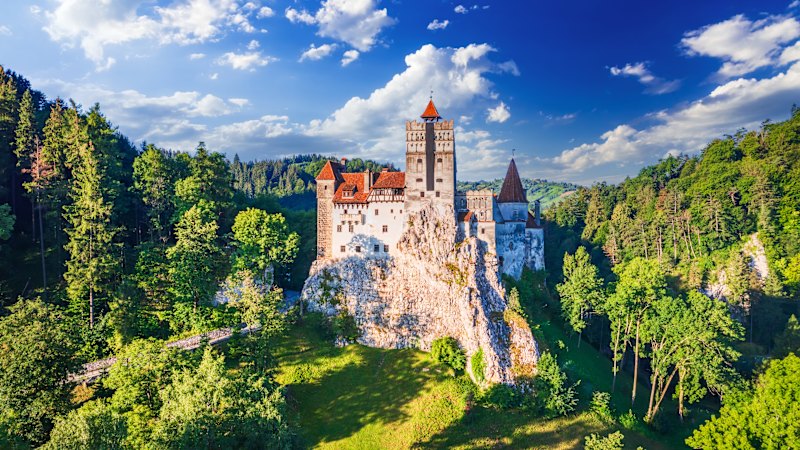
Given that less than 40 years ago, the country was economically and spiritually broken, it’s astonishing how well it has recovered. Sure, there are still brutalist concrete reminders of the communist regime in many towns and cities, but there are also fairytale fortified churches and grand Austro-Hungarian palaces.
Similarly, most of the Romanians we meet are outgoing and gregarious – not qualities you associate with the inhabitants of a post-communist nation. Because of its history, Romania often gets lumped in with the rest of the Balkans, but that’s not how locals feel.
“We are not Balkans; we are Latin,” says Kalanyos in Alba Iulia. “We don’t share the language or the mentality. We have more of an affinity with Italy, Spain and Portugal.”
How Romania became the only country in the region with a Romance language rather than a Slavic one is something of a mystery. It’s still a mix – you’ll hear the Slavic word da for yes alongside the imported French derivative mersi for thanks – but overall it sounds like people are speaking Italian with a Russian accent.
Unfortunately, that Latin influence doesn’t extend to the cuisine. Outside the big cities, the food is best described as hearty – think rich stews, grilled sausages and lots of sour cream. There are signature dishes worth sampling, and you certainly won’t go hungry (portions are often comically large), but on the whole, it’s filling rather than fancy.
One genuine surprise is Romanian wine. Despite extensive research, I fail to find a disappointing feteasca neagra, a local grape that produces reliably smooth, full-bodied reds. Likewise, my white wine-drinking companions are impressed with feteasca alba, an aromatic dry white with notes of apple and apricot.
There’s even decent sparkling. During a visit to Rhein Cellars in the mountain town of Azuga, we sample the same Rhein Extra Imperial Brut that was served at the coronation of King Ferdinand I in Alba Iulia in 1922 (not the same vintage, obviously).
Made using the methode champenoise, it’s a dangerously quaffable drop that has none of the throat-catching dryness you sometimes get from champagne. The best news? It’s about $5 a glass. In fact, you’ll struggle to pay more than $12 for a glass of Romanian wine in most restaurants.
Although the country joined the European Union in 2007, it still hasn’t adopted the euro, so it remains relatively affordable. In Sibiu’s historic centre, a pizza and a glass of local red in a well-rated restaurant comes to $22. Try finding that in Siena.
This tour is one of Intrepid’s increasingly popular Premium range, an elevated travel style that promises smaller groups, upgraded accommodation and more inclusions. For the most part it delivers. Our group of 11 travels in comfortable minivans with a dedicated tour leader. Most of the hotels are characterful, four-star properties, although some last-minute changes mean a couple aren’t as well located as they should have been.
The real luxury, however, comes from private tours with local guides, who offer a perspective only possible through lived experience. Reading about the 1989 revolution in a guidebook is one thing; hearing Andra Oprescu, our guide in Brasov, describe cowering in her grandmother’s house because of gunfire outside is far more powerful.
Premium tours also include more activities, so on most days there’s a guided tour or a visit to a significant attraction. Naturally, one of these excursions is to Bran Castle, the hilltop medieval fortress that’s become known as Dracula’s home.
If you’ve ever longed for a Dracula-branded snow globe or a pocket-sized impaling stake, this is the place to come. While the entrance is a sprawl of tacky souvenir stalls, the tour is actually very good.
Our guide is honest about the tenuous connection between Dracula and Vlad the Impaler and concentrates more on the castle’s stint as a royal residence between 1920 and 1948.
There’s still plenty of guts and gore (the medieval torture exhibition is especially gruesome), but on the whole it’s surprisingly restrained.
By the time we get to Peles Castle on day nine, I’m a little castled out and almost consider skipping the tour. Thankfully, I reconsider, because it has one of the most arresting interiors I’ve ever seen. Originally commissioned in 1873 by King Carol I as a royal hunting lodge, it offers a globe-trotting riot of decorative styles.
Highlights include an intricately carved German Neo-Renaissance arrival hall, a marble-smothered Florentine reception room and an intimate, rug-lined Ottoman-era smoking den.
For sheer, downright bizarreness, nothing beats Salina Turda, an abandoned salt mine that’s been transformed into an underground theme park, complete with a Ferris wheel, mini golf and rowboats on a subterranean lake. I can safely say that of all the things I pictured myself doing in Romania, sitting in a massage chair at the bottom of a 42-metre-deep salt mine chamber wasn’t one of them.
Our trip finishes in the country’s capital, Bucharest, a sprawling metropolis whose historic centre is an intriguing clash of medieval churches, grand Beaux-Arts palaces and concrete Soviet eyesores.
Of the city’s myriad museums, two stand out for the differing perspectives they offer on the country’s 42-year communist rule.
The first is the Museum of Communism, an immersive four-room recreation of a typical 1980s-era communist apartment. Tucked away on a side street in the historic centre, it explains how the communists came to power and details the brutal hardships endured by the population under Ceausescu’s rule.
The second is the Palace of Parliament, the gargantuan government building Ceausescu was inspired to build after a visit to North Korea in 1971. Following a devastating earthquake in Bucharest in 1977, he used the opportunity to demolish more than 9000 homes and dozens of churches to make room for the 365,000-square-metre building, often cited as one of the heaviest in the world.
He ploughed billions of dollars of public money into the project, employing more than 20,000 workers and 700 architects to create a lavishly decorated monument that symbolised the “victory of socialism”.
The official one-hour tour visits a fraction of the building’s 1100 rooms, but it’s enough to see the expertise and expense squandered on an egotistical folly while the population endured power cuts and food rations. According to our guide, the building contains about 3500 chandeliers and more than 2.5 million tonnes of marble.
When I ask him how Romanians feel about the building today, he says it varies. Some people glorify it, claiming it’s a magnificent showcase of the country’s natural resources and craftsmanship. Others despise it because it represents the inequality and injustice that defined Ceausescu’s rule.
“In some ways, it taught us resilience,” he says, “but we paid a high price.”
Sarmale Often considered Romania’s national dish, sarmale are pickled cabbage leaves stuffed with a mixture of minced pork, onions, rice and aromatic herbs, such as thyme and dill. Commonly served with cornmeal polenta and sour cream, they’re a reliable fixture on most traditional menus.
Mici Romania’s take on cevapi. Skinless minced beef and pork sausages cooked over an open charcoal grill. Juicy, tender and flavourful thanks to a cocktail of seasonings (normally garlic, black pepper and thyme) and a dash of bicarbonate of soda.
Chicken in sour cherry sauce A specialty of the Banat, a region shared between Romania, Serbia and Hungary, this distinctive sweet-and-savoury dish combines pan-seared chicken with a sour cherry sauce. Try it at Casa Bunicii in Timisoara, where it comes with an unusual accompaniment: a cheese-stuffed baked apple.
Smoked pork and bean soup A hearty Romanian staple, this rich soup combines beans, smoked pork and diced vegetables in a smoky broth flavoured with vinegar or fermented wheat bran, giving it a distinctive sour tang. Often served in a bowl made from a hollowed loaf of crusty bread.
Papanasi Deep-fried doughnuts made from sweetened cottage cheese dough and served with creme fraiche and a sweet blueberry or cherry confit. Normally presented with the doughnut hole balanced on top, like a dinky little hat.
FLY Emirates and Turkish Airlines offer a one-stop service from Australia to Belgrade. Qatar Airways and Emirates offer one-stop flights from Bucharest back to Australia. emirates.com; turkishairlines.com; qatarairways.com
TOUR Intrepid Travel’s 11-day Premium Belgrade-to-Bucharest trip runs from May to September and includes upgraded accommodation, an arrival transfer and more than a dozen guided tours, attractions and activities. From $7895 a person, twin share. See intrepidtravel.com
The writer was a guest of Intrepid Travel.
Citations · 2 reports from 2 outlets
Tap a citation to read it above, right here on T.A.M.
Dracula is the least interesting thing about this underrated nation
Discover the unexpected highlights of one of Europe’s best-kept secrets.
1 hour ago · Rob McFarlandDracula is the least interesting thing about this underrated nation
Discover the unexpected highlights of one of Europe’s best-kept secrets.
1 hour ago · Rob McFarland