
University professor loses legal case over unauthorized cell research
A former university professor has lost a legal challenge following his dismissal over the use of women's cells in mouse experiments without consent. The university has reportedly paid millions in relation to the research scandal.
First reported 1 hour ago · latest update 1 hour ago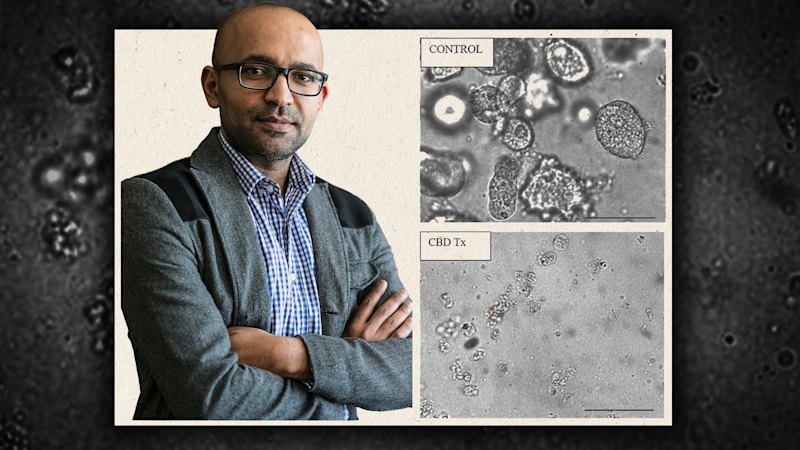
The research seemed so promising. Under a microscope, the scientists could see cancerous cells being “completely eradicated” by a cannabis extract.
A 2021 announcement trumpeted the results as “groundbreaking”. The research pair-up – the University of Newcastle and ASX-listed hemp grower Ecofibre – seemed convinced they were poised to transform women’s health.
“All patients have responded positively,” Ecofibre announced (though the experiments were on patient samples, not on patients themselves). Patents had been filed. Almost five years to the day, the picture is rather different.
Fair Work Commission documents reveal the University of Newcastle researcher who led the work has now been terminated for research misconduct. The research centre he directed has shut, with all samples and data from the suspect research destroyed. Staff have lost their jobs, and PhD students have had to abandon their studies. The university has had to repay donors.
Ecofibre is a hemp grower and producer, selling various cannabis-based treatments for pain, including “Endo Relief Cream” and cannabinoid vaginal suppositories known as “Endo Relief Melts”.
But the evidence showing cannabis can treat chronic pain is thin on the ground. “Due to a lack of evidence from high-quality research,” the International Association for the Study of Pain said in 2021, it “does not endorse the general use of cannabinoids to treat pain.”
Ecofibre and the University of Newcastle hoped to change that. What went wrong from there is chronicled in two Fair Work Commission judgments.
The two organisations entered into a research partnership to test the efficacy of cannabinoids on endometriosis and other gynaecological diseases.
Professor Pradeep Tanwar, director of the University’s Global Centre for Gynaecological Diseases, was made chief investigator of those research projects.
Tanwar was also the principal investigator in two research projects to study the molecular basis of endometriosis and look for blood markers for the disease being run at three hospitals around Newcastle.
By 2023, Ecofibre and the university had been jointly granted patents for hemp treatments for ovarian cancer and endometriosis. “We are well positioned to move to the next stage of our research, which includes full protocol development for eventual human trials,” Tanwar said in an Ecofibre letter to shareholders.
It was then, according to the Fair Work Commission documents, the problems began.
In 2023, the university became aware of allegations that patients in Tanwar’s studies had not signed consent forms or were asked to sign them retrospectively.
Hospital service investigations concluded that more than 100 patients involved in the research had not signed consent forms for their tissue to be used. This masthead revealed the existence of that investigation in 2025.
Nor, the university alleged, were the patients told their tissue would be grafted onto so-called “xenograft mice”.
Informed consent is sacrosanct in science and covered by strict rules. Fundamentally, research participants must volunteer, and they must understand what they’re signing up to.
After investigating, the hospital system pulled its ethical approval for the studies. Ecofibre also terminated its research agreement with the university, which was being used to fund most of the centre’s senior research positions.
The company did not return a request for comment.
The university suspended Tanwar in April 2024 on full pay.
Without its leader and money to fund ongoing research, the Global Centre for Gynaecological Diseases closed in December 2024, and most staff working there lost their jobs.
The Fair Work Commission judgment summarises the damage done: “Two students being required to abandon their PhD work and recommence their studies (one of them four years into their PhD), 14 students being disrupted and assigned new supervision, 17 staff having their employment disrupted and career outputs affected and over 1000 mice being expended during the research that will not yield publishable/useable data.”
In total, the university spent about $8 million on the research. The commission’s judgment noted that the university had to repay some donors after the scandal broke.
The university terminated Tanwar’s employment in August 2025.
Speaking on Tuesday, Tanwar said getting patients’ consent was the responsibility of the hospital’s clinicians.
“Under the approved ethics protocols, consent was taken by hospital clinicians,” he said. “Written consent was given in accordance with the legislation. Unfortunately, consent documentation processes at the hospital had shortcomings.”
Tanwar this year appeared before the Fair Work Commission and unsuccessfully argued his dismissal was harsh, unjust and unreasonable.
The commission concluded that Tanwar, as chief investigator, “had ultimate responsibility for the ethical conduct of research”, even if it wasn’t his job to directly supervise the doctors who were talking to patients. It found his termination was not unfair.
In May, Tanwar appeared before the commission again to appeal the decision, arguing that “all patients provided verbal consent, no patient was harmed, there was no dishonesty or fabrication, and Dr Tanwar did not interact with patients”.
A commission’s full bench, in a judgment published last week, also rejected that claim, finding “the failure to ensure ethical protocols were followed resulted in some women who donated their samples doing so without proper informed consent being obtained in circumstances where they are entitled to expect that the ethical protocols put in place by those researchers will be followed”.
Tanwar said he was disappointed.
“This outcome is a warning to every lead academic in collaborative research about the length and breadth of ‘ultimate responsibility’. That you can be dismissed for the actions of others in different employment relationships and over which you have no authority,” he said.
“This has come at enormous personal and financial cost to me and my family. The commission itself accepted that the dismissal has been extremely difficult for me, both personally and financially.”
In a statement, the University of Newcastle said it was “committed to responsible and ethical research”.
“In this case, the Fair Work Commission upheld the outcome of the university’s investigation, finding that the decision to dismiss was sound and that the investigation was reasonable and procedurally fair.”
The Examine newsletter explains and analyses science with a rigorous focus on the evidence. Sign up to get it each week.
You have reached your maximum number of saved items.
Remove items from your saved list to add more.
You've used all of your gift articles. 3 more will become available on the 1st of every month.
Citations · 2 reports from 2 outlets
Tap a citation to read it above, right here on T.A.M.
No consent: Sacked professor loses case after women’s cells used in mice experiment
The research seemed so promising, but now a university has paid back millions and its one-time star is gone.
1 hour ago · Liam MannixNo consent: Sacked professor loses case after women’s cells used in mice experiment
The research seemed so promising, but now a university has paid back millions and its one-time star is gone.
1 hour ago · Liam Mannix