
I’m sick of immigration being blamed for problems it doesn’t cause
But the resurrection of Pauline Hanson and her ratbag One Nation has changed all that, and now it’s on for young and old.
First reported 1 hour ago · latest update 1 hour ago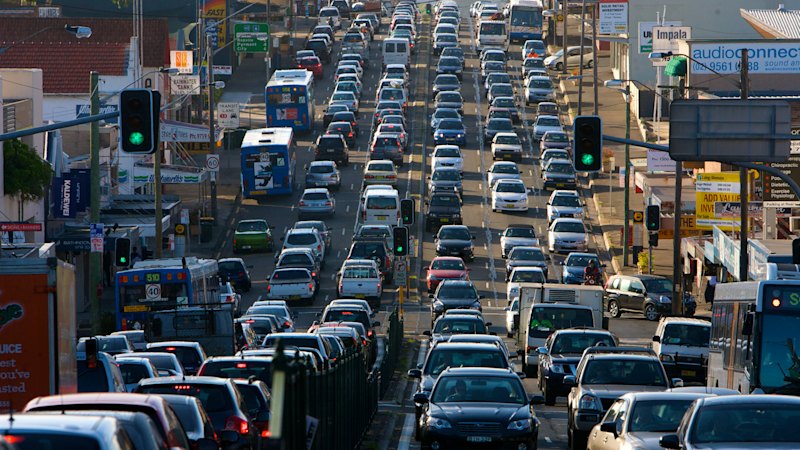
You have reached your maximum number of saved items.
Remove items from your saved list to add more.
You've used all of your gift articles. 3 more will become available on the 1st of every month.
For as long as I can remember, voters have disapproved of immigration, while governments of both colours have encouraged it.
To put it politely, all that’s changed is where most of the migrants come from. They used to come from Europe; now they come from Asia.
This masthead’s polling finds that two-thirds of Australians want our refugee intake (which is a lot smaller a part of total immigration than the punters seem to imagine) slashed, more money spent on deportations and a ban on immigrants coming from countries where extremism is a danger.
One reason governments like immigration is that business is all in favour. If you’ll forgive a little cynicism, it’s not hard to see why. When you’re trying to increase your profits, the easiest way is to sell into a growing market. And when you need skilled labour, it’s a lot easier to sponsor a migrant with skills some other country has paid to provide them with rather than to fiddle about with your own apprenticeships, training schemes and such like.
All this is why, for many years, the two major parties had a tacit agreement to avoid talking about immigration in front of the children, so to speak.
But the resurrection of Pauline Hanson and her ratbag One Nation has changed all that, and now it’s on for young and old.
What’s eating the voters – and driving much of the surge in support for One Nation – is the high cost of eating which, as I’ve argued repeatedly, is not so much because of high prices as it is lower wages to pay for the stuff. That’s hard to fix; bulldusting on about migrants is much easier.
But if ever there was an outfit happy to jump on the anti-immigration bandwagon, it’s One Nation. It has started a how-low-can-you-go reverse auction between the parties. With so many of its former voters shifting their support to the party, the Liberals were the first to join the auction. And even the Labor government felt sufficiently rattled to join in.
One Nation promises to cut net migration by 750,000 in its first three years, then move to an annual limit below 130,000. This, they boast, would be the biggest cut to immigration in our history.
The Coalition has proposed to more than halve net migration for two years to 100,000, 130,000 in its third year and 160,000 in its fourth year. After that, net migration would be tied to the pace of housing completions.
In response, the government has announced measures to achieve a net migration rate of 225,000 a year by 2028. This would be down from an outsized 300,000 in 2024-25.
How do I think it would turn out in practice? In the unlikely (and unthinkable) event of One Nation winning government, it would discover that the realities of office prevented it from doing anything like what it promised.
The econocrats would immediately explain that, as its opponents had argued, negative population growth would tank the economy. About three-quarters of the 2.1 per cent growth in gross domestic product over the year to June was accounted for by population growth.
Should One Nation press on regardless, it would fall well below its target. No government has that much control over net immigration.
Were the Coalition to win government, and the air come out of the One Nation balloon, it’s likely to return to type as the party of business whose business was to make it easier for business to stay in business.
It would go through the motions of keeping its promise and not worry too much when not much came of it. The idea of linking net migration to housing completions sounds nice but, in practice, would be very hit and miss.
If Labor survives in office, it would stick with its announced intention to reduce net immigration to 225,000 a year, but the target would be hard to hit because of factors beyond the government’s control.
Our opposition to immigration is primordial – deeply instinctive. But we mustn’t let it blind us to the benefits immigration brings. Don’t forget that, without immigration, our low natural increase (births minus deaths) thanks to a fertility rate (number of kids over a woman’s lifetime) of 1.48 and likely to go lower, our population would be falling.
Any economist will tell you that you don’t want to live in an economy with a falling population. Opportunity doesn’t grow, it contracts.
Like almost all countries, we have an ageing population. That means an ever-growing population of oldies who pay little tax but generate a huge bill for pensions, healthcare and aged care. Without immigration, that burden would be borne by an ever-smaller working population.
So immigration slows the ageing problem. With more people to share the cost, a bigger population makes it possible to afford improved infrastructure.
Remember too that immigration gets blamed for problems it didn’t cause or, more commonly, only partly contributed to. So while an end to immigration would cause a shrinking economy and a new set of problems from there, a big reduction in annual immigration wouldn’t have much noticeable effect on other problems.
It’s true, for instance, that our recent high migration (which was bigger than the government intended) contributed to the rising cost of housing. But that’s not true historically, and if you think a cut would make much difference, you’d be disappointed.
House prices are the result of many factors, including the inefficiency of our housing industry and our recent choice to have fewer occupants per dwelling.
Immigration is often blamed for road congestion but, should a cut come about, we’d be hard pressed to notice much difference.
It’s a pity our more sensible politicians are so quick to jump on a populist bandwagon, but so reluctant to explain to voters why the populism makes little sense.
Ross Gittins is the economics editor of The Sydney Morning Herald.
Ross Gittins unpacks the economy in an exclusive subscriber-only newsletter. Sign up to receive it every Tuesday evening.
Citations · 2 reports from 2 outlets
Tap a citation to read it above, right here on T.A.M.
I’m sick of immigration being blamed for problems it doesn’t cause
But the resurrection of Pauline Hanson and her ratbag One Nation has changed all that, and now it’s on for young and old.
1 hour ago · Ross GittinsI’m sick of immigration being blamed for problems it doesn’t cause
But the resurrection of Pauline Hanson and her ratbag One Nation has changed all that, and now it’s on for young and old.
1 hour ago · Ross Gittins