
Flying to Europe via the Middle East? Cheaper fares beat safety concerns
As the conflict in the Middle East rages on, travellers are increasingly unfazed and unwilling to pay a “danger premium” for flights avoiding the region.
First reported 1 hour ago · latest update 1 hour ago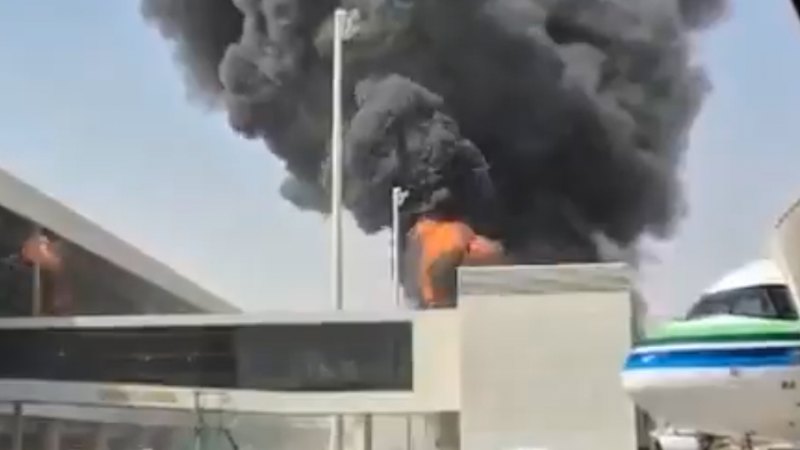
Australian travellers are increasingly choosing cheap airfares over caution, booking flights via the Middle East to reach Europe and the UK despite ongoing security concerns and air travel disruptions.
The trend highlights resilient demand for overseas travel that has proven largely immune to geopolitical instability, and an unwillingness by consumers to pay more than absolutely necessary for airfares in the cost-of-living crunch.
For many, airfare pricing has reached a point where discounts can outweigh security concerns.
Complex Travel director Mark Trim said prices for flights to Europe via routes that avoid the war regions of the Middle East now carry what he describes as a “danger premium”.
When the Iran war broke out earlier this year, risk-averse travellers pivoted towards carriers like Qantas, Singapore Airlines and Cathay Pacific that bypass Middle Eastern airspace.
However, the increased demand for these flights and higher fuel costs – exacerbated by some carriers changing their routes to avoid the region, with resulting longer flight times – drove up ticket prices. By contrast, Gulf carriers like Emirates, Qatar Airways, and Etihad are trying to lure back travellers with the discounts and often more direct routes as the conflict drags on.
For budget-conscious Australians, those savings are proving too attractive to pass up.
Trim said consumer thinking has changed. “‘I won’t go via the Middle East’,” he says. “But then when you see pricing via Asia and you compare that to something [more competitive] through a Middle Eastern airline, suddenly it becomes a decision on ‘How much is that worth it to me?’”
There is a certain price point where affordability outweighs concerns about flight safety and trip disruptions, Trim says.
In the June quarter, Singapore Airlines’ fares from Australia to Europe more than doubled in price (up 109 per cent), while the number of passengers booked on its flights increased by 25 per cent from a year earlier, figures from aviation analytics firm Cirium show. At Qantas, fares to Europe rose 27 per cent, while passenger numbers edged up 1 per cent. Qatar Airways, however, saw bookings to Europe drop 72 per cent since the June quarter last year.
A general willingness to travel through the Middle East is now helped by the fact that since the Iran war started in late February, no major commercial aviation disaster has occurred in the region, despite significant disruptions, especially at the beginning of the war.
It’s also perhaps helped by the profusion of information for airlines – and travellers – to track events: FlightAware and FlightRadar24 allow consumers to see with their own eyes the level of air traffic flowing through the region. While the technology doesn’t change the risks, it gives consumers a new sense of control.
Trim notes that the “danger premium” effect is not unique to the current situation in the Middle East; it was also evident with Malaysia Airlines in the aftermath of the mystery disappearance of MH370 and the shoot-down of MH17 by Russian separatists in Eastern Ukraine, both in 2014.
As Trim explained in a Complex Travel company video: “It’s sort of, ‘I won’t fly Malaysia Airlines’, but if they get a deal, suddenly, ‘Oh, you know what? I’m sure it’ll be fine’.”
Reuters reported that Saudi Arabia stopped issuing public warnings of imminent military attacks days before the recently deadly strikes on Riyadh airport. The strikes killed at least 18 people and wounded more than 300.
In the video presentation last month, before the recent attacks on Riyadh airport, Trim noted that for every customer pledging not to fly through the Middle East – or through the US given uncertainties about the Trump administration – there are five who are prepared to book.
“For every one of those, there’s five who are [saying] ‘she’ll be right’,” he said.
Cirium Asia Editor Ellis Taylor puts it down to the growing expertise of Middle East hubs in managing the airspace amid complications created by persistent drone and missile incursions.
“Travellers have a lot of faith that Middle Eastern governments are managing the aviation situation there,” said Taylor. Consequently, the conflict “doesn’t seem to be putting people off.”
Airlines are a “little more comfortable” with how to manage their operations, Taylor said. In the case of Emirates, for example, “there is a history in how to manage take-offs and landings – with missiles and drones entering the region.”
Taylor said travellers were becoming more resilient to shocks. After 9/11, it took “the best part of two years” for the market to fully recover, he said. “Now, it’s taking a few weeks – the demand is still there, particularly out of Australia.”
“The perception is less ‘my safety is compromised’ and more ‘whatever happens, it will be managed one way or another’.”
And for those in the market to travel, deals are possible. Both Virgin (in collaboration with Qatar Airways) and Singapore Airlines have announced early bird deals for those who book six to 11 months ahead. Emirates is offering early booking offers for several European destinations, while Qatar has early bird fares to Rome, Barcelona and Athens, some starting as low as $1779 return.
Flight Centre Travel Group global leisure chief executive James Kavanagh said that “already this early bird season we’ve seen incredibly sharp pricing to the UK and Europe from the likes of China Southern, China Eastern and Malaysia Airlines, and travellers are showing they’re more open to trying something different.” And bookings with Middle East carriers were on the upswing too, he said.
“Airlines like Emirates, Qatar and Etihad are premium carriers that have built an almost unshakeable reputation, so it will take a lot to shift people away from them,” he said.
A spokesperson for Virgin said the results of its early bird specials have exceeded expectations and demonstrate “the strength of our partnership with Qatar Airways and the connectivity it provides across our network”.
Even with the consumer confidence firm, the safety picture of the Middle East is itself somewhat confused.
While Houthi rebels continue to strike Saudi Arabian airports, the Department of Foreign Affairs and Trade lists Saudi Arabia as a level 3 “reconsider your need to travel” destination. DFAT lists King Khalid International Airport in Riyadh as level 4 “do not travel” due to recent security incidents, and has the same warning for areas of the kingdom within 30 kilometres of the border with Yemen, due to ongoing conflict with the Iran-backed Houthis.
When Smartraveller downgraded its advice from level 4 to level 3 on some Persian Gulf countries in June, bookings on Middle Eastern carriers rebounded 36 per cent, Kavanagh said.
It suggested Aussies had been avoiding the region because of lingering concerns about their travel insurance while transiting, rather than genuine security concerns, he said.
The recent Smartraveller move from level 3 to level 2 – from “reconsider your need to travel” to “exercise a high degree of caution” – for Qatar and the UAE should help rebuild confidence even further, Kavanagh predicts.
The Market Recap newsletter is a wrap of the day’s trading. Get it each weekday afternoon.
You have reached your maximum number of saved items.
Remove items from your saved list to add more.
You've used all of your gift articles. 3 more will become available on the 1st of every month.
Citations · 2 reports from 2 outlets
Tap a citation to read it above, right here on T.A.M.
Flying to Europe via the Middle East? Cheaper fares beat safety concerns
As the conflict in the Middle East rages on, travellers are increasingly unfazed and unwilling to pay a “danger premium” for flights avoiding the region.
1 hour ago · Chris ZapponeFlying to Europe via the Middle East? Cheaper fares beat safety concerns
As the conflict in the Middle East rages on, travellers are increasingly unfazed and unwilling to pay a “danger premium” for flights avoiding the region.
1 hour ago · Chris Zappone