
Diversifying plant consumption for the future of food
Current consumer habits involve eating a very small fraction of available plant species. Experts suggest that exploring a wider variety of plants at markets could contribute to a more sustainable food future.
First reported 1 hour ago · latest update 1 hour ago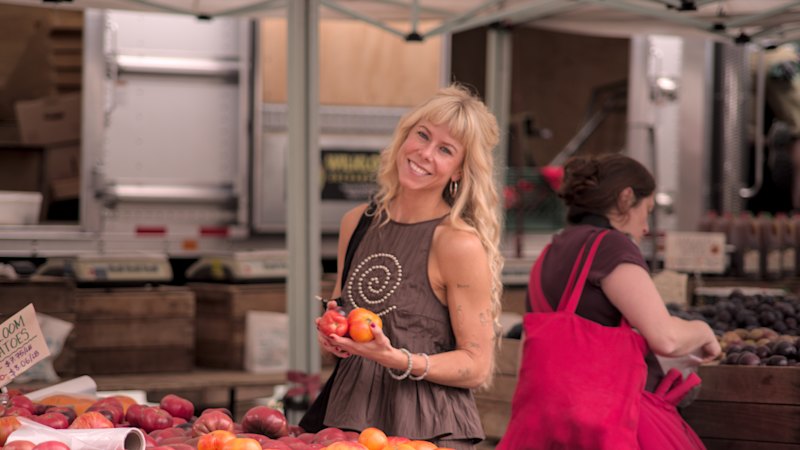
Before triangular domes of uniform tomatoes and symmetrical lettuce heads, carrots were purple, celery was pink and human diets were a proverbial joyride through the plant kingdom. Self-proclaimed vegetable nerd, food journalist and author Ali Francis celebrates at least 125 of them in her new book The Curious Lives of Vegetables, in her quest to make the future more sustainable — and delicious.
“Vegetables are works of art. What do you mean romanesco just exists in nature? It’s a crazy Fibonacci fractal thing that grows out of the dirt,” says the Australian former Bon Appetit staff writer, now based in Utah. “We see so much abundance in supermarkets, but it’s coming from perhaps the narrowest base of ingredients we’ve ever pulled from in history.”
The key? Eat more. Her new book, with vivid illustrations by Sydney-based artist Adriana Picker, dives deep into more than 120 plants that were once ubiquitous and now hang on by a delicate thread thanks to plant-loving devotees around the world. Without these heroes, Francis notes, we might never encounter sea succulents at our farmers markets, let alone rutabaga at the grocer.
While most Australians won’t have easy access to Guatemala’s papaya-esque Ayote green flesh squash or the Meadow garlic of North America (and foreign epicureans will be hard-pressed to find our kampurarpa or karkalla at their supermarket), diversifying with what’s available near you is a terrific start.
The best recipes from Australia's leading chefs straight to your inbox.
“It’s about seeking variety,” Francis says. “We’re not all going to have access to these really niche, obscure ancient plants that are in the book, but hopefully it inspires people to try out new things.”
If your go-to approach is one of the big chains, try an Asian or Italian grocer near you. If you have access to multiple farmers markets, give a different one a crack. Reach for strange, unusual things that you have no idea how to cook, Francis suggests, and try anyway.
“We’re faced with a lot of hopelessness. The food system is such a joyful way to fight back against a lot of that, eating plants in particular,” she says. “In an era where we’re told to stop doing so many things, the message around plants is to maximise.”
Profiling enduring “curious” vegetables and their stewards (including those who manage the Svalbard Global Seed Vault in the side of an Arctic mountain, lest civilisation collapse and we have to start from scratch; those protecting Sierra Leone’s seafaring Geechee red pea; and the Australian champions of modern murnong cultivation), Francis is on a mission to elevate your plate.
“These seeds have made it through so much to be here,” she says. “They’re living archives of history. How many thousands of people’s legacies are in these seeds?”
For most of human life, seeds reflected generations of careful tending. With the proliferation of industrial agriculture, things got out of hand. Having grown up on a cattle farm on the edge of Cania Gorge National Park in central Queensland, Francis is adamant that farming itself is not the problem.
“It’s not evil to breed varieties. It’s not inherently bad to want to improve upon our vegetables and plants,” she says, emphasising that selecting for flavour, resilience and yield has gone so far in one direction that we’re now experiencing exceptional hegemony – and risk.
“The qualities that make a vegetable really good at surviving a long journey in a refrigerated truck aren’t the same things that make it delicious, culturally important or resilient in a changing climate,” she says. “Vegetables in the supermarket look so hardy but they’re really vulnerable.”
Banana plants are near-identical the world over because they’re all from the same Cavendish base, a sterile plant that is propagated via genetic cloning. If a bug destroys one crop, it could destroy them all. Increasingly standardised crops means widescale culinary collapse looms closer than it ever has. Ancient, hardy, diverse varieties – plus an open mind and a broad plate – are the antidote.
“Once they’re gone, we can just never get them back,” Francis says. “The cool thing about biodiversity is that it’s a message of addition: eat more of these things. The best way we can keep as many plants as possible in rotation is to build a market for them.”
Five ways to diversify your diet (and maybe save the world)
The Curious Lives of Vegetables by Ali Francis and Adriana Picker published by Hardie Grant is on sale now RRP $39.99
You have reached your maximum number of saved items.
Remove items from your saved list to add more.
You've used all of your gift articles. 3 more will become available on the 1st of every month.
Citations · 2 reports from 2 outlets
Tap a citation to read it above, right here on T.A.M.
You’re eating less than 0.07 per cent of the plants you could be
Venture further down the aisle and deeper at the market – and you might just help rewrite the future of food.
1 hour ago · Riley WilsonYou’re eating less than 0.07 per cent of the plants you could be
Venture further down the aisle and deeper at the market – and you might just help rewrite the future of food.
1 hour ago · Riley Wilson