
Ten of the world’s great ocean pools, ranked
Instead of waves, sharks and rips, ocean pools come with bars, cafes and hot showers. But that’s not the only reason to love them.
First reported 1 hour ago · latest update 1 hour ago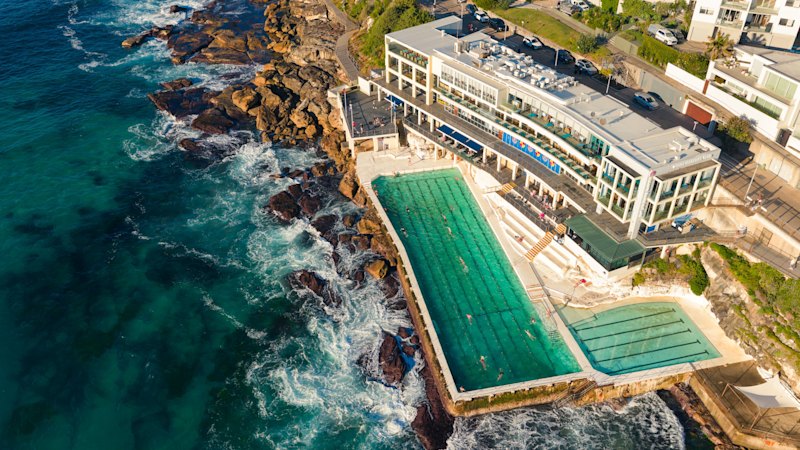
You have reached your maximum number of saved items.
Remove items from your saved list to add more.
You've used all of your gift articles. 3 more will become available on the 1st of every month.
With summer fast approaching, our thoughts as a nation invariably turn to the beach. Australia has about 12,000 beaches along nearly 60,000 kilometres of coastline. No country on Earth has more (or at least no other country has been able to successfully catalogue more beaches than Australia). And no other country, arguably, has better beaches.
And yet, our beaches can be unpredictable places, home to waves which might make surfers and body surfers ecstatic, but frighten families, and powerful rips and currents which keep lifesavers on high alert. There’s also the (very) remote chance of shark attack – in mid-January this year, three incidents in Sydney in two days, including a fatality, forced an entire city to rethink its swimming habits, at least temporarily.
As a result, not everyone feels comfortable on a surf beach. But there’s a viable alternative for those wanting to enjoy Australia’s coastline, with far less fear of waves, currents, rips or ocean predators – the world’s best ocean pools (often referred to as ocean baths) often found alongside some of the very best of our surf beaches.
Australia’s first ocean pool, Newcastle’s Bogey Hole, was built by convicts and opened in 1819. Today it’s just one of 70 ocean pools located along the New South Wales coastline. Sydney is home to over 30 ocean pools alone, including at its four best-known beaches – Bondi, Bronte, Coogee and Manly.
But there are many more ocean pools beyond the state and beyond our shores. You’ll find them all over the world where there’s a coastline. Each has its own character, from the art deco grandeur of Newcastle Ocean Baths to the volcanic cavern confines within the Canary Islands’ Charco Azul, to Sydney’s most famous ocean pool, Bondi Icebergs, where diners and drinkers look out over the waves, lap swimmers and sunbakers below.
It’s no surprise that New South Wales is over-represented on this list of the 10 best ocean pools on Earth, but read on to find which ocean pool rates highest of all.
Sign up for the Traveller newsletter
The latest travel news, tips and inspiration delivered to your inbox. Sign up now.
It’s no coincidence that along one of the world’s “sharkiest” coastlines you’ll find one of the world’s most iconic ocean pools. Just south-east of Cape Town lies Gansbaai, dubbed Shark Alley, where visitors can watch enormous great white sharks from within cages under the sea. If you’d prefer not to think of great white sharks at all, Sea Point Pavilion Pool offers an Olympic-sized swimming pool beside the Atlantic Ocean, with some of the most spectacular sea and mountain views, in one of the world’s most famously picturesque cities.
Built in 1914, Sea Point Pavilion once had an open-air cinema above its pool and an open-air stage where the best acts of the city played to holiday-makers in the pool below. The pool remains one of the city’s most loved public spaces, with a spectacular view of Lion’s Head, one of Cape Town’s most recognisable landmarks. In the early days of apartheid, Sea Point Pavilion was cherished as an egalitarian public gathering space. Entry is 39 rand and ($3) for adults and 23 rand ($2) for children, but that includes a five-metre springboard, dive pool and two splash pools for children.
While almost all of Australia’s best known ocean pools are located in Sydney, or Newcastle, arguably the most naturally striking of all Australia’s ocean pools is located five hours’ drive south of Sydney, on NSW’s Sapphire Coast.
Descend stairs, then clamber down a honey-coloured bedrock cliff face and you’ll come face-to-face with a rectangle of saltwater that’s every shade of blue and green possible, depending on the light and time of the day. Bermagui Blue Pool – built during the 1930s, mostly by local volunteers and the lifesaving club, with help from the council and Bermagui resident and philanthropist Bill Dickinson – feels almost geological, as it’s built so deeply within the rock face, just beside the sea. You don’t even have to swim here to “get” it, there’s a viewing platform with views across the pool and out to sea, where humpback whales pass close to shore between August and November. You’ll also see seals sitting just beyond the pool on a rocky shelf by the ocean.
These ocean pools just north of Porto on Portugal’s Atlantic Coast are as much an architectural accomplishment as a safe place to swim, especially when viewed together with the historic Romanesque, Gothic, Baroque and Neoclassical architecture of the surrounding area. These two pools – a smaller pool designed for children connects to the larger pool – are the most renowned work of famed Portuguese architect, Alvaro Siza, and are now recognised as a Portuguese national monument.
The pools are embedded into the rocky coastline, beside the long sandy beach, Leca de Palmeira, opposite a 17th-century fortress. The Atlantic Ocean is capable of producing massive swells which break along this rocky coastline. Leca de Palmeira is an iconic surf beach (about 150 kilometres south is Nazare, where some of the world’s largest waves ever surfed can be found), but Piscina das Mares offers a safe place for families to swim. Siza intended to work within the coastline, rather than dominate it with his design, and used minimal amounts of concrete walling. At low tide, the pools are calm and still, but high tide and big swell add a wild element to the experience.
A fear of sharks was in part responsible for the construction of this smaller triangular-shaped ocean pool located on Marine Parade, between ever-popular Manly and Shelley beaches. Fairy Bower Rockpool was built to create a safe swimming environment, particularly after fishing activity had brought more sharks into the area.
A combination of its quirky triangular shape – which, in early morning with the rising sun shining across shallow clear water, turns all the shades of blue and a set of sculptures called The Oceanides (although the locals refer to them as The Sea Nymphs) makes this pool look more fairytale than real life. It’s only 20 metres long and 15 metres across (at its widest point) so it’s no place for swimming laps, but it’s the perfect place for a cooling dip with no threat of ever being caught in a rip. Bring your mask and snorkel and explore the marine reserve next door, or check out the array of cafes, restaurants and bars along this very tourist-friendly strip. When the waves get huge, it’s also a great spot to watch daredevil surfers take on a surf break near the pool, at one of Sydney’s most notorious big wave locations.
While Sydney’s ocean pools are much better known, Newcastle’s ocean pools were equally as important in changing the way colonial Australia viewed public swimming along the coast. Construction of Newcastle Ocean Baths was first considered in 1910 as a way to introduce the concept of mixed gender public swimming, and to normalise the idea of men and women enjoying a swim along the coastline, together. The funding for this pool relied on introducing mixed gender swimming, to break away from an archaic 1838 Act mandating gender segregation.
When the pool was finally completed in 1922, it blended the classic art deco architecture of that decade with a major shift in public sensibilities. And what a view. Walking through the gates (admission is free) is like a portal to another time. Past the grand art deco facade, you can look north to Stockton Beach, and all the way to Nelson Bay when conditions are especially clear. Seals occasionally rest in rock shelves out front, and whales and dolphins swim in the sea beyond. A few suburbs south, Merewether Ocean Baths are the largest ocean pools in the southern hemisphere, but it’s these more petite baths that are arguably the most impressive.
Perhaps the most striking feature of Bronte Baths is that they feel less like a swimming pool at all and more like you’re swimming within the eastern Sydney coastline. Carved into sandstone cliffs at the southern end of Bronte Beach, the wall separating the pool from the Pacific Ocean is barely above the waterline, so at high tide or in big swells the whole pool often disappears temporarily each time a wave enters.
Dating back to 1887, Bronte’s baths were constructed as a response to the dangers of swimming at Bronte Beach where a short, steeply angled beach can produce at least three simultaneous rips including the Bronte Express, a rip in the centre of the beach that’s been responsible for multiple drownings. Beyond protection from dangerous surf and sharks, the baths also allowed colonial authorities to regulate public bathing behaviour. The pool gets busy, especially during summer, so it pays to get there early. Time your swim for sunrise, when the light over the northern end of the pool, holds the colours of the sky perfectly on the surface. On big surf days, swimming here can feel like a theme park ride.
The Bogey Hole comes in so high on this list because it’s the most historically fascinating of all New South Wales’ ocean pools – if for no other reason than it was the first, dating back to 1819. But there’s more to this pool: it started its life as a private pool for a colonial-era commandant keen on utilising the perks of his position. Major James Morisset – the longest serving commandant of Newcastle – was a keen swimmer, so he ordered a group of convicts to hand-cut a swimming hole from the rocks at the foot of Shepherd’s Hill. After Morisset died, the pool was opened to the public, then enlarged.
The Bogey Hole is more than a place to swim; it’s a record of colonial history. Daylight bathing was prohibited here until 1894 and after that, men and women had to swim on different days. Opening the Bogey Hole to the public was also the first solution authorities devised towards taming our wild coastline. Though swimming here is not without risk: on big surf days, waves wash into the pool. But on calm surf days, especially on a low tide, the emerald-coloured water acts as a mirror for the sandstone cliffs around it and you can see sea-stars on the bottom.
Charco Azul earns third place because it’s consistently ranked overseas as the world’s best ocean pool, and it’s different to the rest of the ocean pools because it was created almost entirely by nature. Along with Australia, the Canary Islands dominate every world’s best ocean pool poll; and Charco Azul is always that country’s No.1. Formed naturally by ancient lava flows, it’s located within a volcanic cavern, protected from the waves of the ocean beyond by a small wall created by lava. Though local operators have built walkways, wooden sunbathing areas and a discrete reinforced concrete barrier to the sea, it doesn’t alter the natural character of the ocean pool.
There’s a steep walk down to two pools of dreamy pale-blue waters, set against the white foam of waves outside. There’s a children’s pool beside the main pool, with a flat bottom, and a tiny cascading waterfall. Swimming here isn’t free, but entry only costs €0.50 (80¢), and there’s an on-site bar (chiringuito) offering beer, wine and cocktails and local delicacies like freshly caught fish and goat’s cheese above the pools with views across the ocean.
Coming in at No.2 on this list, Wylie’s Baths is less famous than some, but it occupies every bit as privileged a position. Perched metres above the Pacific Ocean, below the steep rocky cliffs at the southern border of Coogee beach, Wylie’s is an underground celebrity hangout; if you can recognise the stars in swimming caps and goggles. Built in 1907 by champion long-distance swimmer Henry Alex Wylie, this was one of the very few mixed-gender ocean pools in Australia.
Wylie bought a lease just above the high-water mark and constructed the pool himself. He trained his daughter, Mina, to a silver medal in the 1912 Stockholm Olympics, the first Olympics women were allowed to compete at (Australia’s Fanny Durack beat her to gold, a sure sign of the changing times in Australia). A century later, Wylie’s pool lives on. There’s a sundeck and kiosk (try the signature carrot cake) with a heck of a view over the ocean to Wedding Cake Island. Entry costs $6.50 ($3.20 for kids), but the 20¢ two-minute hot shower is the best deal anywhere in Sydney on a chilly winter’s day.
Aside from being Australia’s most famous ocean pool, “Icebergs” epitomises the very idea of an ocean pool, which is why it tops the list. Built on the southern end of Bondi Beach, this 50-metre-long pool is carved right into sandstone cliffs at the edge of the Pacific Ocean below the four-storey Bondi Icebergs club (which includes a world-renowned fine dining restaurant/bar on its third level, and a popular bar and bistro on its second level) and its water supply comes directly from the ocean, when waves crash over reinforced concrete edges into the pool.
It’s one of the few pools on this list that requires an admission fee ($10 for adults, $7 for children), but there’s a sauna with glass windows included to thaw out in while looking across the pool to Bondi Beach beyond, so you’ll get your money’s worth. Built in 1927 as a way for local lifesavers to maintain their fitness over winter, full membership is still only granted to those who swim in competition races three out of four Sundays in winter for five continuous years. Bondi Icebergs is also the world’s only licensed winter swimming club: so you can swim laps, then sit on the balcony overlooking the pool and beach with a well-earned beverage.
Citations · 2 reports from 2 outlets
Tap a citation to read it above, right here on T.A.M.
Ten of the world’s great ocean pools, ranked
Instead of waves, sharks and rips, ocean pools come with bars, cafes and hot showers. But that’s not the only reason to love them.
1 hour ago · Craig TansleyTen of the world’s great ocean pools, ranked
Instead of waves, sharks and rips, ocean pools come with bars, cafes and hot showers. But that’s not the only reason to love them.
1 hour ago · Craig Tansley