
Toilet paper, recording devices and spy suspicions: Inside the OpenAI case that has rattled America
The cloak-and-dagger details of the case have gained attention in Silicon Valley and in law enforcement and national security circles.
First reported 1 hour ago · latest update 1 hour ago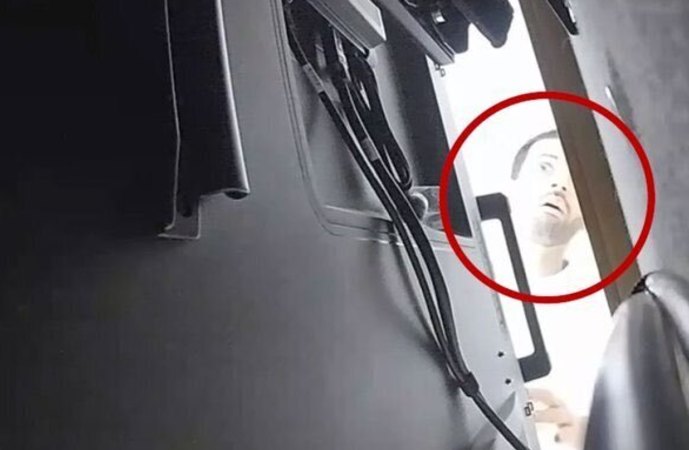
The OpenAI engineer who was charged this week with planting a secret recording device at the artificial intelligence company recently said he helped advise government agencies in Saudi Arabia on technology, and was listed as a partner at a venture capital firm alongside a member of the Saudi royal family.
In an Arabic podcast interview last month, Abdulrahman Alfozan, 35, a Saudi national, said he and other Saudi tech professionals in Silicon Valley had formed a group that advised Saudi organisations, including the kingdom’s social insurance agency. Separately, RAED Ventures, a venture capital firm in Riyadh, the Saudi capital, lists Alfozan as a venture partner on its website, along with Prince Khalid bin Bader Al Saud.
Alfozan has a long history in Silicon Valley. He was an engineer at Meta before joining a startup that went through Y Combinator, the Silicon Valley startup accelerator. He gained permanent residency status in the United States in 2020, according to court documents, and was hired by OpenAI in July 2025.
Details about Alfozan are emerging after OpenAI disclosed earlier this week that it had discovered a hidden recording device in a conference room in one of its San Francisco buildings. The company said it had traced the device to Alfozan, who was arrested by the FBI and charged with trying to secretly record conversations using an electronic device.
The incident has fuelled concerns about the security of leading AI labs like OpenAI that create advanced AI models that are among the most closely guarded secrets in the US technology industry. Jay Clayton, the director of national intelligence, said that what had happened at OpenAI underscored how winning the AI race “is a national security prerogative.”
OpenAI said Alfozan did not appear to have inappropriately obtained or extracted sensitive information about its technology or customers. But the cloak-and-dagger details of the case have gained attention in Silicon Valley and in law enforcement and national security circles.
“Silicon Valley is ground zero for espionage from a variety of countries around the world,” said Amy Zegart, a professor at Stanford University who specialises in national security and intelligence. She added that she was “troubled” by the OpenAI incident and expected more cases “because these companies are so important.”
An OpenAI spokesperson said the company had “a rigorous insider risk program to protect our employees, our intellectual property and customer data” and declined to discuss its monitoring process.
Alfozan did not respond to a request for comment. His lawyer, William Pernik, said in an email that his client “poses no flight risk whatsoever,” cited his “long-standing ties to the community” and said that he would contest the allegations and detention at a hearing on Monday.
“I am aware of the narrative that is being painted,” Pernik said, “and we will fight it wholeheartedly.”
RAED and the Saudi Embassy in Washington did not respond to requests for comment.
In a filing in US District Court for the Northern District of California, which was unsealed prosecutors detailed how OpenAI’s security team had found a thumb-size recording device on September 30, wrapped in toilet paper and plugged into the back of a television in an executive conference room. Only executives and their assistants could reserve the room, which was used for leadership meetings and briefings with government officials, the complaint said.
OpenAI employees then placed a camera in the conference room, prosecutors said, and it recorded Alfozan checking behind the TV on October 5. That day, security staff found a second device in a bag that Alfozan had left in a printer room, the complaint said.
Last month, an AI chatbot account linked to Alfozan’s wife was used to ask how to build a continuous audio recorder, add Wi-Fi connectivity, encrypt its memory card and hide its activity, according to the complaint. Alfozan asked an AI tool to list meeting rooms in OpenAI’s offices and asked about locations for “leadership and exec,” prosecutors said.
Alfozan, his wife and another relative had booked one-way tickets to Saudi Arabia for this past Monday, prosecutors said in another court filing.
Born in Saudi Arabia’s central region of Qassim and raised in Dammam, Alfozan got into Mawhiba, the kingdom’s national program for gifted students, he said in the interview with “Identity Capital,” an Arabic podcast about professionals and careers. He later received a scholarship through a gifted-student program at King Abdullah University of Science and Technology and studied computer science and engineering at the Massachusetts Institute of Technology.
On the podcast, Alfozan described meeting Crown Prince Mohammed bin Salman, then the deputy crown prince, during the prince’s 2016 visit to Silicon Valley. He said the prince had advised young Saudis in Silicon Valley to build their skills at the world’s leading companies and then bring that expertise home.
This article originally appeared in The New York Times.
Get news and reviews on technology, gadgets and gaming in our Technology newsletter every Friday. Sign up here.
You have reached your maximum number of saved items.
Remove items from your saved list to add more.
You've used all of your gift articles. 3 more will become available on the 1st of every month.
Citations · 2 reports from 2 outlets
Tap a citation to read it above, right here on T.A.M.
Toilet paper, recording devices and spy suspicions: Inside the OpenAI case that has rattled America
The cloak-and-dagger details of the case have gained attention in Silicon Valley and in law enforcement and national security circles.
1 hour ago · Emmy MartinToilet paper, recording devices and spy suspicions: Inside the OpenAI case that has rattled America
The cloak-and-dagger details of the case have gained attention in Silicon Valley and in law enforcement and national security circles.
1 hour ago · Emmy Martin