
RBI denies Tata Sons' request to remain a private company
The Reserve Bank of India has rejected Tata Sons' application to relinquish its status as a core investment company. The conglomerate has been directed to proceed with a public listing.
First reported 2 days ago · latest update 2 days ago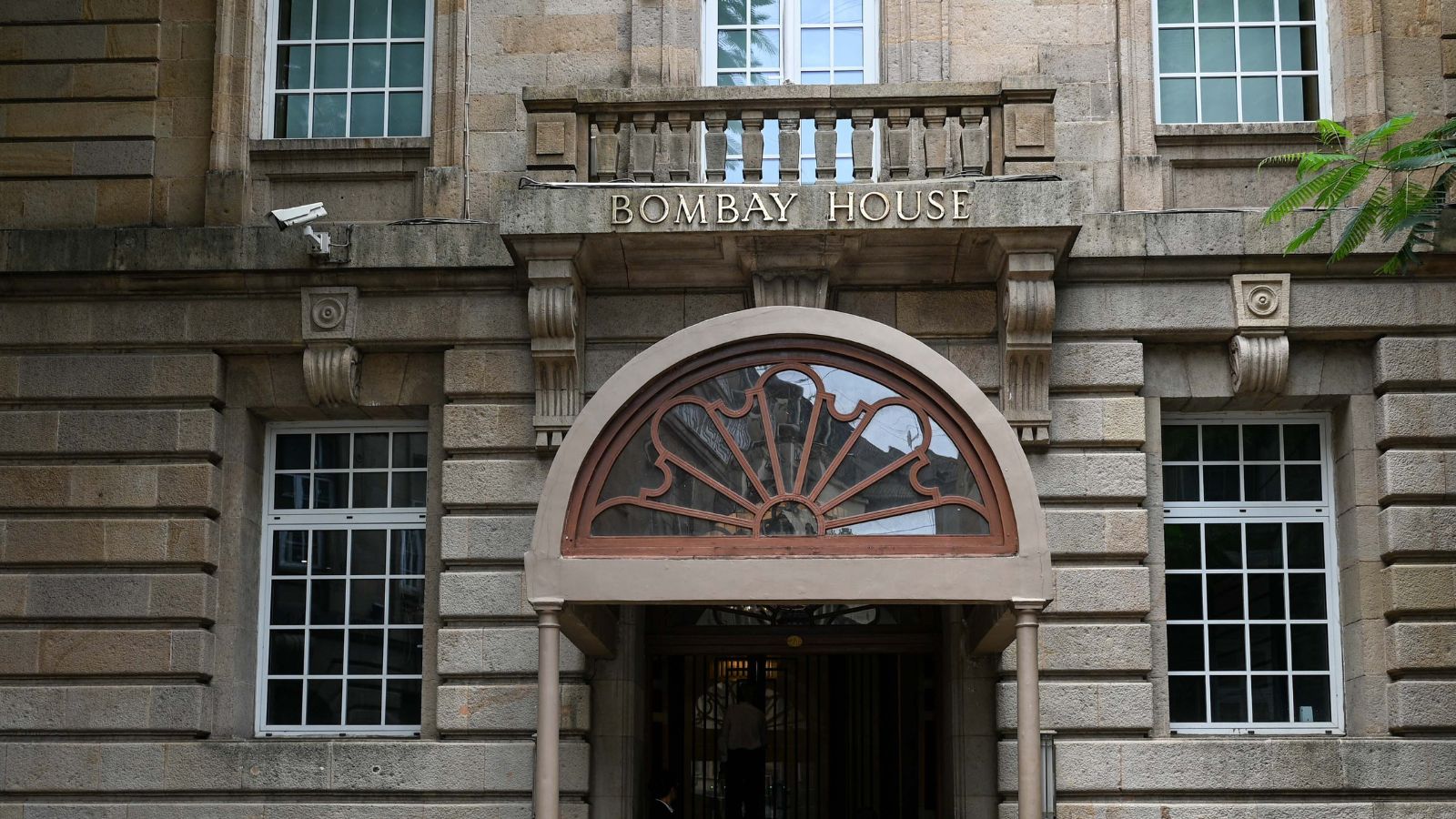
In a big setback to the Tata group, the Reserve Bank of India has rejected the application of Tata Sons Ltd, the principal holding company of the group, to remain as an unregistered investment company. It has, instead, directed the holding company of the Tata group “to take necessary actions to ensure full compliance with all guidelines/ instructions.
This means Tata Sons will have to go public with an initial public offering (IPO) and list its shares on the stock exchanges. Tata Sons had earlier approached the central bank seeking to voluntarily surrender its certificate of registration and be classified as an unregistered Core Investment Company (CIC).
Noel Tata, Chairman of Tata Trusts and a Director of Tata Sons, was also advocating for the company to remain a private, unlisted entity. In a letter to the Chief Financial Officer of Tata Sons, the RBI said, “please refer to your letter of application dated March 28, 2024 on the captioned subject, stating that Tata Sons Private Limited (TSPL) would fulfil the criteria prescribed for being classified as an unregistered Core Investment Company (CIC), and your several subsequent correspondences on the subject.” “After considering the above and examining all the relevant factors, we advise that your request for voluntary surrender of CoR for being classified as unregistered CIC, cannot be acceded to,” the RBI said. “As such, we advise you to take necessary actions to ensure full compliance with all guidelines/instructions, as applicable to NBFC-Upper Layer (UL) issued by the RBI, immediately,” the central bank said.
Also Read | Tata Sons on stock market? RBI’s ‘Rs 1 lakh crore or more’ rule may decide The RBI’s direction has potentially significant implications for Tata Sons, given its position as the principal investment holding company of the Tata group and its classification as an NBFC–Upper Layer (NBFC-UL).
The central bank’s instruction to “take necessary actions to ensure full compliance” places the onus on Tata Sons to address any gaps in its regulatory compliance framework and align its operations, governance and financial practices with the enhanced requirements applicable to upper-layer NBFCs.
For Tata Sons, the directive could mean tighter scrutiny of its balance sheet, investment structures, risk-management systems, corporate governance and other regulatory processes. As an NBFC-UL, the company will be subject to a more stringent regulatory framework than lower-layer NBFCs, reflecting the RBI’s assessment of the potential systemic importance of large financial entities.
Any requirement to strengthen compliance could therefore result in additional oversight, changes to internal processes and greater emphasis on board-level monitoring and disclosures. It may also require the holding company to reassess certain group-level practices to ensure that its activities remain consistent with the regulatory expectations governing its NBFC status.
Also Read | Will Tata Sons stay private? How an RBI decision has revived the IPO debate The RBI’s communication also underscores the regulator’s expectation that Tata Sons should move quickly to close any identified compliance gaps rather than treat the matter as a longer-term exercise.
For Tata Sons, the immediate priority is therefore likely to be demonstrating timely compliance and listing, strengthening controls where required and ensuring that its governance and financial framework meet the RBI’s expectations for an upper-layer NBFC. The listing of Tata Sons will enable Shapoorji Pallonji group to monetise its 18.3 per cent stake and raise funds for their expansion plans.
The RBI had earlier classified Tata Sons in the list of upper layer non-banking finance company (NBFC-UL). However, the RBI said Tata Sons application for de-registration was under examination. Once an NBFC is categorised as NBFC-UL, it will be subject to enhanced regulatory requirement, at least for a period of five years from its classification in the layer, even in case it does not meet the (prescribed) criteria in the subsequent years.
In other words, it will be eligible to move out of the enhanced regulatory framework only if it does not meet the criteria for classification for five consecutive years. Trustees of Tata Trusts, which hold 66 per cent stake in Tata Sons, are divided on the issue of listing of Tata Sons.
While Tata Trusts Chairman Noel Tata and some former Tata Sons directors are against listing Tata Sons, two trustees of Tata trusts – Venu Srinivasan and Vijay Singh – have argued for listing of Tata Sons. Pallonji Mistry group which holds 18.3 per cent stake in Tata Sons is for the listing of Tata Sons.
According to a trustee of Tata Trusts, control, be it charitable trusts, was a workable proposition in earlier times but Tata Sons needs stability and a rigorous regulatory mechanism now. “The Tata Trusts have been fractious and turbulent in the recent past and there is no guarantee of a better future.
I do not think listing will significantly affect the trusts which will retain their large shareholding, board seats etc and will not lose their promoter status,” he said. “A public listing would not only unlock value for minority shareholders but also equip Tata Sons with capital to sustain growth,” said another Tata Trusts trustee.
The matter of listing Tata Sons has been under consideration and discussion for a while now as the Reserve Bank regulations require Tata Sons to be listed on the stock exchanges as it is considered to be an upper layer non-banking finance company. The RBI replaced the previous methodology to determine NBFC-UL with a simple criterion that only NBFCs with assets of Rs 1 lakh crore or more will be classified as NBFC-UL.
Although Tata Sons has had no direct access to public funds since repaying its debt in 2024, it remains an indirect recipient of public funds under the RBI's definition because listed Tata companies, including Tata Steel, Tata Chemicals and Tata Power, hold equity stakes in it. According to the Reserve Bank of India's Scale Based Regulation (SBR) framework, an NBFC–Upper Layer (NBFC-UL) is a non-banking financial company that the RBI identifies as requiring enhanced regulatory oversight because of its size, systemic importance, interconnectedness, and risk profile, using a prescribed scoring methodology.
Citations · 3 reports from 3 outlets
Tap a citation to read it above, right here on T.A.M.
RBI rejects Tata Sons plea to remain private, directs the firm to go public
2 days ago · George MathewRBI rejects Tata Sons' bid to stay private, directs listing
Tata Sons' bid to relinquish its core investment company registration has been turned down by the Reserve Bank of India, pushing the Tata Group's holding firm nearer to a public stock offering. Tata Trusts, the majority owner, aims to preserve the company's private nature for sustained stewardship. In contrast, the Shapoorji Pallonji Group is advocating for a public float.
2 days ago · REEBA ZACHARIAHRBI rejects Tata Sons' plea to stay private, tells conglomerate to go public
RBI rejects Tata Sons plea to stay private tells conglomerate to go public
2 days ago