
Kobe’s robot monument serves as a symbol of city resilience
Thirty-one years after a devastating earthquake, a robot monument remains a prominent symbol of resilience in Kobe, Japan. The city continues to honor its recovery through this cultural icon.
First reported 1 day ago · latest update 1 day ago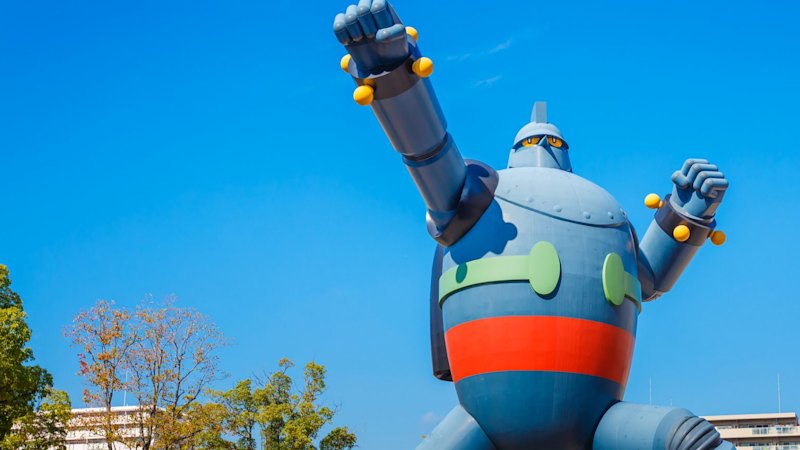
My fascination with Japan started as a child, and it came exclusively through television. The Samurai and Phantom Agents featured hilariously terrible dubbed English, but introduced Australian kids to ninja and samurai. Then there were cartoons such as Astro Boy, Prince Planet and Marine Boy, with big-eyed characters, simple animation and goodies-versus-baddies plots.
One cartoon has stuck with me to this day. Gigantor was about a giant blue robot who fought evil, but he was controlled by a 12-year-old boy. In Japan, the robot was known as Tetsujin 28, and was created in 1956 by manga artist Mitsuteru Yokoyama, who lived in Kobe.
When the Great Hanshin Earthquake struck Japan in 1995, Kobe was the worst-hit city – more than 4500 people in the city were killed, 40,000 people were injured and 400,000 buildings were destroyed.
In 2009, local businesses and government banded together to build a statue of Tetsujin 28 to symbolise the city’s resilience and rebuilding. They hoped it would become a tourist attraction that would reinvigorate the stricken neighbourhood of Shin-Nagata, which lost about 80 per cent of its buildings.
At home, I have a couple of shelves full of various Gigantor toys and models, collected from four trips to Tokyo in the past three years. To say I’m obsessed is an understatement. And that’s why I’m finally here in Kobe for the first time, on a day trip from Osaka. I want to see the place that gave birth to the big guy and pay homage.
Sign up for the Traveller Deals newsletter
Get exclusive travel deals delivered straight to your inbox. Sign up now.
After a 13-minute trip on the shinkansen (bullet train) from Osaka, I arrive in Kobe, then take a short ride on a local train to Shin-Nagata station. I walk a few minutes, turn a corner into Wakamatsu Park and there he is – 18 metres tall, 45 tonnes, his shiny blue metallic shell glinting in the sun, his giant red-tipped feet dwarfing a nearby child’s bicycle, his right arm defiantly held aloft.
All of a sudden, I’m nine years old again. I have to hold myself back from squealing with delight. He’s huge. He’s magnificent. He’s awesome. I start snapping pictures from every imaginable angle. The cartoon’s theme tune plays on a loop in my head: “Gigantor the space age robot, his power is in your hands.”
I am a man of a certain age, and yet I ask a passer-by to take photos of me underneath the statue, striking the same pose as Gigantor. I have no shame.
Nearby, I find a row of streetlights that use the robot’s distinctive helmet-shaped head as light fittings. And down the end of the neighbourhood’s main shotengai (shopping street) I find Kobe Tetsujin Sangokushi Gallery, which is dedicated to the work of Gigantor’s creator, and includes small working models for the statue, a video of its construction (unfortunately only in Japanese) and 1960s toys, comics and merchandise devoted to him, along with artefacts related to Yokoyama’s other manga creations.
The rest of my day is spent experiencing what this revitalised city has to offer. I take a ride on the Kobe Nunobiki Ropeway, a cable car that takes you on a steep ride up into the hills. The top station offers magnificent views of the city below. Then I take a long, leisurely stroll down through the lush Kobe Nunobiki Herb Gardens, home to 75,000 herbs, plants and flowers, descending to the middle station and taking a return journey to the bottom on the cable car.
Not far away, it’s a brisk uphill walk through Kitano-cho, where European-style villas and mansions, once owned by international traders and diplomats from the 19th century, are intact and open to view. I’m not a big fan of Starbucks, but I relent as the one in Kitano-cho is situated in a lovely, sprawling English colonial-style house built in 1907.
Afterwards, I wander to Ikuta Shrine, one of the oldest in Japan, dating to AD 201. It has a splendid row of bright red torii gates, and is a place where people come to pray for romance or safe childbirth.
Next, a long walk along the promenades that line Kobe’s bay and port area, including a visit to the Port of Kobe Earthquake Memorial Park, displaying stark reminders of what happened here more than 30 years ago.
Then, as the light is starting to fade, it’s a 10-minute walk to Nankinmachi, one of only three Chinatowns in Japan. Over dumplings and beer, I happily end a day in which I came to see a robot from my childhood and ended up discovering much more.
FLY ANA flies twice daily from Sydney direct to Tokyo; from Perth ANA operates daily flights between December 1 and April 20, and three times a week otherwise, with connecting flights to Osaka. See ana.co.jp
VISIT From Osaka, take the shinkansen (bullet train) to Shin-Kobe Station. There are also cheaper and slower local train services between the two cities. A 14-minute ride on the Seishin-Yamate line train from Shin-Kobe station gets you to Shin-Nagata station, the closest to Gigantor/Tetsujin 28. Kobe Tetsujin Sangokushi Gallery is open only at weekends. Most of Kobe’s main sights are walkable.
STAY Koko Hotel Osaka Shinsaibashi is a smart boutique property ideally placed for the beginning of your day trip to Kobe. Nearby Shinsaibashi station links you to the main railway hub at Shin-Osaka station, for the shinkansen to Kobe. See koko-hotels.com
The writer travelled to Japan as a guest of Fender, and to Osaka and Kobe at his own expense.
You have reached your maximum number of saved items.
Remove items from your saved list to add more.
Citations · 2 reports from 2 outlets
Tap a citation to read it above, right here on T.A.M.
My obsession with Japan’s famed robot led me to this great city
Thirty-one years since an earthquake devastated Kobe, a robot who fights evil continues to represent the city’s resilience.
1 day ago · Barry DivolaMy obsession with Japan’s famed robot led me to this great city
Thirty-one years since an earthquake devastated Kobe, a robot who fights evil continues to represent the city’s resilience.
1 day ago · Barry Divola