
Analysis suggests Victorian cost-of-living schemes favor high-earners
State government cost-of-living initiatives in Victoria, such as registration rebates and free transport, are reportedly benefiting high-income earners more than those in greater financial need.
First reported 11 hours ago · latest update 11 hours ago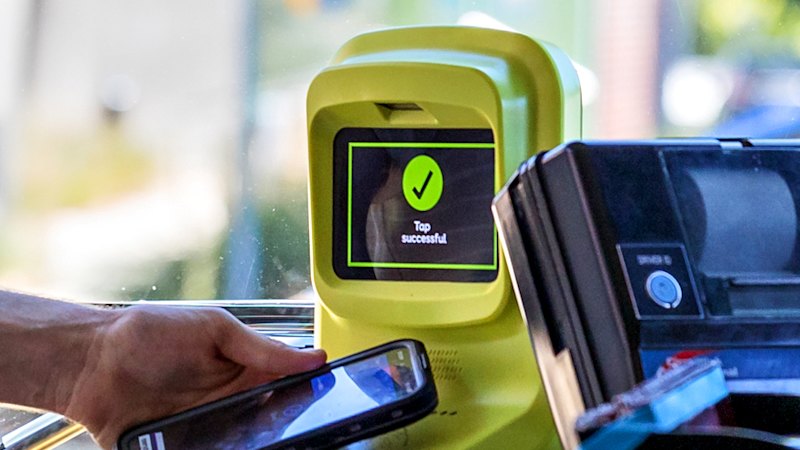
Victoria is spending more than any other state on cost-of-living relief, but some of the government’s biggest schemes are delivering more than twice the savings to high-income households as the state’s lowest earners, a new analysis has found.
New modelling from the Policy Institute of Australia estimates that while the top 20 per cent of households received more than $207 million in rebates from the state government’s vehicle registration discount, compared to $100 million claimed by the lowest-earning 20 per cent.
The government’s public transport initiatives, which made travel across Victoria free for two months before half-price fares were introduced for the remainder of the year, have similarly skewed towards higher-income earners – with the top 20 per cent of households receiving 2.2 times the financial benefit received by the bottom 20 per cent.
Victorian taxpayers are currently funding about $3.8 billion in cost-of-living concessions, which equates to $1335 per household – a figure higher than any other state or territory.
The spending amounts to 8.7 per cent of the state government’s own-source tax revenue – more than the $2.9 billion raised from gambling taxes, and more than a third of the revenue generated from stamp duty.
Report author and Policy Institute of Australia (PIA) principal economist Nicholas Tarrant said that while the government’s cost-of-living relief was well-intentioned, it was not well targeted.
“This report isn’t about spending less on those doing it tough, it’s about making sure support goes to those who need it most,” he said.
“Support is too often based on how much petrol or energy you use, or how much your home is worth. But this favours the well-off. If state governments want to help with cost-of-living pressures, they need to rethink the way they do it.”
Nationally, the institute estimates the top 40 per cent of households by income or wealth have received $3.6 billion in commonwealth and state concessions and cost-of-living support this year.
It found a retiree who owned a $3 million home outright, had $500,000 in superannuation and one car could qualify for almost $2800 a year in concessions. By comparison a single mother who rented, relied on public transport and had few assets could receive about $1500.
The report also took aim at Victoria’s energy concessions, which are restricted to eligible concession card holders but are uncapped and calculated as a percentage of the total bill amount. The institute found that under the current model, concession card holders who can afford to run heating throughout winter and air conditioning during summer could see more than $2000 wiped from their energy bills, while another household using less energy would receive a smaller subsidy.
Tarrant said cost-of-living remained the number one concern for Australians.
“With Victoria and NSW heading to elections, there is a temptation to spend more. But the better response would be to fix how the current support is delivered.”
Instead of their patchwork of rebates and concessions, the PIA is calling on state governments to introduce one single, means-targeted allowance designed to help lower income households and paid as a lump sum rather than through discounts and rebates.
Under reforms proposed by the institute, governments could redirect billions of dollars in existing concessions to those most in need, potentially providing eligible households with an average payment of $2200 a year.
The institute estimates better targeting payments by using Services Australia data, state and territory governments could collectively save up to $1.3 billion a year.
Treasurer Colin Brooks said the government responded to rising fuel prices with measures that have helped ease the pressure on Victorian households.
“Labor makes no apology for the scale of cost-of-living support Victorians have received – we will always back Victorians when they are doing it tough,” Brooks said.
“We can afford it because it’s one-off cost-of-living help right now, while we are delivering a surplus.”
Similar issues with rebates and discounts were identified across Australia. In NSW, the wealthiest 20 per cent of income earners received more than nine times as much from toll road rebates as the lowest-income earners.
In Queensland, the highest income households received 1.3 times as much from vouchers for children’s sporting activity as the lowest income households.
By comparison, South Australia spends the least on cost-of-living support, but offers a single targeted support payment as a lump sum.
Start the day with a summary of the day’s most important and interesting stories, analysis and insights. Sign up for our Morning Edition newsletter.
You have reached your maximum number of saved items.
Remove items from your saved list to add more.
Citations · 2 reports from 2 outlets
Tap a citation to read it above, right here on T.A.M.
Why high-earners are benefiting twice as much from Victoria’s cost-of-living schemes
From free transport to registration rebates, the state government’s attempt to help Victorians is disproportionately benefiting those who need it the least.
11 hours ago · Annika SmethurstWhy high-earners are benefiting twice as much from Victoria’s cost-of-living schemes
From free transport to registration rebates, the state government’s attempt to help Victorians is disproportionately benefiting those who need it the least.
11 hours ago · Annika Smethurst