
NSW Labor MP Sarah Kaine to introduce private members bill
Labor MP Sarah Kaine is planning to introduce a private members bill to the party caucus. This move is described as a rare act of internal dissent within the Minns government.
First reported 12 hours ago · latest update 12 hours ago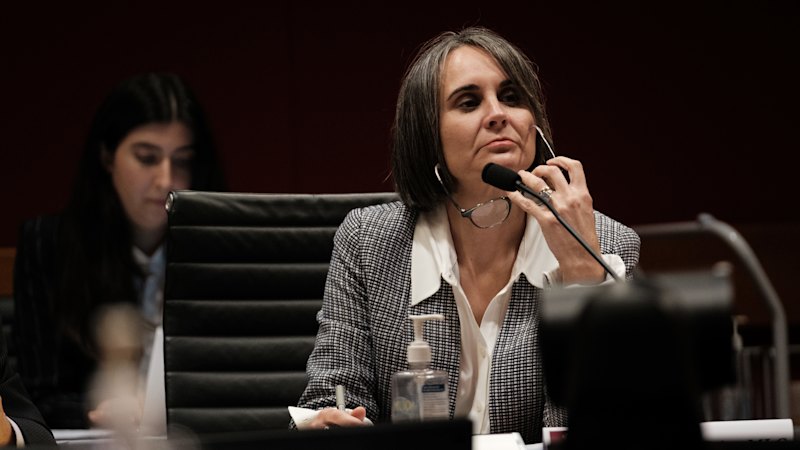
State Labor MPs are bracing for a tense confrontation with their own government over the failure to pass new anti-slavery laws, taking the highly unusual step of seeking to present a backbench bill to the party’s caucus and force Premier Chris Minns’ hand before the next election.
In a rare act of rebellion, upper house MP Sarah Kaine will take a private members’ bill to caucus when parliament resumes on Tuesday. Modelled on legislation drafted by the state’s anti-slavery commissioner, the bill would introduce a new labour hire licensing scheme and regulator in NSW.
Documents obtained by The Sydney Morning Herald show that late on Monday afternoon, Kaine circulated a draft bill and briefing to her caucus colleagues. The decision was a response to growing frustration within the Labor caucus at the government’s failure to move on the issue.
Kaine said it was “inexcusable” the government had yet to pass labour hire licensing laws, labelling it a moral imperative to “clean up what has become, in some cases, a ruthless supply chain for human labour”.
“It is inexcusable that we have not done more,” she said. “This is a bread and butter issue for the Labor Party. We should be doing it. We should have done it. Let’s get on and do it now.”
Lodging a private members’ bill from within government is unconventional, and has not occurred during this term of government. Usually, ministers present legislation for assent from the caucus.
But there have been growing calls for the Minns government to crack down on rogue labour hire operators from unions and anti-slavery advocates after evidence of significant exploitation of migrant workers in the state.
The brief circulated by Kaine on Monday noted Labor’s most recent state conference in July endorsed an Australian Workers Union motion committing the party to establishing a licensing scheme, as did the party’s 2024 platform.
On Wednesday, Mark Morey, the secretary of Unions NSW and a candidate for Labor at the next election, will appear on a panel in parliament organised by Greens MP Jenny Leong urging the government to introduce a licensing scheme, and a slew of recent expert reports have also highlighted NSW as a laggard on labour hire reforms.
In July, the Labor-aligned think tank the McKell Institute released a report which found that the absence of a licensing scheme in NSW – compared to Victoria and Queensland – had created a “magnetic pull for labour hire operators seeking to exploit seasonal workers for profit”. McKell estimated that 63 businesses operating in NSW have had their labour hire licences cancelled in either Victoria or Queensland.
However, that figure may be higher. Steve Dargavel, Victoria’s labour hire licensing commissioner, recently told a parliamentary inquiry into modern slavery that 623 NSW-based labour hire providers have had their licences cancelled or refused in that state.
A submission to the same parliamentary inquiry by NSW anti-slavey commissioner James Cockayne alleged a system of exploitation overseen by labour hire companies was exposing migrant workers to “modern slavery harms”.
Despite that, the government has resisted introducing a licensing scheme, instead insisting that it wants to sign up to a future national scheme. However, negotiations over a national scheme collapsed last year after opposition from some states.
At a budget estimates hearing this month, Industrial Relations Minister Sophie Cotsis said the government was “considering a number of options” and would “have more to say”. She pointed to reforms including work on a code of practice for labour hire companies and increased compliance by Safework NSW.
“In terms of making sure that we get rid of these dodgy operators … industry, unions, everybody is calling that we need to do something. It just can’t be one size fits all,” she said.
Kaine will face resistance from the government over the bill. In a statement, a government spokesperson said cabinet had “settled the government’s position on this matter and would not be proceeding with Ms Kaine’s bill”.
However, Kaine said evidence of exploitation was significant enough that the government should act.
“The evidence is mounting, the warnings have been given, and the stories we have heard are heartbreaking,” she said.
“The time for discussion alone has passed. We need practical action to protect workers and drive dodgy labour hire firms out of our state.”
While Kaine will move the bill, the former industrial relations academic who previously served as a senior IR official in the NSW public service, is not alone and will have support in caucus.
Some Labor backbenchers in NSW have long been frustrated by the perception of what has previously been described as a “command-and-control” structure in the government which has led to caucus meetings with little debate or dissent. In 2024, one MP told the Herald caucus was “where ideas go to die”.
Start the day with a summary of the day’s most important and interesting stories, analysis and insights. Sign up for our Morning Edition newsletter.
You have reached your maximum number of saved items.
Remove items from your saved list to add more.
Citations · 2 reports from 2 outlets
Tap a citation to read it above, right here on T.A.M.
Why this Labor MP is taking a stand against her own party
In a rare act of rebellion within the Minns government’s tightly controlled partyroom, upper house MP Sarah Kaine will take a private members bill to caucus on Tuesday.
12 hours ago · Michael McGowanWhy this Labor MP is taking a stand against her own party
In a rare act of rebellion within the Minns government’s tightly controlled partyroom, upper house MP Sarah Kaine will take a private members bill to caucus on Tuesday.
12 hours ago · Michael McGowan