
Exhibition explores Jim Henson’s legacy and the evolution of puppetry art
The Sydney Morning Herald and The Age describe a new exhibition that traces Jim Henson’s impact on puppetry, highlighting how the medium has progressed from childhood magic to sophisticated artistic practice. Both outlets present the same overview of the show without conflicting details.
First reported 6 hours ago · latest update 6 hours ago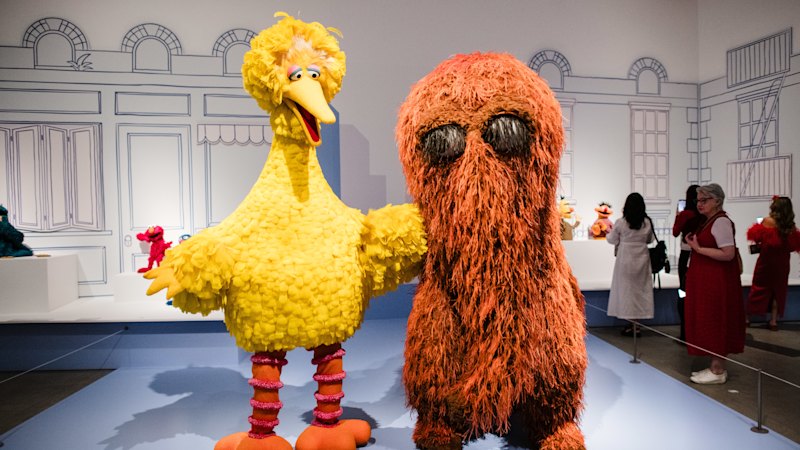
You have reached your maximum number of saved items.
Remove items from your saved list to add more.
The celebrities of our childhood weren’t generally made of flesh and bone; they were built from felt, foam, rubber and googly-eyes.
We believed it was magic that brought furry, kooky creatures like Kermit the Frog and Elmo to life, and to a certain extent, we were right. But that magic doesn’t necessarily come from the puppet itself. It comes from those underneath it.
“You’ve got great performers projecting their personality through the puppet,” says Dave Barclay, a British puppeteer who has worked on Yoda, Jabba the Hutt and The Dark Crystal’s Aughra. “Frank Oz, for example, had Miss Piggy, Fozzie Bear – he’s got so many different Muppet characters that are all just small facets of him. There’s a truth to all parts of them.”
Despite working with one of the oldest theatrical artforms, puppeteers remain a pop-cultural force. They bring magic to screens through shows like Seth Rogen and Evan Goldberg’s Muppet Show revival, which recently won four Creative Arts Emmy Awards. Off-screen, they’ve rocked out as The Muppets at the FIFA World Cup final half-time show.
One puppeteer channelled this magic like no one before: Jim Henson. From The Dark Crystal to Fraggle Rock, Henson revolutionised the use of puppets, transforming them into bona fide celebrities.
Now, nearly 70 years after he and his wife formed The Jim Henson Company, his work continues to have an indelible impact on screen puppetry. This legacy is explored in Make, Believe, Magic: The Worlds of the Jim Henson Company, a new exhibition at the Queensland Art Gallery and Gallery of Modern Art (QAGOMA).
Walking through the exhibition is like stepping inside Henson’s bold, bright and endlessly active imagination. More than 180 handcrafted puppets and animatronic creatures greet you, from the Cookie Monster and Gobo Fraggle to Skeksis and a banjo-playing Kermit. Mr Snuffleupagus proudly towers over everyone in his Australian debut. Their scale is slightly overwhelming, but nothing compared to the warm, fuzzy nostalgia coursing through your body. Here stand our childhood celebrities in the flesh – or felt, rather.
Between the puppets lie iconic props, costumes (including David Bowie’s from Labyrinth) and original drawings, all honouring Henson, who died in 1990, and his lasting legacy. Most impressive is the Great Hall set from Fraggle Rock: Back to the Rock, the entirety of which was shipped from Canada in a world-first. You’re completely immersed in the subterranean world, only made aware of its fabricated nature when passing puppeteer armholes.
“As [Henson’s] daughter, I have to take a step back and remember that before he created The Muppets – puppets didn’t look like that at all,” says Lisa Henson, chief executive of The Jim Henson Company. “In a sense, he created the whole idea of what you think of as a puppet – googly-eyed, colourful, fleecy creatures.”
He didn’t just revolutionise puppet aesthetics, says the exhibition’s curator Amanda Slack-Smith. He transformed the art of puppetry itself.
“Before Jim Henson, the idea of being a puppeteer for film and television as a profession wasn’t really a thing,” she says. “You started seeing puppets in advertising and on talk shows, like Rowlf on The Jimmy Dean Show. It was all because of Henson’s looser style – he was such a force.”
Far from simple glove puppets such as Punch and Judy, or wooden and papier-mache TV puppets, Henson’s creations were more experimental and flexible. Kermit, for instance, was initially made from a winter coat belonging to Henson’s mother, which allowed puppeteers to contort the frog’s face to great comedic effect.
“Henson’s puppetry takes you into this kind of magical realism. You’re in this world where you can talk about the mundane, but in a magical way. That’s mesmerising to any age group,” Slack-Smith says.
Henson’s collaborative spirit made puppetry what is it today, inspiring other seminal puppeteers such as Frank Oz, Kevin Clash, and his son, Brian Henson. His Creature Shop has helped bring life to external projects such as Guillermo del Toro’s Pinocchio, Five Nights at Freddy’s and The Darjeeling Limited. Some of these titles will be explored in Lifelike, an ACMI exhibition opening in November that celebrates the magic of movie puppetry, much of which wouldn’t exist without Henson.
On set, Henson pioneered the use of television monitors, which allowed puppeteers to watch and perfect their puppets from under or behind sets. Many of these sets were elevated, Barclay notes, sometimes by as much as six feet to ensure the puppeteers could move more freely.
These developments were life-changing for puppeteers who were used to working blind and crouching for hours. But that’s not to say puppetry is no longer strenuous.
“You have to treat yourself like an athlete who uses their entire body, but unseen,” says John Tartaglia, an American puppeteer who has performed as Gobo Fraggle and Sprocket the Dog. “You’re utilising your upper body and holding your hand over your head all day long in uncomfortable positions ... It’s a very physical job, and you’re using your body in a way that it wasn’t really created for.”
If you’re comfortable while performing, you’re probably not doing it right, Tartaglia says. Sprocket the Dog, for instance, weighs somewhere between 4.5 to 6 kilograms, which may not sound like a lot, but certainly feels like it when you’ve held it over your head all day.
Barclay had similar experiences while working as chief puppeteer for Star Wars′ Jabba the Hutt. Six people operated the slug-like creature, three of whom were crammed inside the puppet from 8.30am to 8pm.
“In Little Shop of Horrors, we were using these huge levers to control Audrey II’s lips. I think nearly everyone tore ligaments and muscles trying to get it absolutely perfect. We had a full-time physiotherapist on-set,” Barclay says.
This strenuousness is partially why puppetry remains beloved. Knowing that someone is contorting their body, pushing themselves to their limits, makes it even more enticing – like watching an Olympic athlete finish a race.
Beyond this, puppetry creates spaces of belonging. This is especially true of Henson’s work, Tartaglia notes, which involved fully realised worlds and “smorgasbord” families.
“All of us, in some ways, feel different ... But Henson’s work, even to this day, makes you feel like you belong,” he says. “No one is too weird to belong to the Muppet gang. It’s just this wonderful, welcoming, warm, nostalgic feeling. When I watch Labyrinth, I’m not just watching a movie, I’m visiting my friends. There’s something magical about that.”
Puppetry has evolved significantly since The Jim Henson Company was formed in the 1950s. From advanced animatronics to the use of CGI and AI, elements of puppetry have become more efficient and precise. During the filming of Coyote vs Acme, for example, Barclay was able to stand in as Wile E. Coyote using a puppet to ensure the actors maintained a perfect eye-line. He was then simply overlaid afterwards. Henson welcomed these kinds of innovations, Barclay says, though always to enhance rather than replace.
Puppetry therefore remains ubiquitous on screen, even if we don’t necessarily see it. However, Barclay doubts there will ever be as much puppetry work as there was in Henson’s day. That said, he’s noticed a growing appreciation for practical effects, as seen with recent films such as Project Hail Mary, which primarily used practical puppets to bring alien character Rocky to life.
“I often chat with people at comic conventions, and nearly all of them prefer the actual physical puppets on-set,” he says. “Most people say there’s more soul, more life in them … There’s something deeply human about puppets.”
Tartaglia agrees, adding that the trick moving forward will be to “maintain the humanity in puppetry”, the soul that helps audiences feel as if they belong. After all, that’s where the magic truly comes from.
Make, Believe, Magic: The Worlds of the Jim Henson Company will run at QAGOMA until April 18, 2027.
Dave Barclay will be a guest of ACMI for Lifelike, which opens on November 20. Dave will also be taking part in a dedicated talk around his craft at ACMI on November 18.
The author travelled to Brisbane as a guest of QAGOMA.
Find out the next TV, streaming series and movies to add to your must-sees. Get The Watchlist delivered every Thursday.
Citations · 2 reports from 2 outlets
Tap a citation to read it above, right here on T.A.M.
Only heartstrings attached: Jim Henson and the evolving magic of puppetry
As children, we believed it was magic that brought puppets to life on screen. A new exhibition proves we were onto something.
6 hours ago · Nell GeraetsOnly heartstrings attached: Jim Henson and the evolving magic of puppetry
As children, we believed it was magic that brought puppets to life on screen. A new exhibition proves we were onto something.
6 hours ago · Nell Geraets