
Renewable transmission line in Victoria paused until after state election
The Victorian government led by Premier Jacinta Carroll has halted land acquisition for a controversial renewable transmission line that runs through marginal electorates in Melbourne and western Victoria. Both the Sydney Morning Herald and The Age report the pause will remain in place until after the upcoming election, with no reported differences.
First reported 1 day ago · latest update 1 day ago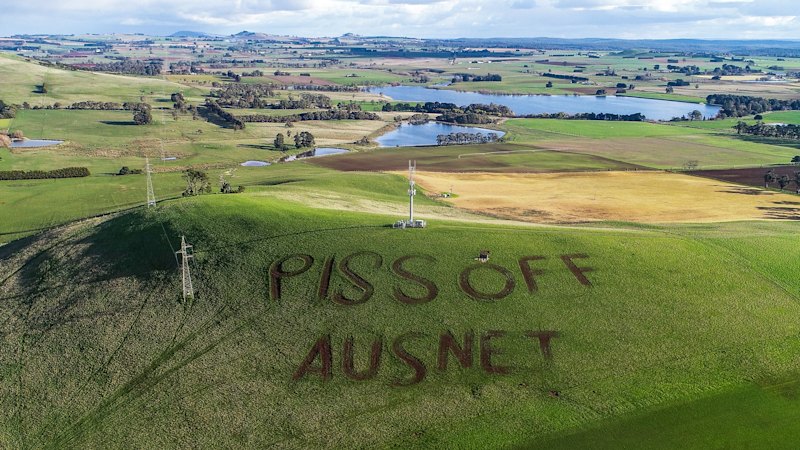
A contentious green power transmission line in the state’s west is in limbo, as Premier Ben Carroll promises to re-cost the project and delay land acquisition until next year.
Opposition to transmission projects such as the Western Renewables Link (WRL), a high-voltage power line taking electricity from regional Bulgana to Sydenham at Melbourne’s suburban fringe, is shaping up as a key election issue.
In a statement on Tuesday, Carroll said he would commission an independent assessment of WRL’s costs to ensure it delivered value for money for Victorians, who ultimately pay for transmission projects through their electricity bills.
The report is due by the end of the year and will be made public. Compulsory acquisitions for properties affected by the route will be paused while this process is under way.
In his statement, Carroll framed the announcement around cost of living.
“This project was planned almost 10 years ago and Victorian consumers deserve updated, transparent costings,” he said.
“If we can save money on the costs of building, we can help reduce the cost of living.”
The estimated $1.5 billion project received a greenlight from the planning minister’s environmental effects process this week, which allows it to proceed towards another set of approvals, including a federal environmental assessment.
The project is being delivered by Ausnet and has been opposed by landowners, particularly farmers, in the state’s west, who have complained about the consultation process and the selection of the route through their area and believe the towers will hamper their farming operations.
Many landowners have received compensation letters ranging from hundreds of thousands of dollars to multimillion-dollar compensation offers, but community campaigns against the project have persisted.
The 190-kilometre project will better connect renewable energy generators in the state’s west to Melbourne where demand is greatest. It includes towers as high as 85 metres.
It also runs through a swag of important Labor seats for the state election, including Melton at Melbourne’s fringe and Ripon and Eureka, which include parts of Ballarat.
Carroll’s statement acknowledged the three MPs in these seats, Steve McGhie, Martha Haylett, and Michaela Settle, and said they had been advocating on behalf of locals on the issues.
“They have made it crystal clear to me that locals want transparency on this project,” he said.
“I’ve heard that message – and this is my plan.”
Transmission lines are shaping as an election issue after the Coalition and One Nation both vowed to scrap VNI West, another proposed line that would run from the NSW border and connect to the WRL and has similarly been the subject of community campaigns.
Opposition Leader Jess Wilson had initially proposed to pause and review VNI West but boosted her pledge to a cancellation after One Nation made its opposition to renewable energy projects a key part of its electoral strategy in the regions.
The Coalition is currently pledging to pause and review WRL, rather than cancel it.
Opposition energy spokesman David Davis said the government’s handling of the project and the energy transition was chaotic, creating uncertainty for businesses and households.
He said the project was now listed in an annual report from Brookfield Infrastructure Income Fund as a $4 billion project, well above other public estimates, and it was still an open question how much customers would have to pay through their bills.
In August, Davis wrote to the premier asking the government not to proceed with the environmental effects statement, approve acquisition powers or take any other steps to facilitate the project until after the election.
“These decisions should not be made in the final months of a government’s term, particularly where they could deliberately limit the choices available to a government elected in November,” he said at the time.
“Having visited and listened to many residents and landholders who will be impacted, it is clear WRL has not secured the social licence required for a project of this scale.”
Alison Reeve, Energy and Climate Change Program director at Grattan Institute, said it made sense to conduct a “short, sharp” review of the project’s costs, which had likely increased.
She added that the review should examine the cost of not proceeding with the WRL and the impact of any alternative projects.
“I think it's quite reasonable because the thing is once the cost is locked in… then we're stuck with paying for it as consumers. So it does make sense to get it right.”
Monash University associate professor and renewables expert Roger Dargaville said the review was prudent, but the program remained important to increase Victoria’s transmission capacity and open up opportunities for new solar and wind farms.
“No one wants a 500 kV [kilovolt] power line going through their property, which is understandable… [but] this kind of infrastructure is critical for supporting the economy.”
Reeve said some property owners had become so entrenched in their opposition to transmission lines that it appeared likely the government would need to compulsorily acquire parts of their land.
Victorian Farmers Federation president Ryan Milgate said Carroll’s move should be part of a broader rethink about transmission projects.
“Farmers have been saying for years that the WRL needs greater scrutiny. The government has now acknowledged that by pausing compulsory acquisition and ordering an independent cost assessment,” he said.
The move to settle community concerns about transmission comes as research by Energy Networks Australia show many people they don’t realise how far the nation is through the energy transition.
The group says Australia is about halfway in terms of the infrastructure required, but their own polling shows 61 per cent of Australians think the transition has only just begun or is in early stages.
About 83 per cent of respondents said the ageing grid needed to be updated to keep the power on and 65 per cent believed renewables were the cheapest way to do so.
Energy Networks Australia chief executive Dominique van den Berg said the researched showed now was not the time to back away from the transition.
“Australia is halfway there, but most people think we have barely started. That perception gap is enormous, and it is distorting the national debate,” she said.
“Once Australians see the progress, 76 per cent say finish the job. They know the grid is ageing, they know doing nothing will cost more, and they want the rebuild to deliver the cheapest electricity possible over the long term.”
Start the day with a summary of the day’s most important and interesting stories, analysis and insights. Sign up for our Morning Edition newsletter.
You have reached your maximum number of saved items.
Remove items from your saved list to add more.
Citations · 2 reports from 2 outlets
Tap a citation to read it above, right here on T.A.M.
Renewable transmission line through marginal seats paused until after election
A contentious transmission line in Melbourne and Victoria’s west will be reviewed by the Carroll government, with land acquisition paused until next year.
1 day ago · Kieran RooneyRenewable transmission line through marginal seats paused until after election
A contentious transmission line in Melbourne and Victoria’s west will be reviewed by the Carroll government, with land acquisition paused until next year.
1 day ago · Kieran Rooney