
Property price slump threatens state budget with billion‑dollar shortfall
Both the Sydney Morning Herald and The Age report that a 4% fall in property values is now expected, reversing earlier forecasts of a 3.9% rise. The decline would reduce stamp duty revenue, creating a significant deficit for the state budget.
First reported 56 minutes ago · latest update 56 minutes ago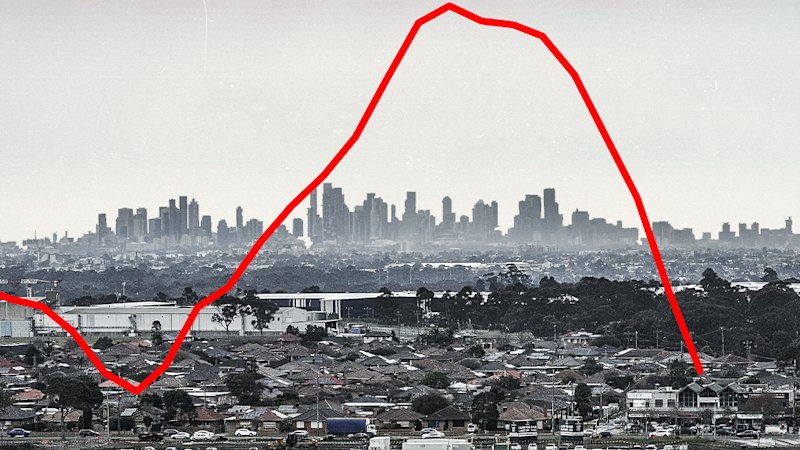
Falling house prices could wipe as much as $1.8 billion from the Victorian budget this year alone as banks and real estate experts predict a downturn worse than Treasury’s forecast in May.
The hit to stamp duty, the state government’s biggest source of tax revenue along with payroll tax, calls into question Labor’s promised $1 billion surplus in a budget already struggling under the weight of a debt bill headed towards $200 billion.
When the government handed down its budget in May, it forecast that prices would increase by 3.9 per cent in the year to June 2027.
This represented a slower growth rate compared with previous years, which Treasury expected would pick up later in the decade as interest rates were cut, helping the property market recover out to 2030.
But since these predictions were published, leading forecasters have warned property prices in Melbourne for both homes and apartments are falling by an average of 4 per cent.
Domain’s forecast report for 2026-27 predicts combined dwelling prices will fall by 4.4 per cent, Westpac is expecting a decline of 4 per cent and Commonwealth Bank, the nation’s biggest lender, now expects Melbourne house prices to decline by 10 per cent in 2026 with the falls to continue until April next year.
A decline of 4 per cent would represent an almost 8 per cent difference to the expectations outlined in the May state budget.
More pessimistic forecasts have caused alarm within other east-coast state governments which rely on stamp duty and land tax as key revenue streams and which are managing historically high levels of debt.
The Carroll government declined to say whether they had already downgraded their expected tax take because of the property market slump, or to provide revised figures for 2026-27.
However, Treasury bureaucrats provide their own modelling on the financial consequences if their economic modelling does not unfold as planned, in a section of the budget papers known as the sensitivity analysis.
In May, this predicted that if the property market performed 1 percentage point lower than forecasts, the government would lose $228 million in revenue.
An 8 per cent shortfall in forecasts would theoretically equate to a revenue hit of up to $1.8 billion this financial year.
Any significant downturn in sales volumes, which are expected alongside price decreases, would also cost $100 million of revenue for every 1 percentage point below expectations, the analysis found.
A government spokesperson argued the budget had accounted for shifts in the property market.
“Our budget forecasts factored in a cooling in the housing market, which is occurring across Australia and [is] expected with elevated interest rates, and we are closely monitoring the property market and monetary policy developments,” they said.
“Victoria continues to lead the nation in home building and home approvals – building more than 35,000 additional homes than New South Wales.”
But Opposition Leader Jess Wilson said the government’s overreliance on property taxes was coming home to roost.
“With more than 30 new or increased property taxes and charges under Labor, Victoria’s parlous finances are badly exposed to any property downturn,” she said.
Property industry leaders have attributed the significant downturn to elevated interest rates and the Albanese government’s decision to slash capital-gains tax and negative-gearing benefits that have been incentives for investors.
Melbourne’s housing market was already softening before the federal government’s reforms, and median prices had been growing more slowly than in other capital cities. Economists believe this has been driven by Victoria’s own investor taxes but have warned the same charges are also hampering new supply.
In a demonstration of how market fluctuations can impact revenue, Treasury in May said higher interest rates had already prompted them to downgrade their property-tax revenue forecasts by an average of $598 million per year from 2026-27 to 2028-29.
RMIT University public policy expert Professor David Hayward said he anticipated this downgrade would rise to at least $1 billion as the market had cooled considerably since then.
He said property prices reflected just one aspect of the market forecast in the budget that could deliver a hit to government revenue if they performed below expectations, with higher interest rates and lower sales volumes capable of wiping millions from budget coffers.
When these factors all played out at the same time, the combined effect could significantly alter the state’s bottom line, Hayward said.
The Victorian government is heavily reliant on property taxes as one of its biggest sources of income outside federal government grants, a trend which has drawn the ire of business groups.
The tax take this financial year is forecast to be $43.18 billion. Of this, $17.7 billion is forecast to come from stamp duty and land taxes, which are affected by rises and falls in the property market.
In 2026-27, stamp duty alone was forecast to bring in $10 billion, down from $10.6 billion the year before, before rebounding and growing by average of 7.4 per cent per year out to 2030.
The budget papers note this reflects a “cyclical decline in the property market”.
Land tax receipts have also been downgraded by hundreds of millions over the forward estimates.
These revised estimates were banking on a house-price rebound in 2026-27, when it expects a growth of 3.9 per cent and an average of 5 per cent a year over the forward estimates.
Queensland Treasurer David Janetzki last week said he had revised down stamp duty revenue for the Queensland budget by $345 million.
The state’s credit rating was on Friday downgraded for the first time in 17 years, to AA, as it warned of larger cash deficits from Olympic infrastructure spending, persistent inflation and a softening property market.
“Property tax changes by the Australian government in its May budget will also hit Queensland’s stamp duties,” ratings agency S&P said in a statement on Friday.
Start the day with a summary of the day’s most important and interesting stories, analysis and insights. Sign up for our Morning Edition newsletter.
You have reached your maximum number of saved items.
Remove items from your saved list to add more.
Citations · 2 reports from 2 outlets
Tap a citation to read it above, right here on T.A.M.
Property price slump creates a billion-dollar problem for the state budget
The government forecast property prices would rise by 3.9 per cent this year. Experts now expect a 4 per cent fall, which would deliver a major hit to stamp duty revenue.
56 minutes ago · Kieran RooneyProperty price slump creates a billion-dollar problem for the state budget
The government forecast property prices would rise by 3.9 per cent this year. Experts now expect a 4 per cent fall, which would deliver a major hit to stamp duty revenue.
56 minutes ago · Kieran Rooney