
Is a blood test for microplastics too good to be true?
We inhale, eat and drink microplastics. So why do experts say that testing for them is ‘useless’?
First reported 1 hour ago · latest update 1 hour ago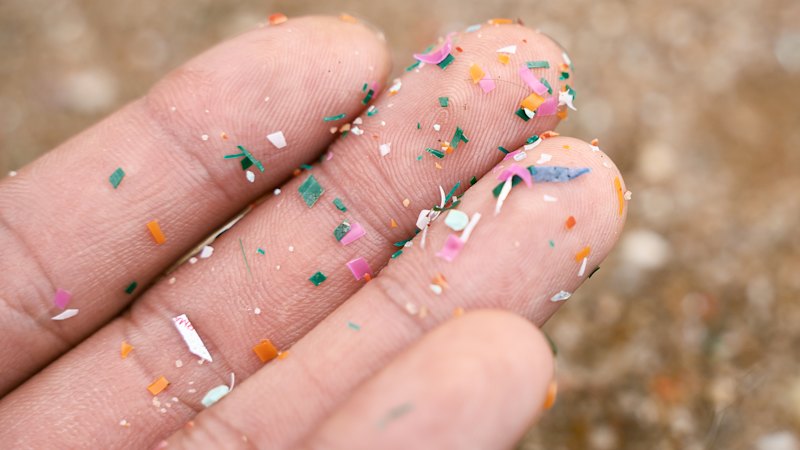
Around the world each year, an estimated 20 billion kilograms of plastic ends up littering the environment. Inevitably, some of that waste breaks down into tiny particles called microplastics, which we inhale, eat or drink.
Last year, American longevity influencer Bryan Johnson announced his company, Blueprint, had devised the “world’s first” at-home microplastics blood-testing kit for US$135.
“The average male testicle has 8.2milligrams of microplastics and the average brain has more than 50 per cent more microplastics than 10 years ago,” said the 49-year-old on YouTube to an angsty soundtrack of violins. “The problem is bad, and it’s getting worse.”
While Johnson’s company may have been the first, multiple other companies now offer at-home blood tests, including in Australia, where they can cost up to $750.
One small, new study found that people who had suffered a serious heart attack had higher levels of micro- and nano-plastics in their blood; another study published last week found that people with lung cancer were also more likely to have high levels of microplastics in their lungs; and other research has linked microplastics with reproductive, digestive and respiratory issues, with a suggested link to colon and lung cancer.
It is understandable that people who feel concerned for their wellbeing might be interested in finding out the levels of microplastics in their bodies, so they can understand their risk factors and try to mitigate them.
As the saying goes: “You can’t improve what you don’t measure.”
Johnson (over)shared an update of his own apparent improvements in May. “I had 165 microplastic particles in my semen just 18 months ago,” he wrote on LinkedIn, attributing the change to regular sauna sessions, a reverse osmosis water filter and removing plastics from his home. “Now, I have zero.”
A promising result – except there are three key issues with testing for microplastics: the tests themselves are flawed; lipids in the blood can be mistaken for microplastics; and even if we can accurately measure microplastics in our bodies, there is no consensus about their impact.
According to Oliver Jones, a professor of analytical chemistry at RMIT, these tests and the biomarkers they are testing are not validated, meaning the data they give you is “useless”.
“The information you would potentially be getting is inaccurate, so there is nothing you can do with it. It’s meaningless,” Jones says. “No knowledge is no power.”
Measuring microplastics in our bodies is further complicated by the fact that microplastics look the same as fat compounds in the blood.
This can lead to false positives, says Mark Green, an associate professor in reproductive biology at the University of Melbourne.
“It is very, very hard to measure a small piece of plastic, which is made up of carbon and hydrogen, from a human matrix, which is also made up of carbon and hydrogen,” says Professor Kevin Thomas, director of the Queensland Alliance for Environmental Health Sciences at The University of Queensland.
As a result, researchers still haven’t definitively proven microplastics make it into our bloodstream.
“I find it difficult to understand how you could do an at-home test when we struggle with some of the most advanced instruments available to make the same measurements,” Thomas says.
Of the study suggesting people who had heart attacks also had higher levels of plastic, he said: “It is just as plausible that endogenous lipids in the blood are being misidentified as plastics. The headline could just as well read: ‘Patients who suffer heart attacks have more lipids in their blood’.”
This brings us to the third issue: even if it was possible to measure microplastics in our blood and our bodies, it doesn’t prove causation.
For instance, the authors of the study linking microplastics with lung cancer acknowledged that diseased, inflamed lungs may be more likely to trap microplastics when we breathe them in.
Studies connecting microplastics to health outcomes are interesting and worthy of further investigation, says Green.
As microplastics are a physical particle, foreign to our bodies, they are likely to have an effect at some point and increase our inflammation markers at very least.
“As to whether they cause specific diseases, that’s a different thing, and we need the methodology to be more accurate before we can ask those questions,” says Green.
If researchers with access to the best equipment can’t confidently distinguish between fats and microplastics or quantify the effects, what value is an invalidated expensive finger-prick test?
Additionally, Jones questions what a person is meant to do with any results they do get. Unsurprisingly, some companies claim they can remove microplastics from your blood for a fee too. But there’s currently no proven way to completely remove microplastics from your blood, Jones says.
He adds: “We have all these people selling microplastics tests or microplastic detoxes online and none of them remove anything except your money.”
Start by maximising behaviours that support health such as getting enough exercise, a balanced diet, enough sleep and not drinking or smoking too much.
We can also minimise our exposure to plastics. “There’s a lot we can do to reduce our exposure,” says Green. “And we can do that without blood tests.”
Where possible, don’t drink from plastic bottles, or store or heat food in plastic containers. Swap plastic cutting boards, utensils and containers for wood, glass or stainless steel; replace non-stick pans with stainless steel or cast iron; use a water filter; ditch cling wrap and single-use plastics; and wear less synthetic clothing.
“The main one is to de-plastify your kitchen,” says Thomas.
“The other one is regular vacuuming to keep your dust load in your house down. It’s not just the plastics that are there, but the chemicals associated with plastics. Keeping the dust load down has been shown to reduce your exposure to those chemicals as well.”
Make the most of your health, relationships, fitness and nutrition with our Live Well newsletter. Get it in your inbox every Monday.
You have reached your maximum number of saved items.
Remove items from your saved list to add more.
Citations · 2 reports from 2 outlets
Tap a citation to read it above, right here on T.A.M.
Is a blood test for microplastics too good to be true?
We inhale, eat and drink microplastics. So why do experts say that testing for them is ‘useless’?
1 hour ago · Sarah BerryIs a blood test for microplastics too good to be true?
We inhale, eat and drink microplastics. So why do experts say that testing for them is ‘useless’?
1 hour ago · Sarah Berry