
Zach Cregger discusses his work on Resident Evil project
Filmmaker Zach Cregger, known for his work on 'Barbarian' and 'Weapons', has shared insights into his experience working on the Resident Evil video game franchise. He described the process as challenging, characterizing the work as 'brutal'.
First reported 47 minutes ago · latest update 47 minutes ago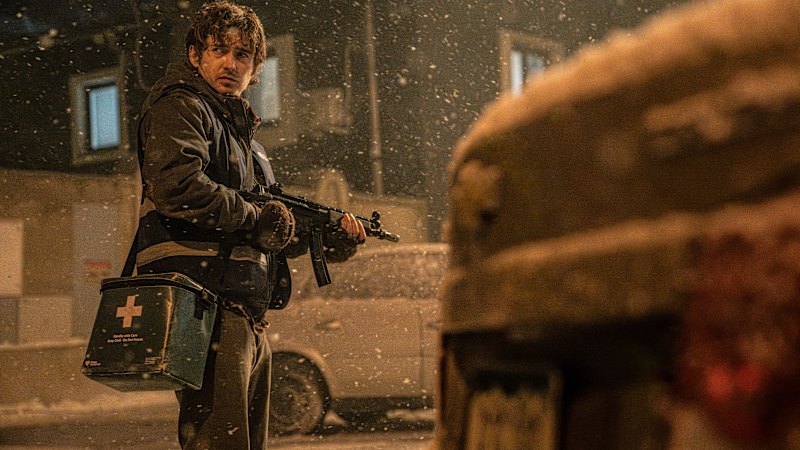
You have reached your maximum number of saved items.
Remove items from your saved list to add more.
There were seven Resident Evil films already when Zach Cregger, the acclaimed writer-director of Barbarian and Weapons, decided to stamp his mark on one of the most successful video games in history, but he hadn’t watched any of them. “I didn’t see them because they didn’t offer me anything that resembled the experience I loved when I played the games,” he says.
The games themselves, though, are a different matter. “I’ve played all of them, thousands of hours. I’ve played the shit out of those games – 20 years of research.”
So while it is officially film number eight in a franchise that has grossed almost $US1.3 billion ($1.8 billion) to date, Cregger’s Resident Evil is very much a reboot rather than a sequel.
“I made this movie to be a homage to the games. I know that when people who love the games the way I do see it they’re gonna recognise this was made by someone who loves the games,” he says.
What they won’t get, though, is a slavish retelling of the game’s narrative. “The Leon story, and all the stories, the games do such a great job of telling, I’m not going to do better than that.”
If some fans are annoyed at that, so be it. “If you’re going into this and your attitude is, ‘Well, if you’re not telling the story of the games, and I’m not watching Leon, the protagonist of the games, then I don’t want it’, well, I can’t really help you.”
It’s 30 years since the first Resident Evil was released by Japanese games publisher Capcom. Its storyline about a virus developed in the lab of the Umbrella Corporation and inadvertently unleashed upon the world breathed new life into the zombie genre, in games and beyond. With more than 213 million copies sold across its multiple versions, it is the ninth best-selling franchise, and top horror franchise, in the history of computer games.
German studio Constantin was quick to see the big screen potential, buying the rights to adapt the game in 1997. By 2002, the first movie, starring Milla Jovovich as Alice, a former employee of the Umbrella Corporation who becomes humanity’s best chance of defeating the T-virus, was out, to middling reviews and stellar box office returns. She starred in five sequels before an attempted reboot in 2021 with Resident Evil: Welcome to Raccoon City met with poor reviews and barely break-even business.
The idea of doing a fresh spin on Resident Evil came while Cregger was shooting his first feature, Barbarian, in Bulgaria in early 2021. “My producing partner, Roy Lee, said, ‘is there any video game you’d ever want to think about adapting?’ And I was like, ‘Resident Evil, but fat chance. That’s like the most valuable horror video game in the world’. And he was like, ‘you should think of a pitch’. And so I thought of this pitch, I went into Constantin, here’s what I want to do, it’s very simple, if you guys are in, great. If you’re not, no worries. And they were like, ‘Yeah, let’s go’.”
He wrote it with his friend Shay Hatten in a furious burst of creativity that also saw him developing Weapons and writing the screenplay for the film he hopes will be his next, the sci-fi horror Flood, all while editing Barbarian. And he approached the job thinking there was no way anyone would ever let him make it.
“At the time I was nobody, so I was thinking they’re going to give this to some very experienced hotshot,” says Cregger. “That gave me the ability to be like, ‘I don’t give a f---. I’ll just write my favourite Resident Evil movie, and they have to pay me because they already said they would’.
“Writing with that attitude of ‘who gives a shit’ is the best attitude you could ever have,” he says. “That’s my sweet spot ... and in the writing of it I fell in love with it, and so by the time I was done, I was like, ‘God, I really hope they let me direct this movie’.”
The plot is simple. A hapless courier called Bryan (Austin Abrams) accepts one last job before heading home to his girlfriend, with whom he’s had a fight. He agrees to deliver an organ from a hospital downtown to another in nearby Raccoon City. It means a drive late at night through remote roads in heavy snow, and he doesn’t have chains, but it pays double, so…
Soon enough this simple mission goes off the rails. Zombies, rabid animals, otherworldly forms intent on devouring him, broken-down cars and a city on fire. But Bryan trudges on, heading for the laboratory, where his package – not an organ after all, but a key ingredient for a vaccine – could be the difference between salvation and damnation well beyond the ruined city.
“It’s kind of like Frodo, who’s got to get all the way up to Mount Doom,” Cregger says of Bryan’s quest. “He’s got to get to the top floor of this hospital, and it just gets worse and worse and worse. He’s on foot, and he’s moving from gauntlet to gauntlet as he gets closer to his goal. That’s it in a nutshell.”
The plot may be straightforward enough, but bringing it to life wasn’t.
“This was so hard, dude, it was harder than I thought,” says Cregger of shooting the movie. He has an idea for a sequel, he says, “but I need to recover and lick my wounds and make another movie first and recalibrate. Never say never, but dude, this was brutal.”
“The whole movie takes place over the course of one snowy night,” he says. “I didn’t even think about what that would mean for my mental health. Setting my alarm for 3pm every day for months, and going to bed at 7am, living in the northern Czech Republic in the freezing snow in winter, it’s a lot.
“It was freezing cold and it was a trudge and I was sick the whole time and it was just hard, dude; it was really, really hard.”
Grim though the working conditions may have been, there’s plenty of humour in the film – that has, after all, become a hallmark of Cregger’s style. But he says that while he lets the jokes come as he’s writing, in the edit he tries to “cut all the comedy out as much as I can”.
The first obligation of a horror movie, he says, is to scare the audience. “You can make a horror movie that’s not funny, no problem, but you can’t make a horror movie that’s not scary.”
It’s become commonplace in the discourse around horror movies – especially those that get marked as “elevated”, whether by fans, marketers or the creators themselves – to see the genre as a way of exploring Big Themes, especially around grief or trauma. But Cregger isn’t keen on such a reading of his own work, despite admitting he wrote Weapons “as a direct reaction to the death of someone very close to me” (Trevor Moore, his friend and collaborator in the comedy troupe The Whitest Kids U Know, who died aged 41 after falling from a balcony at his home).
“That was me exploring grief through horror. However, I hope that’s not what people sense when they watch Weapons. Because I am fatigued with horror as an exploration of grief. It’s fine if that’s what’s in you when you’re writing it, but I’m not excited by the idea of watching a horror movie that’s like a meditation on grief.”
At any rate, Resident Evil is a long way from that. “If Weapons was me vomiting my emotion out, this movie is me playing with GI Joes. It’s just letting my child’s imagination go totally free, and then using all the abilities of my 40-whatever-year-old brain to realise that on screen. I was not trying to exorcise any emotional demons. I was just trying to play.”
Sure. But when did a zombie movie not have something to say about the world we live in?
“What I think is great about zombie movies is that they’re always parables for what’s going on with the living,” he concedes.
In this one, Cregger suggests you might turn your attention to the point of origin of the virus.
“It’s a f---ing tech company that thought they were doing something special, and they didn’t stop to consider that just because they could, doesn’t mean that they should. And I feel we’re all living in a world right now where that is the case, like cranked up to 11.
“There’s these people pumping this stuff out to all of us that is not making our lives any better, we all seem powerless to do anything about it, but they sure can do it, and so we just have to deal with it,” he continues. “If I was to zoom out and think about this zombie story in the greater scheme of how it applies to society, that would be my first stop, I suppose.”
Resident Evil is in cinemas from September 17.
Citations · 2 reports from 2 outlets
Tap a citation to read it above, right here on T.A.M.
‘This was brutal’: Resident Evil’s Zach Cregger on why his dream job was anything but
The creator of Barbarian and Weapons has turned his unique eye on one of the world’s most popular video games.
47 minutes ago · Karl Quinn‘This was brutal’: Resident Evil’s Zach Cregger on why his dream job was anything but
The creator of Barbarian and Weapons has turned his unique eye on one of the world’s most popular video games.
47 minutes ago · Karl Quinn