
Far-right surge in Catalonia impacts independence movement
A rise in support for far-right political factions in Catalonia is causing divisions within the independence movement. Voters are increasingly shifting their focus from secessionist goals toward concerns regarding migration.
First reported 1 day ago · latest update 1 day ago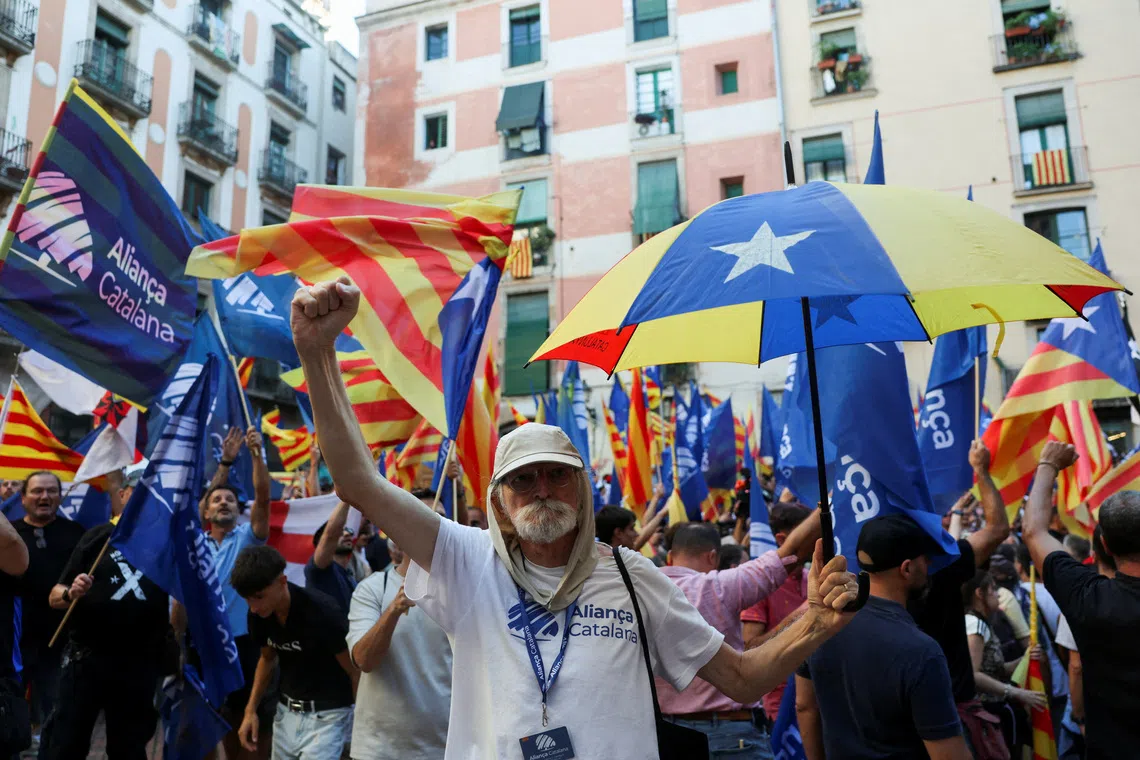
Nearly a decade after Catalonia’s unsuccessful attempt to secede from Spain, the region’s political landscape is undergoing a significant shift. While the movement for independence remains a central theme, voter priorities are increasingly turning toward concerns regarding immigration and public safety. This transition has facilitated the rise of the far-right separatist party Aliança Catalana, which has gained substantial traction among working- and middle-class voters in rural areas outside of Barcelona.
Aliança Catalana currently trails only the ruling Socialist Party in regional polling ahead of the 2028 elections. Although the party maintains a platform of seeking unilateral independence from Madrid, its primary political messaging is centered on stricter immigration controls and the enhancement of public security. This focus has allowed the party to carve out a distinct niche within the broader separatist movement.
The emergence of the party has introduced new tensions within the Catalan political sphere. During recent September 11 national day celebrations—an event traditionally dedicated to pro-independence unity—riot police were required to intervene to prevent violent confrontations between supporters of Aliança Catalana and left-wing separatist groups. The incident underscored the deepening ideological divide within the independence camp.
These internal frictions have complicated the prospects for future governance in the region. Traditional pro-independence parties have explicitly ruled out the possibility of forming governing coalitions with Aliança Catalana, creating a potential barrier to unseating the ruling Socialist Party.
In response to the growing influence of the far-right, other established separatist parties have begun to adjust their own platforms. Some have adopted more conservative stances, including lobbying the central government in Madrid for the authority to impose regional restrictions on immigration. These shifts reflect a broader recalibration of political priorities as parties attempt to address the changing concerns of the Catalan electorate.
Citations · 2 reports from 2 outlets
Tap a citation to read it above, right here on T.A.M.
Catalonia's far-right surge divides independence camp as migration fears grow - reuters.com
Catalonia's far-right surge divides independence camp as migration fears grow reuters.com
1 day agoCatalonia's far-right surge divides independence camp as migration fears grow
BARCELONA, Sept 23 - Almost a decade after Catalonia's failed independence bid, a growing number of voters are shifting their focus from secession to issues such as immigration and crime, fuelling the rise of the far-right separatist Aliança Catalana.
1 day ago