
She was 20 and unknown. What Julie Andrews did next made her a superstar
Julie Andrews launched Eliza Doolittle 70 years ago, but her memories of that time are as clear as ever.
First reported 1 hour ago · latest update 1 hour ago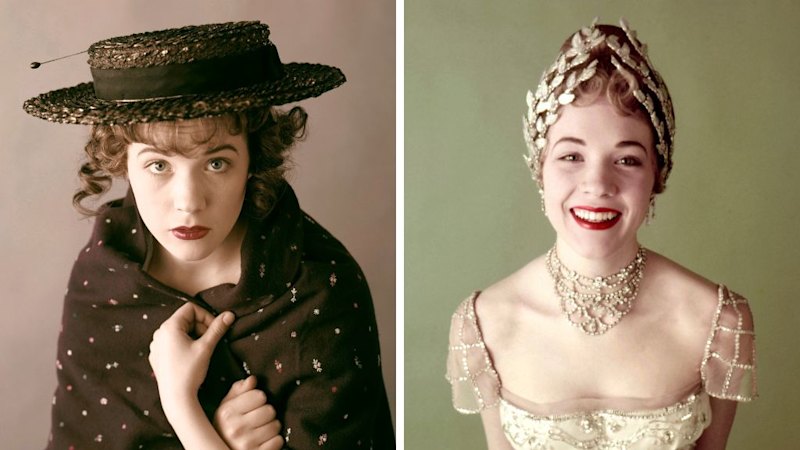
You have reached your maximum number of saved items.
Remove items from your saved list to add more.
It’s been more than 70 years, but Dame Julie Andrews still remembers auditioning for the Broadway musical that would launch her career, My Fair Lady.
“[The audition] was with Alan Jay Lerner, the writer of the script and the lyrics to the songs, and I read for him to start with. I was so young, I really didn’t know what I was doing in those days,” she says, that perfect cut-glass diction impeccable even over Zoom.
But Lerner liked what he heard and cast her as Eliza Doolittle, the lower-class flower seller with a Cockney accent who is the protagonist of George Bernard Shaw’s 1913 play Pygmalion and its musical reinterpretation, My Fair Lady. A quick summary: Linguist Henry Higgins discovers Eliza and bets a friend that by teaching her the King’s English, he can pass her off as a high-born society lady. High jinks ensue, he bullies her, she screams at him, they fight, she leaves, they fall in love, they reconcile, not necessarily in that order.
After nearly two years in the role on Broadway and another in London, the young Andrews certainly found her feet. “Gradually over time I got it under my belt, and it was a difficult role,” Andrews, now 90, recalls. “You are singing in Cockney. You’re screaming. You’re singing purely in things like I Could Have Danced All Night, and so you change your vocal level so often, and then all the acting scenes as well, based on George Bernard Shaw’s wonderful play Pygmalion. So it’s a big, big musical, but a very brilliant one.”
Although she initiated the role in both the world’s theatre capitals, Andrews missed out on the leading part when it came to the film version. What happened next is the stuff of Hollywood legend. Jack Warner of Warner Bros thought Andrews was not a household name and cast Audrey Hepburn, America’s sweetheart and riding high after the huge success of 1961’s Breakfast at Tiffany’s, as Eliza Doolittle in the film version. Hepburn had doe eyes and name recognition, but not a ringing soprano with a four-octave range. The songs were dubbed by Marni Nixon, who had also done the singing for Natalie Wood in West Side Story.
Walt Disney, on the other hand, thought Andrews was practically perfect in every way and cast her in Mary Poppins, which was the No. 1 grossing film of 1964 and won Andrews an Academy Award, a BAFTA and a Golden Globe. And No. 2 at the box office that year? My Fair Lady.
During her acceptance speech for her Golden Globe – an award she won against a field that included Hepburn – Andrews ended with a very special thank you: “Finally, my thanks to a man who made a wonderful movie and who made all this possible in the first place: Mr Jack Warner.”
Not only did the theatrical version of My Fair Lady launch Andrews’ superstar career, it also taught her a lot about acting – and the endurance needed to do eight shows a week for years.
“My Fair Lady was probably in my career one of the biggest things I’ve ever done for that long, and it was an endurance test in a way to keep fresh,” she says. “I learned a great deal about my craft in that particular show: how to look after myself; how to keep fresh; how to not abuse my singing voice or my speaking voice. I became a bit of a nun in those days, and I’m not being facetious, believe me.”
As she is the most famous nun in the history of the world, playing Maria Von Trapp in the 1965 film The Sound of Music, no one would ever accuse Andrews of flippancy on the subject of religious sisters.
Andrews left the London production of My Fair Lady in 1959, and that might have been the end of her association with the show, were it not for John Frost. The Adelaide-born producer wanted to mark the 60th anniversary of the show by reviving it – exactly as it had been in 1956 in New York.
To do that required a fair bit of legwork. The original costumes had been designed by the great photographer and costume designer Cecil Beaton, and Frost found his last surviving assistant, John David Ridge, who was still alive and had Beaton’s original designs. Frost also found Rosaria Sinisi, who had been an assistant to the show’s original set designer, Oliver Smith, and had Smith’s plans to recreate the set. But there was one piece missing.
“There was only one person that was around that could do it and direct it, and that was Julie Andrews,” says Frost. He made the approach, and to his utter delight, she said yes. They began work on the 2016 Opera Australia production, which the company is now reviving to mark the show’s 70th anniversary.
“She came out for about 10 weeks [in 2016], so I got to know her quite well and spent a lot of time with her,” says Frost. “And she is exactly as you would hope she would be. She’s strong and knows what she wants, but is absolutely delightful, just gorgeous.”
Of course, auditioning before the original Eliza Doolittle can be a nerve-wracking experience, no matter how kind she is. “People that came to audition got up there and they’d sort of go to water, because they’d be looking there and she’d be sitting in the room, and all they could think was, Maria or Mary Poppins sitting there. She’d have to calm them down and relax them, and then they’d leave the room and go, ‘Oh my God, I can’t believe it! I just cannot believe I’ve just done that. I’ve just auditioned for Julie Andrews’.”
The cast soon found that in their director they had a real-life Fraulein Maria or Mary Poppins: “She always used to say, ‘Just call me mother’,” Frost remembers. “She told the cast that: ‘Call me mum’ ... She had a dressing room backstage, and they would go up and knock on the door, saying, ‘Mum, could we yadda yadda yadda?’ She’s fabulous like that.”
She and Frost hardly ever disagreed – how could you possibly disagree with Eliza Doolittle herself? – but after a slight difference of opinion over casting, Andrews reacted in the most delightful way possible.
“She looked at me and she held my hand and she said, ‘Darling, just trust your mother, it’ll be alright,” recalls Frost. “I analysed it, and I thought, did she just tell me basically to F-off? It was so beautifully done. Like, ‘yeah, don’t worry about it. I will deal with it. I’m onto it.’ That was the only time, and we laughed about it later.”
Although it had been more than five decades since Andrews left the show, she remembered vivid details from the 1956 production for her Australian cast to replicate.
“She was a well of information,” says Karen Johnson Mortimer, her assistant director. “Even as we worked through rehearsals the first time, she could still hear the way lines were delivered. She still remembered vividly the direction she got from [Broadway director] Moss Hart. She remembered those vocal rehearsals with Lerner and [songwriter Frederick] Loewe getting those songs down. She had her stories, and her recall of everything was an absolute joy. You couldn’t have asked for anything better to springboard the 60th anniversary production from.”
Johnson Mortimer took every word Andrews said as gospel – nearly literally. “Everything that she ever said in rehearsals or pre-rehearsals and in the script, I wrote word for word,” she says. It was a note-taking strategy that would serve her well as Johnson Mortimer stepped up to fulfil Andrews’ vision this time around.
She and Andrews formed a decade-long friendship, with Johnson Mortimer visiting her many times in the intervening decade. On one of those recent visits, she told Andrews the show was being revived again.
“We talked about the first day of rehearsal, and I said, ‘it’d be great if you could Zoom in to everybody’. She said, ‘Yes, I think that’s a great idea, but don’t tell them. Let’s surprise them’. So that was fantastic because there are a few people in our cast who were in the show last time, and so had the experience of working with Julie, and they said, ‘Will we get to see Julie at some point?’ This is on the first day of rehearsals, and I said, ‘Oh, maybe we might Zoom her in so she can watch a rehearsal’.
“Anyway, as we’re doing the opening speeches and welcoming everybody, they threw to me, and I was just talking about how excited we were to be here. I started to allude to the things that Julie had taught me, and then I said, ‘You know what? Why don’t I just let Julie do the talking?’ And we threw to the screen, and up she popped. So it was just a fabulous surprise for everybody.”
Andrews has continued to advise the cast and creatives from afar, which for Claire Lyon, who plays Eliza, has been an extraordinary experience. “It was like, oh my gosh, I’m speaking to Mary Poppins and Maria von Trapp and Eliza Doolittle all in one,” Lyon says.
“I remember getting off the Zoom calls with her and being like, oh my God, that was a total out-of-body experience, and to be in the same costumes that she was in – I mean, obviously they’re all new made for me, but the exact same design – is like stepping into her shoes. It’s quite surreal.”
Lyon grew up listening to the 1956 Broadway cast recording, and she was in the ensemble in a 2008 production, which was also in the Sydney Opera House and Melbourne’s State Theatre. “It’s like a full circle moment now, graduating to Eliza from being in the ensemble nearly 18 years ago,” she says. “It’s almost like I’ve been manifesting it my whole life.”
Andrews had no idea what a juggernaut the show would become when she auditioned more than 70 years ago, but she says it is one of the all-time greats.
“The great musicals do last, and this one is the most unusual because it’s about the wonder of language and the difference that it makes in your life and how you speak,” she says. “I think a musical about words and what they mean and how you use them, and how it affects your life if you use them properly – I’m speaking for myself as well as for the play – it truly matters. It will elevate your status.
“Eliza Doolittle goes from being a girl who’s selling flowers in the gutter, so to speak, and she gets to be a real lady, and the transformation is really phenomenal. Who would have guessed that a musical about words would have lasted so long or been so hugely successful?”
My Fair Lady is now playing at the Sydney Opera House and opens at Melbourne’s State Theatre in November.
Citations · 2 reports from 2 outlets
Tap a citation to read it above, right here on T.A.M.
She was 20 and unknown. What Julie Andrews did next made her a superstar
Julie Andrews launched Eliza Doolittle 70 years ago, but her memories of that time are as clear as ever.
1 hour ago · Cassidy KnowltonShe was 20 and unknown. What Julie Andrews did next made her a superstar
Julie Andrews launched Eliza Doolittle 70 years ago, but her memories of that time are as clear as ever.
1 hour ago · Cassidy Knowlton