
NSW live‑music bill removes genre bans and pokies‑pub loophole
The New South Wales parliament passed a new bill aimed at revitalising live music, eliminating genre bans and a loophole that allowed pokies in pubs. The legislation also includes provisions for fair pay, copyright protection and AI use for musicians.
First reported 46 minutes ago · latest update 46 minutes ago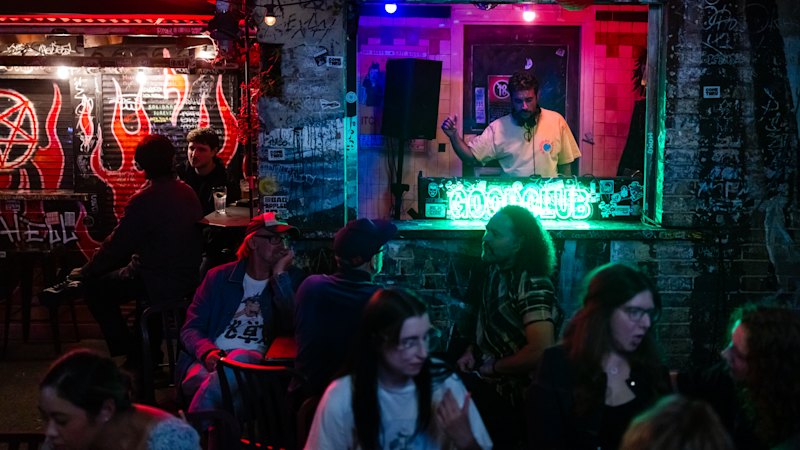
Police and other state agencies will no longer be able to discriminate against particular genres played in live music venues under a new NSW music bill.
Labor’s contemporary music bill marks its second legislative push to reinvigorate Sydney’s nightlife since the 2014 lockout laws, with the first focusing on venues and hospitality through the vibrancy reforms agenda, and the latest on protecting the music sector.
Now state government agencies and local councils can’t assess a live music event’s risk based on its music genre, whether through licensing conditions, development applications, or event approvals.
In the past, police have tried to stop venues from booking music acts from specific genres, such as rap and drill.
Sydney rap group OneFour was the target of a licensing police campaign that prevented venues across the city from including them on their line-ups, according to a 2023 Netflix documentary. The group’s profile soared after a national tour in 2019 was cancelled. At the time, NSW Police admitted to “shutting down” the group’s concerts.
Minister for Music and the Night-time Economy John Graham, who is also arts minister, said the new policy makes it clear that genre alone is not a risk and agencies will be expected to provide evidence to justify risk-based decisions.
“Venues routinely were required to only play jazz or not play disco or not play rock music, or that was how we used to regulate by genre, and it’s totally inappropriate. We’ve removed all that,” Graham said.
The new bill, passed on Thursday, incentivises venues to prioritise local, live music via additional operating hours and grants, after “pokies pubs” used Labor’s $150 million vibrancy reforms agenda to shove musicians into corners, playing covers, in order to access liquor and trading benefits.
Venues that regularly host original live music will now be tiered as “dedicated”, “significant” or “live music”, making them eligible for programs, extended trading hours or government grants depending on classification, instead of blanket eligibility for any that host live music.
“The problem was you couldn’t tell the difference between a pokie venue and a music venue or a venue that was just selling alcohol. They were all treated the same when Liquor & Gaming looked at it,” Graham said.
“We can distinguish not only between who’s playing music, but who are the 50 or 60 venues who are actually programming every night and doing most of the work … It’ll make a big difference to how we can support the key venues that the public would really think about as dedicated music venues.”
Graham said more than 600 venues in NSW are receiving music incentives. “What we’re trying to do is create a third stream of income for venues so that they don’t have to lean so much on either pokies or alcohol,” he said.
Concert organisers can expand line-ups to more than four acts without being designated as a large-scale music festival. Major festivals and outdoor events at government sites including Centennial Park, the Domain and the Sydney Opera House, will also begin monitoring sound using a standard average to avoid hefty fines for breaching noise regulations.
Disputes between councils and designated “dedicated” and “significant” live music venues can be resolved via mediation under the new bill.
Opposition arts spokesperson Chris Rath welcomed the legislation, saying: “We support the government’s ongoing efforts to promote vibrancy and crack down on spurious noise complaints from NIMBYs that have all too often crippled hospitality venues and emerging contemporary music artists.”
The new bill also enshrines artists’ rights amid increasing instances of AI and recording technology misappropriating their music or replacing real people on the charts – but there’s no explicit action to prevent it.
Music NSW managing director Joe Muller also welcomed the legislation, saying it shows the government is serious about contemporary music.
“Musicians need stages to play. That’s the really critical piece – and places to grow their audiences,” Muller said. “Protecting venues, protecting festivals, and creating opportunities for artists to share their work is super important.”
Joe Hardy, a co-founder of gig guide Sydneymusic.net, said that while the bill was a good step for the live music ecosystem and industry, musicians would probably benefit the least.
“Musicians are always downstream from the business model. The business model has to work,” he said.
“Looking at [the government’s] statement of public interest, what is the policy’s objective? The first line says that they are committed to the continued growth of the music industry, ensuring it reaches its full economic and creative potential.
“Creative potential is a pretty sort of open-ended term. I don’t really know what that means. A lot of their interest still seems to be focused on economic output and export, like music export readiness. So support, incentivise, increase access to original live music.”
Start the day with a summary of the day’s most important and interesting stories, analysis and insights. Sign up for our Morning Edition newsletter.
You have reached your maximum number of saved items.
Remove items from your saved list to add more.
Citations · 2 reports from 2 outlets
Tap a citation to read it above, right here on T.A.M.
Genre bans, ‘pokies pub’ loophole ditched in new NSW live music overhaul
The new bill passed on Thursday aims to further boost the state’s live music, while also advocating for musicians’ fair pay, copyright and AI.
46 minutes ago · Kayla OlayaGenre bans, ‘pokies pub’ loophole ditched in new NSW live music overhaul
The new bill passed on Thursday aims to further boost the state’s live music, while also advocating for musicians’ fair pay, copyright and AI.
46 minutes ago · Kayla Olaya