
Lachie Neale case prompts discussion on AFL suspension rules
The case involving Lachie Neale has highlighted concerns regarding the proportionality of one-match bans in the AFL. Discussions are ongoing regarding potential rule adjustments to address how these penalties impact different stages of the competition.
First reported 2 hours ago · latest update 2 hours ago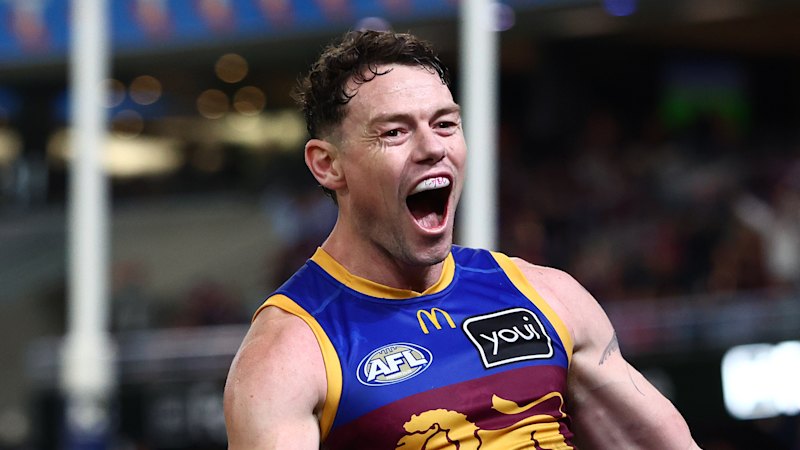
You have reached your maximum number of saved items.
Remove items from your saved list to add more.
Usually, the AFL punishes on-field misconduct in the currency of matches, which it considers fungible. But that premise is false; it produces a small number of cases where sanctions are grossly out of whack with the crime.
On Thursday night the AFL Appeal Board overturned Lachie Neale’s one-match ban and instead fined him $10,000. Sensible outcome and good luck to him. But the route Neale took back to the MCG – wide open to him; bolted shut to almost everybody else – demonstrated that the defect lies in the rules, and that rescuing one man’s week fixes nothing.
Late in the first quarter of last Saturday’s preliminary final, Neale slugged Hawthorn’s Jack Ginnivan in the guts, behind play and off the ball. The match review officer graded the conduct intentional, the impact medium and the contact to the body. That yielded a fixed sanction of one match.
On Tuesday night, the tribunal found the blow forceful and intentional, delivered off the ball to an unsuspecting opponent; rejected the player’s account as inconsistent with the camera vision; and held that the case for exceptional and compelling circumstances didn’t outweigh the nature of the conduct.
On Thursday night, the Appeal Board saw it differently. The tribunal had erred in law, it held, by weighing the intentional nature of the strike against Neale when asking whether exceptional and compelling circumstances existed. Intention was an element of the charge, already proved, so counting it again was double-dipping.
That left only the other side of the ledger, being Neale’s exemplary playing record: over 300 games, two Brownlow Medals, two premierships as captain and four All Australian selections. Thirteen seasons without a suspension.
The Appeals Board applied some creative mathematics and rounded one match down to $10,000.
Is all of this necessary? We all know that nobody would bother with all the legal gymnastics if this was a round-seven match. Had it gone the other way, Neale would’ve been the first player since 2003 to miss a grand final over something done the week before. Sport, sometimes, can be a cruel mistress.
We should rightly accept the findings of fact. The place to quarrel is with the arithmetic that follows. The Appeals Board corrected an error of law. Excessiveness is not assessed just by looking at the number of matches, but also the particular effect of the sanction.
On the face of the sanctioning table, a one-match suspension in round seven and a one-match suspension on the eve of the grand final are identical. Which is where the trouble starts. A home-and-away fixture is one of 23, and missing one is almost always recoverable – the coach usually picks you again the following week, and by October nobody really remembers. A grand final is one of one. Every other game of the season is, distilled down, a qualifying round for it.
Forget Neale; he’s sorted. Think instead about the 20-year-old charged over the identical strike in the preliminary final that got his side there. Run Thursday’s legal reasoning for him (or her). The legal error gets corrected, and the Appeal Board turns to the other side of the ledger to find ... what, exactly?
A handful of games. No Brownlows, no captaincy, no decade of clean football, because he hasn’t had a decade. He misses the only grand final he’ll ever play. The rule squashes him with the same disproportion, and not a skerrick of relief.
The only key that opens the door is a stellar CV, and a CV takes years to build. Relief flows to the bloke with two premiership medallions already in the cupboard; the kid who’s never played in one serves the full week. Upside down. It rewards longevity when the harm falls hardest on youth.
The criminal law worked this out a long time ago. Two offenders can cop the same sentence and carry wildly different loads out the courtroom door. What’s written on the warrant is seldom the whole of the punishment. Sentencing courts have long accepted that consequences falling outside the sentence itself – extra-curial punishment – can properly be weighed in fixing it.
Put differently, a judge asks what the penalty will actually do to the person in the dock, not merely what it’s labelled as.
A few codes have fixed the problem. In UEFA Europa League regulations, accumulated yellow cards are wiped after the quarter-finals so that nobody sits out a final over a booking collected months earlier. Has discipline in the knockout rounds gone to hell in a handbasket? Not noticeably. UEFA simply wrote into its rulebook what every punter already knew; that a final isn’t just another match.
Back, then, to the AFL’s table. It measures offending from three angles – conduct, impact and contact – and the gravity of sanction not at all. Was it intentional? How hard? Where did it land? Those questions all get answered. What will the week off actually cost the bloke serving it? Never asked.
The objections aren’t stupid, mind you. Treat the grand final differently, and two players who commit identical acts in the same preliminary final walk away with different outcomes, depending solely on whether their team won.
Go soft in grand final week and you blunt the deterrent at precisely the moment when stakes, fatigue and the odd festering grudge make misconduct most likely. Jack Ginnivan’s ribs didn’t hurt any less because it’s September.
Discretion, left to its own devices, had an unfortunate habit of favouring the famous. Reopen it, and every finals series turns into a festival of pleading exceptionality. Besides, the AFL guidelines already permit a reduction for exceptional and compelling circumstances. Lachie Neale won that argument eventually. The system works, then, right?
Aristotle apprehended all this millennia before the Match Review Officer did. The bloke who taught us to treat like cases alike also recognised that a general law will inevitably misfire in the unusual case, precisely because it’s general. The correction, equity, is to decide the case as the lawmaker would have, had he foreseen it.
There can’t be any amnesty or discounting. Alternate sanctions must be BIGGER for any player who elects it, and the price is published in advance. The deterrent gets sharper. And for completeness, a sporting sanction was never compensation to Jack Ginnivan; its job is to uphold the competition’s standards.
The existing exceptional and compelling circumstances discretion is constructed around the player – his record, his character, his standing. The Tribunal weighed it one way; the Appeal Board, correcting the scales, the other. Fair enough, both ways. But the discretion is aimed at the wrong target.
Everybody always knew what this appeal was about; nobody could say it.
Had the same strike happened in May, Neale would’ve copped his week, and nobody would’ve bothered with a five-hour hearing on a Tuesday night, let alone a sequel on Thursday.
So what’s my lawyer fix? I’d give any player faced with a grand final ban for a rats ‘n’ mice misconduct charge the option of a sanction carrying over to the next season, by also paying a hefty fine.
In lawyer-gibber, it reads like this: Where a player is found to have committed a reportable offence attracting a fixed sanction of one match, and the match to which that sanction would apply is the Grand Final, the player may elect to serve instead a suspension of four matches commencing with the first match for which he is otherwise selected in the following premiership season, together with a financial sanction double the maximum applicable to the classification. The election is available once in a player’s career. It is not available where the offence is graded severe impact or high contact, or is a second or subsequent offence in the same season. The election, once made, is irrevocable and follows the player to any club.
It’s confined to the lowest rung of suspension, where the gap between offence and consequence is widest and the competition’s interest in keeping a player out of that particular match is weakest.
It costs the player more. Four matches plus a double-maximum fine, for a medium-impact strike to the body, sits well above anything the table would dish out in any other week of the year.
Lenient? Try selling that to the bloke watching the first month of next season from the bleachers. And note who can use it: the 20-year-old, on exactly the same terms as the dual Brownlow medallist.
On Tuesday night, the rules were applied to a player who’d broken them, and he was out. On Thursday night, the same rules were applied to the same player, on the same vision, and he was in.
Nothing about the blow changed; nothing about the grand final changed. What changed was the reading of one clause about one man’s record – handy if you’re Lachie Neale, worthless if you’re anybody else.
Citations · 2 reports from 2 outlets
Tap a citation to read it above, right here on T.A.M.
The Lachie Neale case highlighted a flaw in AFL’s rules. Here’s my lawyer’s fix
Other sports have recognised that a one-match ban can be a disproportionately severe punishment depending on the match in which it is served. The problem is easily solved.
2 hours ago · Darren KaneThe Lachie Neale case highlighted a flaw in AFL’s rules. Here’s my lawyer’s fix
Other sports have recognised that a one-match ban can be a disproportionately severe punishment depending on the match in which it is served. The problem is easily solved.
2 hours ago · Darren Kane