
Employers urged not to worry as cancer survivors face work‑return challenges
Both Australian outlets report that Nick’s managers told him not to worry about his job, while research shows many cancer survivors struggle with fatigue, unsupportive employers, cognitive issues and financial pressure when returning to work.
First reported 1 hour ago · latest update 1 hour ago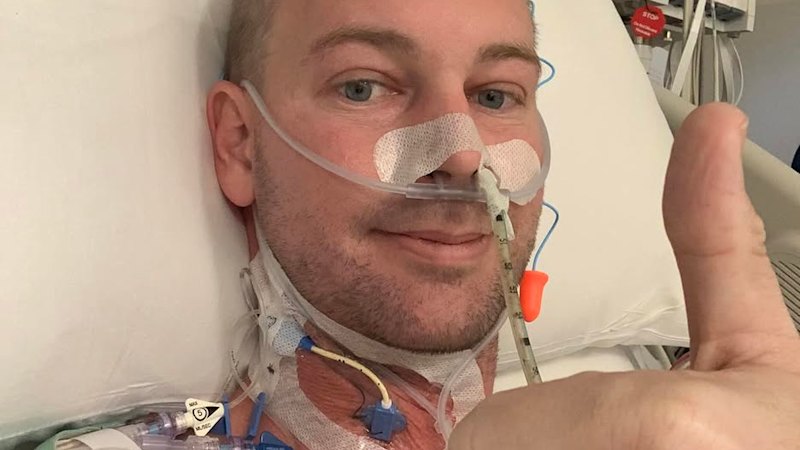
Cancer survivors are poorly supported to return to work, with fatigue, unsupportive employers, cognitive impairment and financial pressure among the most significant barriers.
Researchers from Griffith University collaborated with insurance company Hannover Re to interview cancer survivors with life insurance, as well as healthcare professionals and employers, to identify barriers across the work system.
Associate Professor Carys Chan from Griffith’s management department said cancer-related fatigue was found to be the greatest physical barrier to returning to work.
“With cancer treatment [such as] radiotherapy [and] chemotherapy, it actually impacts your body for the long term because [it’s] killing some of the cells that are harmful to you … [and] also killing some of the good cells,” Chan said.
“So the level of fatigue that cancer patients face even after they’ve recovered is obviously going to be higher than … for people who haven’t had cancer.
“A lot of [cancer survivors] are not able to work as long hours as they were before.”
Interviewees also noted cognitive impairment such as “chemo brain”, social anxiety, loss of confidence and fear about reoccurrence and work capacity after treatment.
“I’ve had multiple employers say, ‘either you’re fully back to 100 per cent capacity, or you’re not back at all’,” an exercise physiologist interviewed for the study said.
“That’s happened in mining and nursing – it’s very much full capacity or no capacity.”
Another cancer survivor said: “My cognitive ability for numbers [after treatment], honestly, I don’t even know if I could pass grade four in math … it’s like I have a learning disability when it comes to numbers.”
Brisbane cancer survivor Nick Verry described his fatigue after radiation therapy as “bone deep”.
“It really takes it out of you,” he said.
Verry was 34 years old and six months into a new role as a care and wellbeing partner for Woolworths Group when he was diagnosed with oesophageal cancer.
“My gastroenterologist at the time said, ‘well, you’re not going to survive if you go to the public system’ because it had already spread quite quickly, so he gave me the details for a surgeon at Greenslopes and an oncologist, and I was in the next day,” he said.
He had major surgery shortly after, and spent weeks recovering in hospital.
During this time, Verry pushed himself to return to work. He and his wife had both started new jobs in 2022, and he was anxious about how his diagnosis would affect his young family.
“I remember I came into a meeting with the state director of Big W NSW, and I’m there with a tube out of my nose, and he’s going, ‘what on earth are you doing here?’” Verry said.
“[Not long after] I had a call from the head of HR that just said, ‘Look, don’t worry about anything. Just look after yourself. Look after your family.’”
Verry said he has been fortunate: he works for a large corporation with ample resources, and as a wellbeing professional with a background in exercise physiology, is well-versed in return-to-work protocols.
But he sees the struggles of other cancer survivors, and now advocates for better systems to support employers and employees.
“Cancer changes you so much as a person,” he said. “There needs to be more resources out there to be able to support people through the cancer diagnosis.”
The Griffith study made 13 recommendations to improve survivors’ return-to-work journey, including the development of employer education and support programs, and more consistent and standardised employment protections and income security provisions for cancer survivors.
“A lot of employers need to be educated about cancer and its impact to know how to better facilitate return to work,” Chan said.
“Making sure employers and managers are more cancer literate will improve that whole communication portal between the allied health professionals, the oncologists, and the employers who are supporting employees.”
Start the day with a summary of the day’s most important and interesting stories, analysis and insights. Sign up for our Morning Edition newsletter.
You have reached your maximum number of saved items.
Remove items from your saved list to add more.
Citations · 2 reports from 2 outlets
Tap a citation to read it above, right here on T.A.M.
Nick’s bosses urged him not to worry about work. Most cancer survivors aren’t so lucky
Fatigue, unsupportive employers, cognitive impairment and financial pressure ranked among the most significant issues for cancer survivors returning to work.
1 hour ago · Courtney KrukNick’s bosses urged him not to worry about work. Most cancer survivors aren’t so lucky
Fatigue, unsupportive employers, cognitive impairment and financial pressure ranked among the most significant issues for cancer survivors returning to work.
1 hour ago · Courtney Kruk