
A 175-year-old golden rule in markets is starting to break
Gold has effectively always cost much more than silver, and nickel more than copper. But the age of electricity is starting to wreak havoc on accepted wisdom.
First reported 1 hour ago · latest update 1 hour ago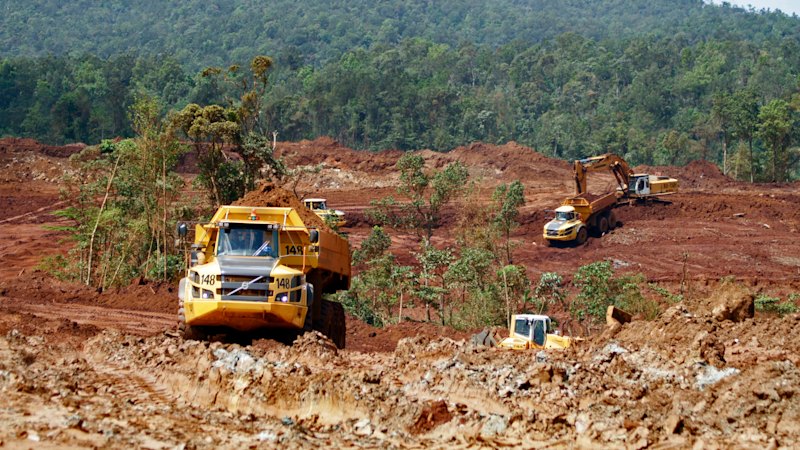
You have reached your maximum number of saved items.
Remove items from your saved list to add more.
In commodity markets, certain truths can be taken as self-evident.
Gold consistently cost about 15 times as much as silver for more than 2000 years, from the time of the Lydian king Croesus to the 19th-century gold standard. Sharp movements in the ratio between copper and oil prices are often taken by traders as indicators of seismic shifts in the world economy.
You can make a similar argument about nickel and copper. Nickel is mainly used in producing stainless steel for cutlery and appliances, while the latter is essential for the wiring in our electric cars, data centres, toasters and washing machines. Nickel has been priced at a consistent premium to copper ever since it started to be mined on a large scale in the mid-19th century. That seeming law of nature looks on the brink of breaking.
The shift is an indicator of how much the energy transition is at the mercy of uncertain supplies of copper. Nickel prices are struggling because when the world needed more in recent years, miners managed to unlock vast new resources. They performed a similar trick in previous decades with iron ore and aluminium. Copper, the indispensable element as the world electrifies, is proving far less tractable to the laws of supply and demand – hence its surge to a record price last month.
Since it started trading on the London Metal Exchange in 1987, nickel has averaged about 2.85 times copper’s price. Over the past few weeks, that’s slumped to about 1.11 times, the narrowest premium on record. At the mine gate, the two prices may already have flipped: a typical copper miner can now receive more for a tonne of metal than an Indonesian nickel miner.
To understand why, you need to look a little into how these elements are actually produced. The largest stream of newly mined nickel in the world isn’t the highly refined element traded on the LME, but nickel pig iron, or NPI, a low-grade product well-suited to the needs of steelmakers. At present, the Indonesian miners who dominate the trade are receiving about $14,500 a tonne for the metal contained in their NPI.
Copper miners likewise sell concentrates rather than refined metal. Smelters pay them the LME price, less processing charges and other adjustments. Extraordinary as it sounds, those treatment and refining charges have recently turned steeply negative, largely because the smelters are making money from extracting and selling trace metals and other byproducts from the concentrate. That implies a price for copper miners of around $15,112 a tonne – some $612 a tonne more than the nickel miners.
What’s causing this change? Geology and metallurgy explain part of it. Most nickel and copper traditionally came from places where ancient volcanic activity helped generate sulfide ore bodies with high concentrations of base metals. There aren’t many such locations on the planet.
Processing innovations in recent decades, however, have opened up vast new provinces of so-called nickel laterites in Indonesia, where millions of years of heat and rainfall concentrated deposits closer to the surface. These laterites tend to be cheap to mine – one reason aluminium and iron ore, ultimately derived from similar landscapes, have long been the cheapest of major base metals.
Copper has had no comparable revolution. Ore grades have been declining for decades, and miners these days seem to prefer buying each other’s deposits to discovering new ones. This has been a boon for mergers and acquisitions bankers, but it creates no new metal.
There’s certainly an anomalous quality to the current price reversal. Those negative treatment charges for copper are indicative of a market where smelters are desperate to get their hands on concentrates at any cost. Chinese processors supplement wafer-thin treatment fees by recovering gold, silver and other byproducts. Record precious metal prices are probably encouraging them to strike extraordinarily generous terms with miners.
At the moment, this may even be helping to drive the relationship between the two metals. Sulfuric acid is another copper by-product, and prices have surged after the war in Iran choked off sulfur supplies from Gulf oil exporters. Many Indonesian nickel miners use vast quantities of the acid to extract metal. As a result, sulfur demand for nickel processing is indirectly supporting the margins of copper smelters.
In commodity markets, such upheavals can often be tempered by countervailing shifts in consumption. Nickel demand has grown far faster than copper over the past decade, driven first by stainless steel and then by nickel-rich EV batteries. Should that continue, the recent additions to supply might all get used, pushing prices back up.
The demand picture for copper looks more bullish, though. The world is entering the “Age of Electricity,” according to the International Energy Agency, as clean energy, air conditioners and data centres route more economic activity through generators, wires and batteries. Copper will benefit from this shift at almost every turn.
Nickel’s prospects look more mixed. To take one example: nickel-intensive varieties of lithium-ion batteries, which drove the most recent wave of Indonesia’s supply boom, seem now to be decisively falling behind state-of-the-art Chinese cells, which use phosphate instead. That could turn 2026’s anomalous price reversal into something more lasting.
It wouldn’t be the first time this happened. In the 19th century, aluminium was so difficult to produce that it cost more than gold. The French emperor Napoleon III served guests with aluminium tableware as a display of opulence. Revolutions in mining and processing turned it into a commodity so humdrum that we use it for soft drink cans and sandwich foil.
Don’t rule out the chance that the dawning electrical age performs the same trick on nickel.
The Business Briefing newsletter delivers major stories, exclusive coverage and expert opinion. Sign up to get it every weekday morning.
Citations · 2 reports from 2 outlets
Tap a citation to read it above, right here on T.A.M.
A 175-year-old golden rule in markets is starting to break
Gold has effectively always cost much more than silver, and nickel more than copper. But the age of electricity is starting to wreak havoc on accepted wisdom.
1 hour ago · David FicklingA 175-year-old golden rule in markets is starting to break
Gold has effectively always cost much more than silver, and nickel more than copper. But the age of electricity is starting to wreak havoc on accepted wisdom.
1 hour ago · David Fickling