
Treasurer Chalmers cites global factors as tax revenue nears record levels
Treasurer Jim Chalmers has attributed inflationary pressures to rising petrol prices and global conflict. The government faces increased scrutiny regarding its economic management as tax revenue nears record highs ahead of a potential RBA interest rate hike.
First reported 1 hour ago · latest update 1 hour ago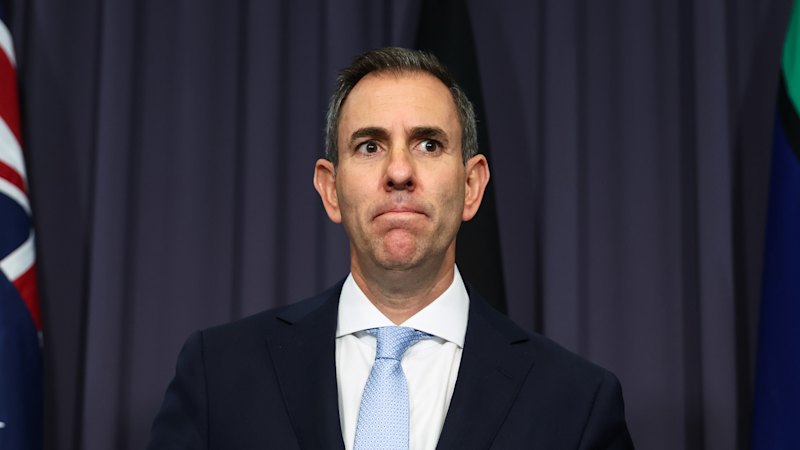
A near-record tax haul under Labor has added to scrutiny of its fiscal management ahead of a widely expected rate hike on Tuesday as Treasurer Jim Chalmers pins the blame on Donald Trump’s war in the Middle East rather than wage earners fuelling inflation.
As economists and a think tank called for targeted tax rises to cool demand rather than hiking rates for mortgage holders, Chalmers tried to get ahead of the bank’s decision, declaring: “The fact that we have a war in the Middle East [is] pushing up global oil prices and pushing up prices at the petrol bowser.”
“We have an inflation challenge in our economy not because unemployment is too low but because the price of petrol is too high and we’ve got other inflationary pressures. I’m reluctant to blame the workers of this country for our inflation challenge,” he said, adding that Australians would be “apprehensive” about the bank’s deliberations.
The comments from the treasurer, who is under growing pressure from Labor MPs to address inflation and productivity, re-opened a political fight with the opposition over who is to blame for high prices, two years after Chalmers created tension with the RBA by accusing it of “smashing the economy”.
Chalmers’ argument that unemployment was not too high was prompted by bank governor Michele Bullock’s blunt assessment last week that the jobless rate may need to rise as high as 5 per cent, up from 4.6 per cent, to take heat out of the economy.
“Inflation junkie Jim is always looking for someone else to blame when he’s asked about his spending addiction – Iran, international events, AI – and now he’s trying to bully the RBA because they’re telling him he needs to go cold turkey,” shadow treasurer Tim Wilson said.
The reserve bank’s next rise will take Australia’s rates to a 15-year high, giving the nation the second highest cash rate in the developed world after Iceland.
Labor released fresh budget figures on Monday showing a $6 billion improvement in the deficit, $4.6 billion of which came from higher tax receipts from personal investments and superannuation funds that have benefited from the AI boom and a stock market that has proved resilient amid war.
Chalmers noted the impact of the government’s policy decisions over the past two budget updates were to improve the bottom line, which he said was “actually quite rare”.
The final budget figures released on Monday showed tax receipts as a proportion of GDP rising to 24.1 per cent, up from the forecast of 23.6 per cent when the budget was released in May. The Howard-era record 20 years ago was only slightly higher at 24.2 per cent when Australia was flush with revenue from the China-induced mining boom.
The previous Coalition government had a 23.9 per cent cap on the tax share. Chalmers last week indicated the government would cut taxes before the next election to stop the tax-to-GDP ratio soaring above the Howard-era record off the back of ever-rising income taxes.
While Chalmers repeatedly insists Labor had improved the budget, veteran budget analyst Chris Richardson said a key metric of the budget’s structural health had deteriorated from a thin surplus when Labor came to power to a deficit of 1.6 per cent of GDP.
“We’ve shifted the budget to a substantially worse position and we’ve papered over it with a revenue rainbow,” Richardson said.
Richardson said the war in Iran had made matters worse but noted that years of elevated spending from federal and state governments “made the ongoing inflation problem worse”.
Richardson said the revenue upgrades came from higher-than-expected migration, commodity prices elevated by the war in Ukraine, and unemployment that had been kept low because the Reserve Bank had gone out of its way to keep as many people in jobs rather than hiking rates as swiftly as other central banks.
The RBA’s approach had spared job losses but created prolonged pain for mortgage holders and taxpayers, the budget watcher argued.
On Monday afternoon, bond futures traded on financial markets had priced in a 90 per cent chance that the RBA would lift interest rates by 0.25 of a percentage point on Tuesday.
The Centre for Policy Development, a think tank, says lifting interest rates to reduce inflation disproportionately hit households with a mortgage, mostly younger workers with children.
The centre argues that a temporary increase to superannuation contributions paid by all workers would be a fairer way to reduce demand across the economy during high-inflation periods. This would take extra money out of circulation to slow spending, but would “keep it in workers’ retirement savings instead of handing it to banks in interest”.
Economist Saul Eslake, who also says super contributions could be used to fight inflation, believes the strategy could be used in tandem with monetary policy.
“The first reaction to a period of high inflation should be through higher interest rates but if it is feared inflation will be persistent, as it is now, varying super contributions might be a useful complement or supplement,” he said.
Another option proposed by the Centre for Policy Development is for temporary increases to personal income tax to reduce spending and put downward pressure on inflation. This would also distribute the burden of controlling price growth more fairly across society, but government would be unlikely to back such an unpopular legislative change.
Eslake says it was once common for federal governments to impose short-term tax increases to reduce inflation.
One example was during an inflationary spike in the early 1950s when the Menzies Coalition government imposed a significant income tax surcharge and a large increase in sales tax to stabilise prices.
But the strategy of using the federal budget to reduce inflation has now “fallen out of fashion”, says Eslake.
Warwick Smith, the Centre for Policy Development’s research director, said Australia needed to stop relying on the single “blunt” instrument of interest rates to properly address inflation.
“We need more tools in the toolkit to tackle the actual causes of inflation,” he said.
Get federal politics news, views and expert analysis. Subscribers can sign up to our weekly Inside Politics newsletter.
You have reached your maximum number of saved items.
Remove items from your saved list to add more.
Citations · 2 reports from 2 outlets
Tap a citation to read it above, right here on T.A.M.
Near-record tax take, rising rates: Chalmers blames war as RBA hike looms
Treasurer says petrol prices are fuelling inflation as a near-record tax haul adds to scrutiny of Labor’s economic management.
1 hour ago · Paul Sakkal, Matt WadeNear-record tax take, rising rates: Chalmers blames war as RBA hike looms
Treasurer says petrol prices are fuelling inflation as a near-record tax haul adds to scrutiny of Labor’s economic management.
1 hour ago · Paul Sakkal, Matt Wade