
Critica surges after unveiling $1.4B tin-tungsten prize in Tasmania
Critica Ltd surged after a scoping study at its Tasmanian tin-tungsten project delivered a $1.42B pre-tax NPV, 65% IRR and 1.9-year payback from a proposed underground mine.
First reported 53 minutes ago · latest update 53 minutes ago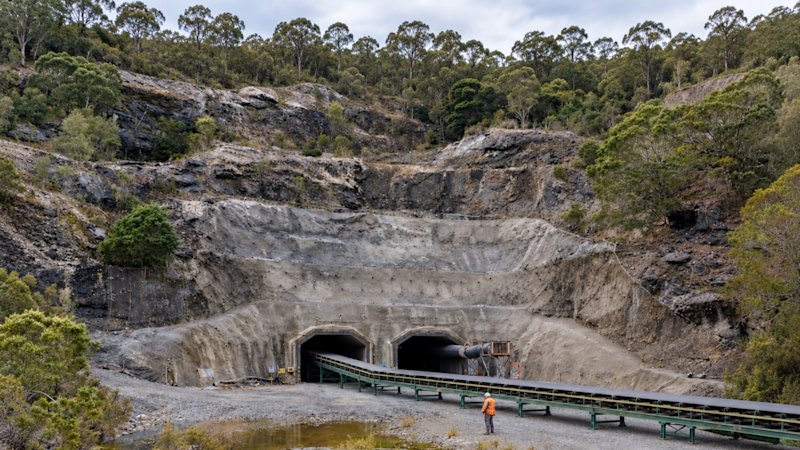
Shares in Critica Limited surged by as much as 25 per cent in early trade to three cents on the heaviest turnover in almost 10 months after the company slapped billion-dollar economics around a radical underground makeover of its wholly owned Mt Lindsay tin-tungsten project in north-west Tasmania
A new scoping study delivered in spades, modelling a whopping pre-tax net present value (NPV) $1.42 billion and a 64.9 per cent internal rate of return, equivalent to a 1.9-year payback. Pre-production capital is forecast at a modest $244.5 million.
Underpinning the transformative study, old plans for an open-pit concept have been consigned to the rubbish bin in favour of a selective, lower-footprint underground mine processing one million tonnes per year. Across an 11.6-year processing period, the new study forecasts $5.2 billion in sales revenue and $1.92 billion in post-tax free cash flow, while $177.3 million in sustaining capital and $20 million in closure costs lift total life-of-mine capital to $441.8 million.
The 13.5-year underground mining schedule targets a 10.9 million tonnes production grading 0.18 per cent tin and 0.14 per cent tungsten trioxide from the project’s Main and No.2 deposits. These near-vertical, tabular skarn bodies remain open down-plunge, leaving scope to chase additional mineralisation at depth, while dual declines, longhole open stoping with paste fill and conveyor materials handling underpin the design.
This 10.9Mt target represents a selected subset of Mt Lindsay’s wider 19-million-tonne resource grading 1.09 per cent tin equivalent, containing 49,000 tonnes of tin and 28,000 tonnes of tungsten trioxide. Notably, 92 per cent of the production target comes from the indicated resource, with the remaining eight per cent inferred material scheduled predominantly in the later years of the mine plan.
The conventional flowsheet combines crushing, grinding, magnetic separation, gravity concentration and flotation to produce tin, tungsten and magnetite concentrates. Further bulk and pilot testwork are expected to validate and optimise specifications. The study assumes recoveries of 75 per cent for tin, 85 per cent for tungsten and 98 per cent for magnetite. Those numbers are comfortably backed by historical pilot-scale testwork, which delivered overall recoveries of 72 per cent for tin, 83 per cent for tungsten and 98 per cent for magnetite.
Critica Limited chief executive officer Jacob Deysel said: “Mt Lindsay also gives Critica substantial exposure to tungsten, which contributes approximately 75% of modelled Base Case life-of-mine revenue, at a time when secure Western supply of this critical mineral is becoming increasingly strategically important.”
Moving forward, Critica says it plans to sharpen the Mt Lindsay development case with block-by-block metallurgical characterisation alongside geotechnical and hydrogeological work to refine the resource classification and mine plan. Confirmatory testwork, concentrate production and product qualification will run in parallel with infrastructure, water and tailings design, environmental approvals, tighter engineering and cost estimates.
At the same time, the company plans to hit the hustings with customers, potential offtake partners, strategic players and financiers as it pushes Mt Lindsay towards a definitive feasibility study.
Adding some serious geopolitical spice to the Mt Lindsay story is tungsten’s increasingly tight global supply picture. China controls 79 per cent of global tungsten mining capacity and 85 per cent of ammonium paratungstate refining capacity, leaving new Western sources of the critical metal firmly in the spotlight.
Critica has kept some fat in its assumptions, using a tungsten price of US$2500 (A$3846) per metric tonne unit (MTU) - where one MTU equates to 10 kilograms - some 17 per cent below the September European benchmark. Its US$45,000 (A$69,231) per tonne tin assumption is similarly conservative, sitting 18 per cent below the current London Metal Exchange prices.
And there could yet be more juice to squeeze from Mt Lindsay. Copper has not been included as a payable product in the current economics, leaving another potential kicker if further metallurgical and commercial work proves it can be economically recovered.
Mt Lindsay is a re-engineering story rather than a discovery yarn. Critica is drawing on more than 88,000m of diamond drilling to redesign a granite-related skarn system from the same broad geological family as Mt Bischoff and King Island.
It also has serious mining pedigree on its doorstep. Just 20km to the east sits Renison Bell, Australia’s biggest primary tin producer and one of the world’s largest operating underground tin mines. Its latest 2026 resource weighs in at 21.8 million tonnes grading a hefty 1.38 per cent tin for more than 300,000 tonnes of contained metal.
Mt Lindsay already holds a granted mining lease and comes with sealed-road access, nearby hydroelectric power infrastructure and Burnie’s export port about 120km away. Its proposed underground portal would be carved into a former Hydro-Electric Commission quarry near the potential processing plant, while paste fill would send some tailings back underground and reduce the amount requiring permanent surface storage.
For Critica, which is also closing in on a scoping study for its Jupiter rare earths project in Western Australia, Mt Lindsay has suddenly put a billion-dollar valuation on the table – at least at scoping-study level – and given the company a sizeable second critical-minerals string to its bow.
Is your ASX-listed company doing something interesting? Contact: mattbirney@bullsnbears.com.au
You have reached your maximum number of saved items.
Remove items from your saved list to add more.
Citations · 2 reports from 2 outlets
Tap a citation to read it above, right here on T.A.M.
Critica surges after unveiling $1.4B tin-tungsten prize in Tasmania
Critica Ltd surged after a scoping study at its Tasmanian tin-tungsten project delivered a $1.42B pre-tax NPV, 65% IRR and 1.9-year payback from a proposed underground mine.
53 minutes ago · Penny TaylorCritica surges after unveiling $1.4B tin-tungsten prize in Tasmania
Critica Ltd surged after a scoping study at its Tasmanian tin-tungsten project delivered a $1.42B pre-tax NPV, 65% IRR and 1.9-year payback from a proposed underground mine.
53 minutes ago · Penny Taylor