
RBA faces economic pressure as unemployment rises and house prices fall
The Reserve Bank of Australia faces challenges following a recent rate rise, as rising unemployment and declining house prices complicate the economic outlook. Analysts suggest that further economic deterioration may be necessary to avoid additional interest rate hikes.
First reported 1 hour ago · latest update 1 hour ago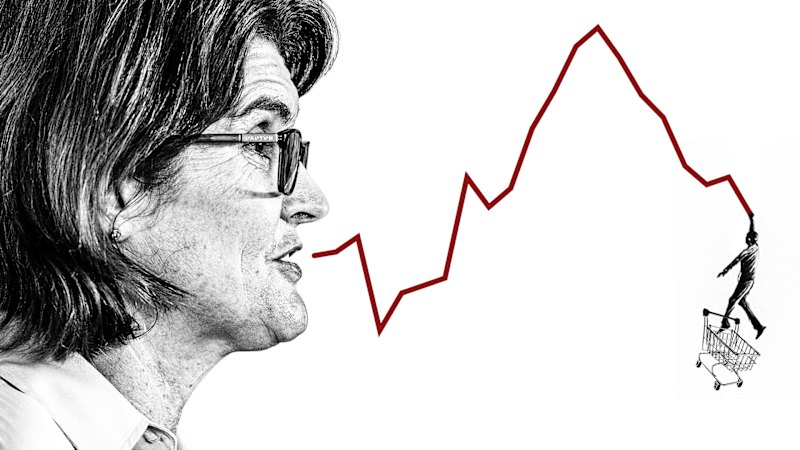
From the time Reserve Bank deputy governor Andrew Hauser appeared on the ABC’s 7.30 program three weeks ago, it was clear an interest rate hike was coming.
“We have one big problem and that’s inflation,” was one of the first things Hauser told the national television audience.
Since then, Reserve Bank officials have used multiple public appearances and even podcast interviews to repeat the message.
After the rate increase was announced, a poised Reserve Bank governor Michele Bullock spent nearly an hour ramming home a similar message at the traditional press conference that follows each interest rate decision.
“I know this decision is difficult for households with a mortgage and businesses with loans, but high inflation hurts all Australians, especially the most vulnerable,” she said.
She even acknowledged the possibility the RBA’s ongoing inflation fight could push Australia into recession if the public’s expectations of inflation cannot be contained.
It is understandable they felt the need to do a lot of explaining: the circumstances for this interest rate hike are highly unusual.
Normally, rates rise when the economy is humming and demand is strong; the RBA intervenes with higher rates to slow things down and keep prices in check.
But right now, unemployment is near a five-year high, house prices are falling and economic growth per person is anaemic – hardly the conditions under which you would expect a fourth hike in eight months that lifts the RBA’s benchmark cash rate to a 15-year high.
US President Donald Trump’s ill-advised and ill-fated attack on Iran is a big factor. Inflationary pressures were stirring before the Middle East conflict began in February, but his intervention has made the inflation fight far more difficult.
The RBA’s short statement announcing the rates decision said, “global energy prices are now much higher than had been assumed” only a month ago. Bullock labelled the Middle East conflict “a big shock” that has “made us all poorer in this country.”
But it’s not all about the Middle East conflict – complex constraints on what the Reserve Bank calls “domestic capacity” are also contributing to Australia’s inflation problem.
That means spending by the private sector (consumers and businesses) and the public sector (governments) is also pushing up inflation.
The release of the Final Budget Outcome for last financial year on Monday was a reminder that, despite Australia’s inflationary pressures, the federal government has been running a budget deficit; it could be doing more to assist the Reserve Bank control inflation by spending less.
The RBA’s monetary policy board, which sets interest rates, has made it clear more increases are possible.
In a short statement announcing Tuesday’s decision, the board said it would “will continue to do what it considers necessary to bring inflation sustainably back to target, including increasing the cash rate target further if needed.”
The bond futures traded on money markets are signalling another interest rate increase by February and a 70 per cent probability of yet another hike by June next year.
But the RBA faces a tricky balance as it tries to tame inflation while not causing lasting damage to the economy.
Australia has benefited enormously from five years of low unemployment, but that could quickly evaporate if rates are lifted too high.
A lot will depend on how consumers and businesses react to the latest interest rate hike. A continued deterioration in the jobs market and further property price falls may prevent another rise.
But if the Middle East conflict drags on, putting upward pressure on inflation, the RBA may conclude it has no choice but to lift interest rates again.
Borrowers beware should senior Reserve Bank officials start appearing on national TV in the weeks before the next board meeting.
Cut through the noise of federal politics with news, views and expert analysis. Subscribers can sign up to our weekly Inside Politics newsletter.
You have reached your maximum number of saved items.
Remove items from your saved list to add more.
Citations · 2 reports from 2 outlets
Tap a citation to read it above, right here on T.A.M.
To avoid another rate rise, things might have to get worse
Unemployment is climbing and house prices are sinking, so the RBA knew this rate rise would need a lot of explaining.
1 hour ago · Matt WadeTo avoid another rate rise, things might have to get worse
Unemployment is climbing and house prices are sinking, so the RBA knew this rate rise would need a lot of explaining.
1 hour ago · Matt Wade