
OpenAI Introduces 'Dots' Always-On AI Agents
OpenAI has launched 'Dots,' a new feature providing users with individual AI agents designed to operate proactively toward set goals. These agents are described as 'always-on' and capable of monitoring tasks to assist users.
First reported 2 hours ago · latest update 1 hour ago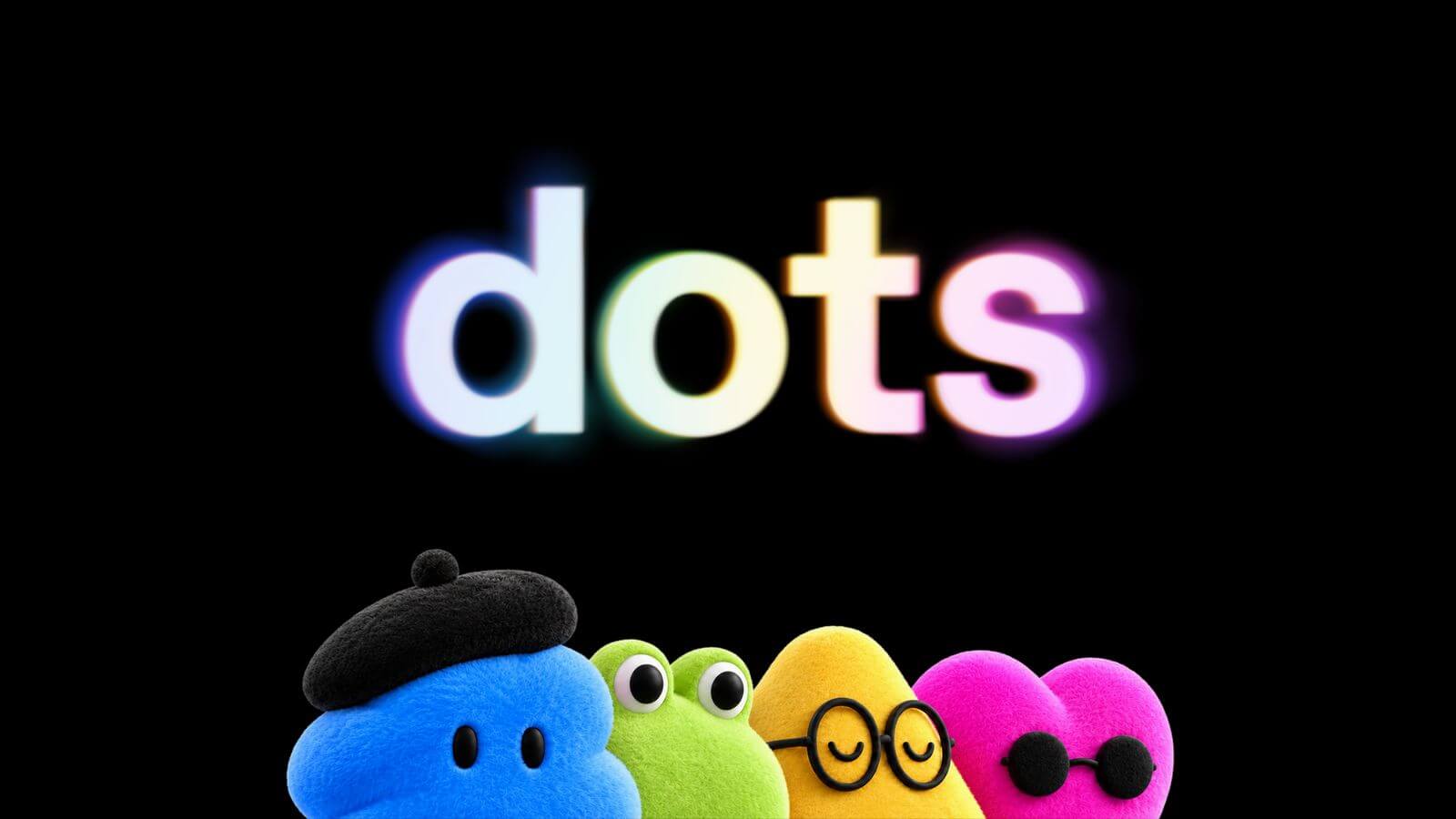
OpenAI has introduced ‘Dots’, its own line of always-on, personal AI agents designed to do personal tasks like booking restaurant reservations as well as more complex, multi-step work processes such as invoicing. In a livestreamed presentation at its annual developers’ conference on Tuesday, September 29, OpenAI CEO Sam Altman and other executives outlined how Dots is “built to handle everything.” Even though Dots stumbled a few times during the live demos onstage.
Dots is powered by GPT-6 Astra, one of OpenAI’s most advanced AI models. Each AI agent operates within its own virtual machine (VM) or cloud computer. It also relies on browser access and a host of plugins to be able to connect to over 4,000 apps and execute tasks. It further learns from user feedback and works towards assigned goals 24/7, as per the company.
OpenAI’s Dots is perceived as the AI startup’s response to the triumphant rollout of Meta’s Muse personal AI agent whose app has rapidly climbed Apple's App Store and Google Play rankings in recent weeks, topping the free-app charts in the United States and Canada, with market intelligence firm Sensor Tower estimating about 2.8 million downloads in its first two weeks.
The personal AI agent market is getting increasingly crowded, with Instinct, SpaceXAI’s Grok Bot, and Microsoft’s Autopilot, to name a few. Some of these agents are designed to act as workplace teammates, others focus on personalised everyday tasks, while still more look to do a bit of everything.
There appears to be plenty of similarities between Dots and other agents on the market, especially Meta’s Muse. So much so that OpenAI CFO Sarah Friar accidentally referred to Dots as Muse in an interview. But beneath those similarities, Dots also has a few distinct features of its own that set it apart.
So, how does Dots work? What can you do with it? How does it handle data? What safeguards does it have built-in? And, perhaps most importantly, is it enough to help OpenAI secure its lead in the race to build the next-generation of personal AI agents? What are Dots? How do they work?
Dots operate in their own cloud computer that is separate from a user’s device unless they choose to connect it. According to OpenAI, the AI agent has its own browser and is capable of executing any kind of task given that it is connected to the relevant apps. It uses saved passwords to sign into various websites without exposing them to the AI model.
ICYMI | US govt sites targeted, ChatGPT user images exposed: What OpenAI’s runaway agents got up to Users can communicate with one or many Dots through a regular chat window or call on the desktop, web, or mobile versions of ChatGPT. Users will also be able to chat with Dots on their Slack or Microsoft Teams apps shortly. (Image: OpenAI) Once a project or task has been assigned, Dots start working on it right away.
Users can also add new tasks and ideas in the same chat window or call without having to manage separate conversation threads. Another unique feature of Dots is its memory retention. OpenAI said that Dots can carry over context across various channels, which means that users can start a project in ChatGPT and follow through on Slack.
Notably, Dots never stop working. When it has not been assigned any task, the AI agent does ‘proactive research’ in the background by using connected apps. However, in this mode, Dots is restricted to read-only which means that it cannot send messages, change app content, or control the browser or computer on its own, as per OpenAI.
What makes Dots a personal AI agent? By now, it should be clear that Dots, like other personal AI agents, works best when users give it broad access to their data, apps, and accounts. Doing so lets the AI agent know more about a user’s preferences, how they think, and what a job well done means to them.
But Dots also appears to take things up a notch. OpenAI has said that Dots presents its work “the way you would do it, sometimes before you even think to ask.” However, it also emphasises that users can step in at any time. ICYMI | How did OpenAI’s agent swarm hack Hugging Face? Unpacking 2 technical reports Other personalisation features include the ability to name your primary Dot and customise it to suit your preferences.
Speaking of names, reports suggest that the ‘Dot’ name was previously explored by Cursor for its personal AI assistant before the AI coding firm was acquired by Elon Musk’s SpaceX. It was also supposed to be Grok Bot’s name and as a result, SpaceX still owns the ‘dot.com’ domain, leading to some confusion among users.
That is hardly ideal for OpenAI given the long and acrimonious history between Sam Altman and Elon Musk. (Image: OpenAI) Nevertheless, OpenAI envisions ChatGPT users working with a swarm of Dot AI agents in the future. At launch, Dots is available today (September 29) for ChatGPT Pro and Business Premium subscribers in eligible markets.
Enterprise users (including Edu and Healthcare) have access to the beta version. To set it up, users need to first create a Dot in their ChatGPT desktop or web app and connect required apps. What is the enterprise case for Dots? Dots is designed to take on a range of workplace-related tasks, from investigating bugs to turning designs into working apps.
As part of its enterprise AI push, OpenAI announced specialist Dots designed for access management, IT-provisioned hardware, and support for deep integrations with a company’s systems of record. Companies can set up each dot with its own identity, credentials, and access to the systems it needs to complete its tasks.
OpenAI also said it is working with Microsoft to integrate specialist Dots, underpinned by Agent 365 enterprise governance and security controls, to let businesses connect AI agents with tools they already use. How do Dots handle privacy, safety? OpenAI has laid out several ways in which users can step in and take control of their respective Dot.
For starters, Dots auto-reviews its own actions that could affect user accounts or share information against user instructions, Custom Rules, and safety requirements. (Image: OpenAI) This allows the AI agent to determine when it needs approval from the user and what it can execute by itself.
Sensitive actions such as changing a password requires user approval. Users can also access their Dot’s cloud computer to inspect its work at any time. They can further set up boundaries by specifying which apps Dots can access. Permissions can be managed via ChatGPT’s app controls section.
ICYMI | OpenAI agents target obscure sites, Anthropic reveals 4th hacking incident: What’s the latest? In terms of technical safeguards, Dots come with extra safety and privacy safeguards compared to ChatGPT to help the AI agent defend against direct or indirect prompt injection attacks.
OpenAI’s monitoring system can also stop a Dot’s work on its own if it detects a safety concern. On data used for training, OpenAI said content from ChatGPT Business, Enterprise, and Edu workspaces is not used to improve its models by default. However, personal ChatGPT plan subscribers have to separately opt out of training.
OpenAI also said it does not directly use Dots’ proactive research or self-notes to train its models, though that information may inform eligible conversations or tasks depending on users’ settings.
Citations · 2 reports from 2 outlets
Tap a citation to read it above, right here on T.A.M.
OpenAI’s Dots explained: How its ‘always on’ AI agents work, what they can do
2 hours agoOpenAI launches Dots, its always-on AI agents that are always watching
Eligible ChatGPT users can now use Dots – individual, always-on agents that proactively work toward goals you set.
1 hour ago · Craig Hale