
Why British PM named Iran as likely culprit in air base plot
Andy Burnham said there were “strong indications that Iran played a part” in the incident at RAF Fairford, where five men were arrested before being released on bail.
First reported 1 hour ago · latest update 1 hour ago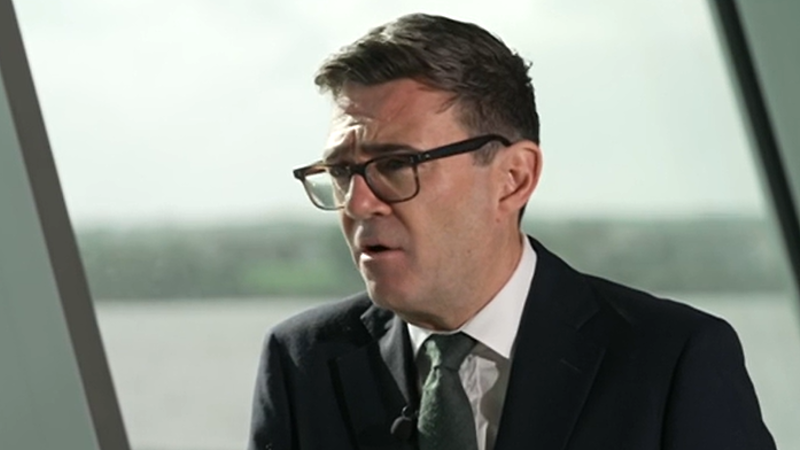
London: Political leaders are often wary of naming the culprit behind a security alert even when their officials quietly brief the media about threats from state spy agencies.
British Prime Minister Andy Burnham set aside that standard caution on Wednesday by naming Iran as a likely player in the alarming plot against a Royal Air Force base in the early hours of Sunday morning.
Burnham made a calculated decision to go public with the assessment from intelligence agencies about the threat to the Fairford air force base when he sat down for a scheduled interview with the BBC.
“There are strong indications that Iran played a part in what happened over the weekend at RAF Fairford, but of course, it remains an ongoing, complex and serious police investigation,” he said.
“And, of course, we are working closely with our colleagues in the United States of America.
“We are on top of it in every possible way imaginable. Police in Gloucestershire [and] our Counter Terrorism Police have done an outstanding job. I thank them for that.
“We will say more in due course, but we can confirm our belief that we believe Iran to have played a part.”
All the signs point to an Iranian ploy to hire small-time criminals to test the defences at a major base – in this case, a base used to support American bombers that strike Iranian targets.
Five men were arrested in the early hours of Sunday near the base with three vans thought to carry explosives.
Police have since stated that they did not find any explosives, although they did find stored fuel.
While this led to online theories that the suspects were merely stealing fuel from nearby farms, that idea flies in the face of the reality. The suspects appeared to be testing the defences of a major military base, without going so far as to launch an attack.
In naming Iran, the prime minister put paid to the theory that the suspects were in the area for some minor reason.
The fact that the police released the five suspects on bail also tends to support the idea that the men were minor criminals. The logical objective is to keep them under surveillance rather than in detention.
One key fact remains a source of mystery. The Times of London revealed that one of the suspects called the 999 emergency phone line – the UK equivalent of triple zero – to notify the police of the activities near the base.
The suspect made this call at 12.45am, the BBC reported. This was before a local farmer saw the men and called police after 1.30am. London’s The Telegraph reported that a suspect made the first call to authorities.
The Iranian ambassador in London has denied any Iranian responsibility for the plot, but that can be taken with a grain of salt.
Political leaders and national security agencies have been wary in the past about naming the source of a threat. Burnham’s remarks are a sign that he puts a greater priority on being frank with citizens about the scale of the dangers from state threats. His predecessor, Keir Starmer, was by nature more cautious.
Burnham is not alone in this approach. When German authorities detected a drone attack on an aircraft at Leipzig in early August, it began an investigation and later named Russia as the instigator.
In short, governments of all kinds are now being more assertive about naming culprits.
Burnham’s comments bring the public position in London closer to the line taken in Washington, DC after US Secretary of State, Marco Rubio, said the incident “clearly involves” a foreign actor.
There is still a gulf, however, between the UK government and the American president, Donald Trump, on what has gone on. Trump said authorities had the five suspects under surveillance for a long time. No UK minister or security official has said the same thing.
Australians will recognise the careful language Burnham used to attribute blame without being definitive. When Jewish community sites were attacked in Sydney and Melbourne in late 2024, authorities took time to determine the ultimate source of the danger.
Weeks after those attacks, the Australian Federal Police warned that overseas actors were using “criminals for hire” and paying them in cryptocurrency to attack targets.
It took several more months before ASIO chief Mike Burgess named Iran as the state behind those two attacks. When the time was right, Prime Minister Anthony Albanese went public with this advice and expelled the Iranian ambassador.
The key objective for the Australian security agencies was to confirm the flow of money and instructions between Iran and those who carried out the attacks.
The British no doubt have the same goal now that the five suspects are under surveillance in the community.
Get a note directly from our foreign correspondents on what’s making headlines around the world. Sign up for our weekly What in the World newsletter.
You have reached your maximum number of saved items.
Remove items from your saved list to add more.
Citations · 2 reports from 2 outlets
Tap a citation to read it above, right here on T.A.M.
Why British PM named Iran as likely culprit in air base plot
Andy Burnham said there were “strong indications that Iran played a part” in the incident at RAF Fairford, where five men were arrested before being released on bail.
1 hour ago · David CroweWhy British PM named Iran as likely culprit in air base plot
Andy Burnham said there were “strong indications that Iran played a part” in the incident at RAF Fairford, where five men were arrested before being released on bail.
1 hour ago · David Crowe