
The Knights may triumph, but who will win Newcastle?
While the footy is front of mind in the Hunter this week, the once Labor heartland will soon be dominating headlines for a different battle: the NSW election.
First reported 1 hour ago · latest update 1 hour ago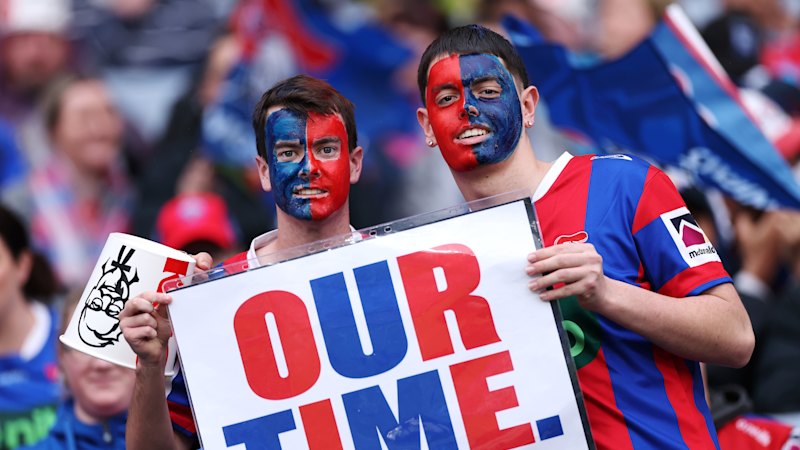
You have reached your maximum number of saved items.
Remove items from your saved list to add more.
Whatever else it signifies, if Newcastle wins Sunday’s NRL grand final, much of the satisfaction locals in the Hunter will take from it will come from the defiant middle finger it will unfurl to Sydney.
Perhaps more than any other city in Australia, Newcastle and the wider Hunter Valley operate on a sort of perma-reactionary instinct bred from a chip which is not so much on the shoulder as it is embedded in the DNA. It’s a region which feels constantly neglected, yet hates change. Craves recognition but can’t stand outsiders who stick their noses in. In any debate, first sense-check which position seems most analogous to something Sydney might do. That’s the loser.
Which, beyond the footy, is instructive in the build-up to the next state election in NSW.
When I moved to Newcastle in the early 2010s, the city was going through a seismic change. After Labor’s 2011 election wipeout, the region had turned blue in a way it never had before (or since), with Liberal MPs elected in Newcastle, Charlestown, Swansea and Maitland. With a Liberal MP already in Port Stephens, it marked a total reshaping of what had been Labor’s blue-collar heartland in NSW.
Eager to consolidate this new constituency, and highlight the sense the Hunter had been taken for granted under Labor, the Liberals delivered a series of significant infrastructure announcements, including light rail, a massive new university campus and courthouse in the CBD, and a major rezoning of the Hunter Street Mall.
In return for their investment, they copped an absolute pasting. Though the Liberals were undone in the Hunter by the Independent Commission Against Corruption’s Operation Spicer investigation – which spurred the resignations of most of their new MPs over a series of illegal donations by property developers – the years that followed were largely dominated by blowback to the same announcements Mike Baird and co had hoped would win Novocastrians over.
One former minister described a sense of “exasperation” in the Coalition government. “We gave up. It was like, what else can we do for these people? I actually loved their attitude, though. I liked to think of it as tough love.”
For the five or so years I lived there, until 2017, the city’s politics was dominated by anger over, in particular, the light rail, but more broadly a kind of vague sense of outrage at the imposition of, well, anything, by people from the wrong end of the M1. As a journalist, and outsider, it was like reporting on a never-ending episode of the Australian children’s comedy Round the Twist. Harold Gribble versus the Twists.
Almost a decade on, the Hunter’s politics looks as though it is facing yet another reshaping. Labor is, to quote one party source, “under water” in the seat of Cessnock, where One Nation is ascendant. Labor’s three other lower Hunter seats – Maitland, Swansea and Port Stephens, all held by ministers – are in the danger column.
In Newcastle, which has gravitated further to the left as the rest of the Hunter veers to the populist right, the incumbent Labor MP, Tim Crakanthorp, will not have been comforted by the party’s parlous third-place finish in a recent mayoral byelection, where it finished behind the victor, independent Gavin Morris, and the Greens. Climate 200 is sniffing around, as are a few other potential high-profile independent challengers. Nowhere is safe.
As a result, the government is being forced to protect seats it couldn’t have predicted would be in danger only a fear years ago. As I’ve previously written, Chris Minns barely stepped foot in the Hunter in his first two years in office. He has been 11 times – so far – this year. The $12 billion commitment to build the next generation of Tangara trains at either the locomotive depot at Broadmeadow or a former mine site in Teralba reeks of self-preservation.
What’s interesting is whether the same reflexive hostility could take hold. One Nation seems to think so, judging by party leader Mike Newman’s criticism of the Tangara project, as well as the bailout of Tomago Aluminium. He has attacked both policies on economic grounds, quoting free-market economist Milton Friedman in a long essay criticising the financial bona fides of the Tangara announcement on his Substack over the weekend.
In any normal electoral cycle, I’d say Newman is a singularly terrible choice as a candidate in Cessnock, the seat where he plans to run. For one, he writes long essays quoting Milton Friedman on Substack. And while he has recently swapped his suits for some very new-looking orange high-vis, he doesn’t exactly scream salt of the earth. Nor does he actually live there. His businesses are registered to an address in leafy Neutral Bay, and on a podcast earlier this year he described his local electorate as North Sydney. When he was unveiled as One Nation leader, he would say only that he was now “living in the region”.
But the mood to lift the middle finger is rising, this Sunday and potentially beyond.
Michael McGowan is NSW state political editor.
Get a weekly wrap of views that will challenge, champion and inform your own. Sign up for our Opinion newsletter.
Citations · 2 reports from 2 outlets
Tap a citation to read it above, right here on T.A.M.
The Knights may triumph, but who will win Newcastle?
While the footy is front of mind in the Hunter this week, the once Labor heartland will soon be dominating headlines for a different battle: the NSW election.
1 hour ago · Michael McGowanThe Knights may triumph, but who will win Newcastle?
While the footy is front of mind in the Hunter this week, the once Labor heartland will soon be dominating headlines for a different battle: the NSW election.
1 hour ago · Michael McGowan