
Debate over Australian Greens leadership election process
There is ongoing discussion regarding whether the Australian Greens should transition to a model where all party members, rather than only elected MPs, vote for the party leader. Proponents suggest this change is necessary to prevent political stagnation.
First reported 1 hour ago · latest update 1 hour ago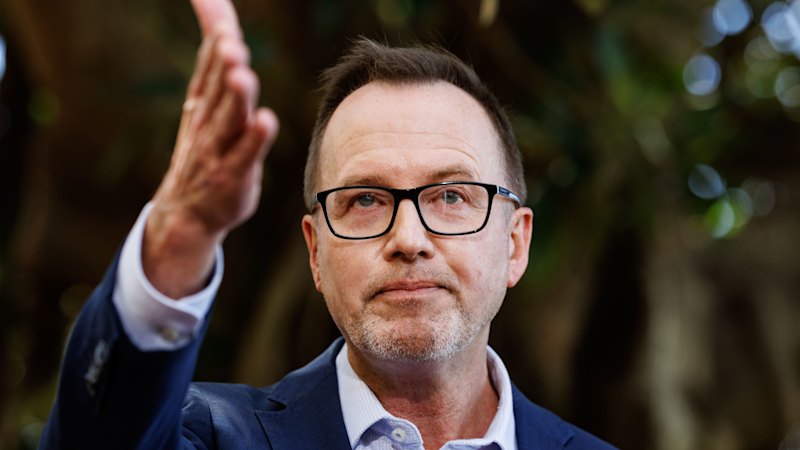
You have reached your maximum number of saved items.
Remove items from your saved list to add more.
To quote Alanis Morissette: isn’t it ironic, don’t you think?
The fictional Roy family from Succession is everything the Greens detest: an avaricious and amoral media dynasty.
Yet the Greens’ leadership battle this week resembled a scene from the beloved HBO show, whose scriptwriters found increasingly extravagant ways (like a superyacht anchored off the coast of Croatia) to isolate their protagonists from the outside world as they schemed for power.
Larissa Waters’ surprise resignation as party leader on Monday came ahead of a two-day Greens’ retreat in Sydney, where the party’s federal MPs were gathering to talk policy and strategy behind closed doors. The retreat suddenly took on a heightened significance as the place the Greens would decide their new leader. (The Succession scriptwriters may well have picked a more cinematic setting for the showdown – an eco-lodge in the Blue Mountains, perhaps, rather than the sterile Commonwealth Parliamentary Offices in the Sydney CBD.)
By lunchtime on Wednesday, NSW Senator David Shoebridge had been anointed the new leader after defeating colleagues Sarah Hanson-Young and Mehreen Faruqi.
The rapid handover avoided a drawn-out, messy contest in which the leadership contenders would have had to make a public case for why they were the best person to lead the party to the next election. There were no vision statements, no media interviews. The only thing Greens’ members and the public heard from the three contenders ahead of the vote came via anodyne Instagram posts declaring they would contest the ballot. None offered any insight into fundamental questions, like whether the party should focus on environmentalism or left-wing economics, or whether it should prioritise parliamentary compromise or picking fights with Labor.
This hasty and opaque process minimised infighting but denied the party a chance for a meaningful and vigorous debate about its future at exactly the moment it needs one. It was a similar story after last year’s federal election, when the partyroom quickly fell behind Waters as a consensus candidate when three of the four Greens’ lower house members, including long-time leader Adam Bandt, lost their seats.
The outcome: the Greens’ primary vote remains stuck around 12 per cent despite growing frustration with the major parties and voter anger at the rising cost of living. Left-wing populists in other countries have made impressive recent gains – most notably, New York’s democratic-socialist mayor Zohran Mamdani but also Germany’s far-left Die Linke party, which last week won the most votes in Berlin’s state parliament for the first time. Yet in Australia, only Pauline Hanson’s One Nation and the teal independents are benefiting from voters’ desire to flick a middle finger to the status quo.
The Greens’ leadership contest this week is emblematic of a party that regards itself as a champion of transparency and grassroots democracy yet, in its internal machinations, is too often secretive and insular. Unlike Labor, the Liberals and the Nationals, its party conferences are off-limits to the media. In 2010, it famously took weeks for it to be revealed that Hanson-Young had unsuccessfully challenged Christine Milne for the deputy leadership.
Max Chandler-Mather, one of the Greens MPs who lost their seats at the last election, made an important contribution this week when he lit a fire under the party to give ordinary members a say in leadership contests.
Now running the Green Institute think tank, Chandler-Mather said progressive voters were asking how the Greens could emulate the success of Mamdani and UK Greens’ leader Zack Polanski (whose party was surging in polls before UK Labour dumped Keir Starmer for Andy Burnham).
“The recipe for their success doesn’t just lie in their policies, rhetoric or even organising strategy. It lies in the process by which they won their elections. In both instances they were elected by direct member elections,” Chandler-Mather wrote in an open letter.
In the UK Greens’ 2025 leadership contest, Chandler-Mather noted, the party quadrupled its membership from 68,000 to 230,000, injecting the party with a surge of energy and resources.
Faruqi may have sounded like a sore loser when, after failing to convince her colleagues to back her, she declared the Greens “cannot call ourselves a grassroots party” without a member vote. But she wasn’t wrong.
To the Greens’ embarrassment, it is not only their UK and New Zealand counterparts who allow rank-and-file members to vote in leadership ballots but also their Labor opponents. After traumatic Rudd-Gillard-Rudd years, Labor moved to a system where party members as well as MPs have a say in picking the leader – though this has only been tested once, when Bill Shorten defeated Anthony Albanese in 2013.
Shoebridge, as far as we know, emerged triumphant because of his successful use of parliamentary hearings to grill defence and law enforcement officials and provide important scrutiny on the AUKUS pact. It’s clear the hard-left warrior, despite being a passionate bushwalker, sees economic populism, not environmentalism, as the key to lifting the Greens’ vote.
The former barrister is strong on policy detail and is a fluent communicator, if often a fiery one. As leader, he now faces a more difficult task than interrogating and criticising: he must inspire and mobilise progressive voters to back the Greens.
Crucially, the charismatic Mamdani channelled New Yorkers’ frustrations at rising inequality by acting as a hopeful warrior with a plan to bring prices down, not a shrill dogmatist.
Shoebridge has committed to giving members a say in the next leadership ballot, but in media interviews on Thursday, he alluded to why such a move has not happened and will be difficult to implement. Party members in smaller states such as Tasmania, the Greens’ birthplace, would resist being outnumbered by inner-city voters in NSW and Victoria.
While it won’t be easy, the party has an urgent need to reform and re-energise, to become more outward-looking and less cloistered. It might not make for compelling television, but could lead to electoral success.
Matthew Knott is the foreign affairs and national security correspondent for The Sydney Morning Herald and The Age.
Citations · 2 reports from 2 outlets
Tap a citation to read it above, right here on T.A.M.
The Greens need to let the sunshine in or risk stagnation
Should the Greens let all the party members - rather than just the elected MPs - vote for the leader?
1 hour ago · Matthew KnottThe Greens need to let the sunshine in or risk stagnation
Should the Greens let all the party members - rather than just the elected MPs - vote for the leader?
1 hour ago · Matthew Knott