
Debate Over Redevelopment of Sydney Public Housing
A government plan to replace low-density public housing with apartment buildings has sparked debate in Sydney. Residents argue that the redevelopment negatively impacts the local community.
First reported 2 hours ago · latest update 2 hours ago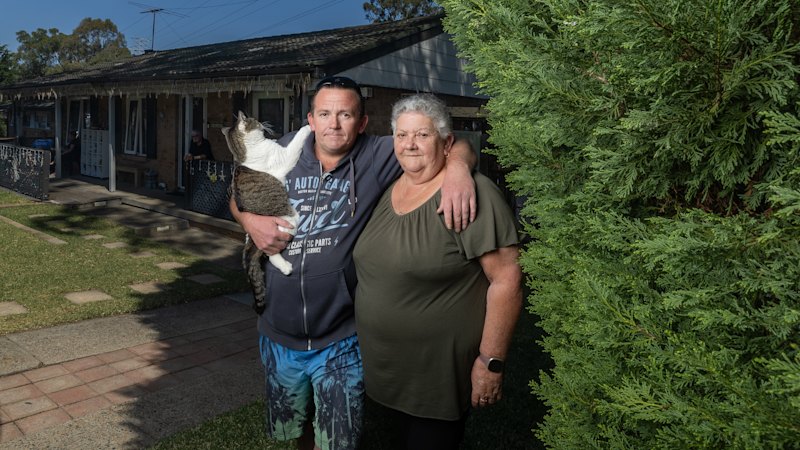
There are many things that concern Louise Marchant and her son, Gary, about being forced out of their home after more than 30 years. Where will they go? How do they pack up the dozens of family photos and memories? And what do they do about the sheds overflowing with Christmas decorations in their backyard?
Louise, 67, and Gary, 39, have worked with neighbours and friends to light up the quiet cul-de-sac of Indigo Way, Blacktown, in Sydney’s west, with a show-stopping display of lights and decorations ranging from snow-capped model towns to rooftop reindeer.
Last Christmas was their final display. Homes NSW is relocating Indigo Way’s public housing tenants, with plans to demolish 16 freestanding homes and replace them with 134 apartment blocks up to six storeys high.
In being forced out, residents on the quiet cul-de-sac have found themselves at the centre of a new housing battle, stretching from the public housing centre of Waterloo to Blacktown: how, exactly, should the government increase the public supply of homes?
Homes NSW, the government agency responsible for delivering and managing public housing, is pushing in some areas to demolish and replace ageing or lower-density homes with modern and more densely packed apartments. But the Greens and other housing advocates are pushing the government to build new homes on vacant, government-owned land – and not demolish existing housing.
“The delivery of these new homes could take up to 10 years,” said Greens MP Jenny Leong, the party’s housing spokesperson, who said the net effect would be a reduction in public housing numbers before construction finished.
Louise and her neighbours, most of whom declined to be interviewed, were contacted by Homes NSW on July 20 with a letter saying its staff is surveying the area for potential development and that residents may be moved in the future. Nine days later, a second letter arrived. All residents would be relocated.
“We were told that they would come out here to us, to have an interview in our house, to see what we need. Not one person has had anyone come out,” Gary said. “I would have expected that within a week, you’d have a knock on the door, or a text message.
“At the end of the day, we’re happy to do it, but the way it’s being handled, the way we’re being treated – it’s not right. And we’re not standing for it.”
Louise is concerned about where Homes NSW will move her, given much of her community and social life exists up and down the street. She regularly cares for her six-year-old granddaughter, who has cerebral palsy and uses her home for therapy. “We have to make it safe for her as well,” she said.
“What I can’t understand is, if they’ve got 16 empty places out there [for the residents of Indigo Way to move into], why aren’t people living [in them]? Why are they taking us out and putting us into those 16 houses … Why destroy homes that are all right and have a good community?”
A similar debate has been raging in Waterloo, in inner Sydney, since the government in May announced plans to bulldoze 750 apartments built in the 1970s and put 3300 new apartments up to 33 storeys high in their place. Leong is calling on the government to build public housing on unused state-owned land.
“[The government has] confirmed under their land audit that they’ve identified unused sites that are publicly owned already that are capable of delivering 13,000 homes,” she said. “But less than 15 per cent of those are being used by the government and, of those, less than 30 per cent will be social housing.”
NSW Housing Minister Rose Jackson said the cost of land was a major issue in delivering housing, and “large-scale renewals on our own under-utilised land” was one method of avoiding buying more land.
“I acknowledge that some families would rather stay in their existing homes and we don’t take these decisions lightly. But I have an obligation to every person on the social housing waitlist to do everything in my power to build more homes and that’s what we’re doing,” she said.
“Every resident that relocates is always given a right of return, and overwhelmingly the feedback I get from residents is that they love their new homes.”
The street has garnered more than 750 signatures on a petition to the government, but hopes are fading for a Christmas display this year.
“It’s going to be the worst feeling, not to be able to come and look at this house at Christmas,” Gary said. “It’s such a good little community.”
You have reached your maximum number of saved items.
Remove items from your saved list to add more.
Citations · 2 reports from 2 outlets
Tap a citation to read it above, right here on T.A.M.
The quiet cul-de-sac at the centre of Sydney’s newest housing debate
The government is bulldozing low-density public housing for apartments. Residents say it’s destroying community.
2 hours ago · Anthony SegaertThe quiet cul-de-sac at the centre of Sydney’s newest housing debate
The government is bulldozing low-density public housing for apartments. Residents say it’s destroying community.
2 hours ago · Anthony Segaert