
AI data centres are springing up in communities across the country. Now, residents are fighting back
For these locals, the prospect of a vast new data centre – just one block away from a school and 16 metres from a home – was too much. So they got to work.
First reported 1 day ago · latest update 1 day ago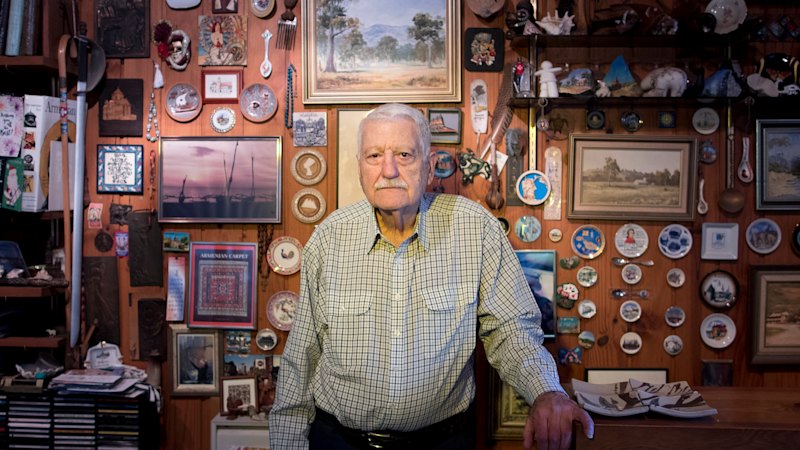
Trainor was also worried about the fire risk. Project Mars’ generators would have required the storage of 1 million litres of diesel fuel on site, together with almost 200 tonnes of lithium-ion batteries. Together with the four additional data centres, those numbers were set to blow out to extraordinary proportions. Titchkosky calculated that such a cluster could necessitate the on-site storage of more than 5 million litres of diesel fuel and 900 tonnes of lithium-ion batteries – a frightening prospect. While data centre fires are rare, when they catch alight, they stay alight, thanks in part to “thermal runaway”, a phenomenon where lithium-ion batteries undergo an uncontrollable chemical reaction, resulting in a self-sustaining and powerfully toxic fire.
Data centre proponents tend to wave away such concerns, while pointing out that data centres are, whether we like it or not, part of our critical infrastructure, securely storing data for essential services including hospitals, government and business. AI enables triple-zero calls and air traffic control, and is embedded in our military. AI also has other applications that, while strictly speaking not critical, could be defined as a net benefit. For instance, Social Protect, an Australian-founded software app, uses AI to detect and delete abusive, racist or sexual comments on social media posts (just in time for AI to generate more abusive, racist, or sexual comments. But still.) AI is also being used to help identify endangered species, and assist in disaster-response planning. “Not everyone understands what data centres do,” says Belinda Dennett, the CEO of Data Centres Australia (DCA). “We need to do a better job of explaining that to people.”
Dennett is a veteran tech lobbyist. She worked for 12 years as Microsoft Australia’s director of corporate affairs before becoming head of government relations for data centre operator AirTrunk. As the head of DCA, she has become both an indefatigable AI-advocate and unflinching human piñata, a data centre super fan in a world that increasingly hates data centres. “The stuff you read is so blown out of proportion,” she tells me on a Zoom call. Take the water issue. “Only 2.3 per cent of the water that’s used in manufacturing is used in data centres. It’s not like you go stick a pipe in a lake and drain the lake.” Besides, “We wash down manufacturing equipment with drinking water and no one seems to object.” Concerns about energy are similarly misguided, she says. For instance, the hair-raising figures on power consumption are actually due to something she calls “phantom demand”: “Many data centre proposals do not proceed to being built. We know there are speculative and duplicative applications in the system that make demand look much larger than it is.”
Dennett is bargaining that the fuss over data centres will fade. “The outrage will move to something else,” she says. Fifteen years ago, she worked on the rollout of the National Broadband Network, a similarly contentious piece of infrastructure. “We faced all this sort of backlash about the NBN. ‘Why do we need it? It’s just for downloading movies. It’s too much money. It’s ripping up footpaths.’ And now we never talk about it, and it’s just accepted that it’s there.”
But the distrust of Big Tech is more visceral, not to mention global, than anything faced by the NBN. Indeed, it’s hard to think of another major technology that has squandered its social licence faster than AI. Just years ago, AI was regarded as a breakthrough technology of unlimited promise, every bit as transformative as electricity and the railroad. Now, it’s seen as the malformed offspring of a small clique of malignant narcissists in Silicon Valley, delusional futurists toying with algorithms that promise to render redundant hundreds of millions of jobs around the world, all the while poisoning the planet.
Shavarsh Bedrossian compares the industry to Big Tobacco. “Remember the cigarette and asbestos companies?” he told me when I visited his Lane Cove home. “Remember what they said about their products? That they were safe to use?” He mentions the noise that comes from data centres. “It doesn’t matter to me, I’ll just take my hearing aids out, but what about the kids in the area, and the dogs? Animals hear different frequencies. And the kids, who will compensate them when they get older for damaged hearing?” As for the politicians, “what they say in public has nothing to do with what they decide in private. And those AI companies have unlimited lobbying funds.” He smiles wryly. “I’ll leave that to your imagination.”
On September 15, 1830, the world’s first steam-powered passenger train departed Liverpool, in north-west England, for Manchester, 58 kilometres to the east. Powered by a 20-horsepower locomotive, the Liverpool and Manchester Railway was a sensation, capable of hauling people and freight at speeds hitherto undreamt of, revolutionising trade and transport. More railways soon sprung up, sparking an investment frenzy. Ordinary people mortgaged their homes to buy railway shares, convinced they were securing a piece of the future. Investment ballooned before the bubble burst in October 1845, precipitating one of Britain’s worst financial disasters.
The speculative delirium that fuelled “Railway Mania”, as it became known, set a template for tech-bubbles to come, including, most notably, the dotcom crash of 2000, where investors feared missing out on what was breathlessly touted as the “new economy”. A similar story is being told now, only this time the technology is AI.
Investment in AI certainly seems disproportionate. Morgan Stanley estimates at least $US3 trillion ($4.2 trillion) will be spent on AI infrastructure by 2028. That is, to be clear, three thousand billion US dollars – almost double the size of the Australian economy (and 230 times what the world spends annually on global hunger). Nobel Prize-winning economist Joseph Stiglitz, among others, believes such spending is unsustainable. Indeed, with the technology yet to demonstrate a convincing return on investment and the biggest AI companies astronomically in debt, the industry has had to resort to what market observers, including famed Wall Street investor Jim Chanos and macro-economist Dean Baker (one of the first people to predict the 2008 housing collapse), consider to be little more than tech-utopianism and financial gimmickry.
“The AI bubble is just a series of different ghost stories used to ignore financials,” British journalist Ed Zitron told The Tech Report podcast in August. “It’s fantastical thinking.” But AI is no longer a parlour game for transhumanist kooks and libertarians. The seven biggest AI companies now represent about one-third of the value of the US stock market, the highest index concentration in modern market history. Any collapse could have catastrophic implications.
Where does that leave Lane Cove? For now, at least, Titchkosky has one less data centre to worry about. In late September, Goodman unexpectedly announced it was abandoning its plans for Project Mars, citing changes to the regulatory environment and “the views of the local community”. Titchkosky was elated. “We had a drink or two,” she tells me.
The fight against Goodman has been won, but more battles lie ahead. Last week, Titchkosky and Trainor appeared before a federal inquiry into the impact of AI and data centres on local communities. They are now advocating for a moratorium, like that in the US, where at least 294 cities and towns have paused construction of AI infrastructure. “Every week it feels like there’s some new development,” she says.
But no matter how busy she is, she makes time every morning to paddle her single scull along Lane Cove River. She’s usually in the water at 5.30am, just as the sun is rising. It is still and quiet, with thick mangroves and misty stands of paperbark. “I love the birds,” Titchkosky tells me. “This morning I saw pelicans, herons, cormorants and a spoonbill.” Spoonbills are rare in this part of the river, so close to the city. “I always notice them, because they’re white, with a feathered mohawk, a black, spoon beak and long black legs. They remind me of what’s at stake.”
Get the best of Good Weekend delivered to your inbox every Saturday morning. Sign up for our newsletter.
Citations · 2 reports from 2 outlets
Tap a citation to read it above, right here on T.A.M.
AI data centres are springing up in communities across the country. Now, residents are fighting back
For these locals, the prospect of a vast new data centre – just one block away from a school and 16 metres from a home – was too much. So they got to work.
1 day ago · Tim ElliottAI data centres are springing up in communities across the country. Now, residents are fighting back
For these locals, the prospect of a vast new data centre – just one block away from a school and 16 metres from a home – was too much. So they got to work.
1 day ago · Tim Elliott