
I am the child of an immigrant. So are 51 per cent of Australians
Both major parties have failed to sell the story of Australia as an immigration nation.
First reported 1 day ago · latest update 1 day ago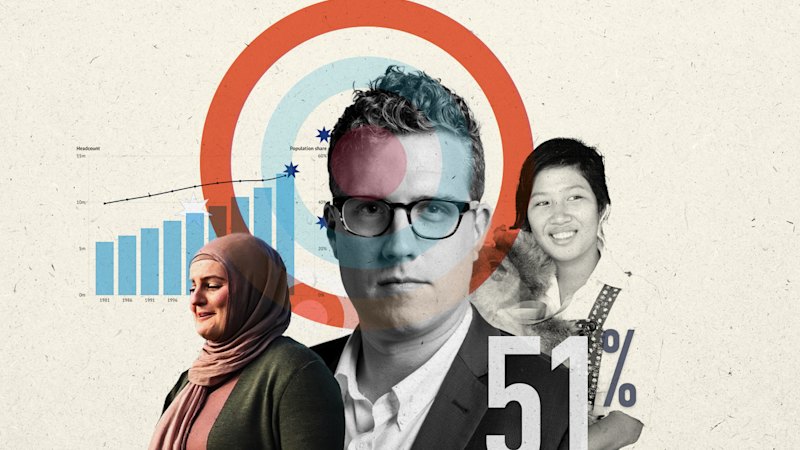
You have reached your maximum number of saved items.
Remove items from your saved list to add more.
I am the child of an immigrant. It is a statement so unremarkable that it is now the norm in a country where 51 per cent of the population have at least one parent born overseas.
When my mother left Poland in 1979, the country was locked behind the Iron Curtain. My uncle and aunty asked if she would ever be able to come back again. She did not know.
My mother was also, until last year, the longest-serving Department of Immigration case officer in Australian history.
For 43 years she worked to bring in refugees and vet those who were not. When I was 12, she taught me how to pick a fake passport. By the time I was 18, she had postings in Malaysia, Sri Lanka and Africa.
She knew all the tricks. The asylum seekers who were suddenly so gay they could not stop kissing each other before their interview. The “Christian” worshippers who were so devout they could not remember a single line in the Bible.
Yet, in all the thousands of cases that she decided over four decades, she did not find one immigrant who arrived intending to destroy Australia’s values.
They came here because they wanted a better life for themselves and their children.
What has changed in the past two decades is that the overwhelming majority of Australia’s immigration intake has shifted from the permanent program (200,000 per year) to the temporary program (now 1 million per year).
So have the settlement services that were historically wrapped around migrants when they entered the country as “new Australians”.
Today, you are much more likely to be a temporary migrant who entered on a student visa, then jumped onto a bridging visa and into a job, than a permanent migrant whose skills, circumstances and support have been assessed by the government either before you arrived or as soon as you landed.
In the 1980s, the Australian settlement team, including my father, took in artists from Romania, refugees from Vietnam and an eccentric band of migrants from Poland. They taught them English and how to find a job. Those first years in Australia are crucial to supporting a shared identity.
Now, as business dictates the flow of temporary migrants under the demand-driven system, the government sees less need to wrap services around them. All because the iron law of GDP means we must continue to grow the economy without taxpayer dollars subsidising the cost of supporting them.
Today, the Australian government spends hundreds of millions of dollars on migrant programs. But as a proportion of GDP, it spends less on settlement services than it did after the end of the White Australia policy. By the end of the decade, the federal government wants to cut spending by a further $385 million.
At the same time, the economy has become dependent on temporary migrants. They now make up a record 16 per cent of the working-age population.
Those who want to further their careers often run head-on into Australia’s guild system: the antiquated peak bodies that control who can work as a professional based on which university they went to and the amount they can pay to match qualifications they are already entitled to.
Engineers become Uber drivers, accountants become kitchen hands. Doctors and nurses struggle to have their qualifications recognised.
When the temporary visa process begins through the instigation of businesses or universities, the government has very little visibility of its impact on infrastructure until it is too late. The policy at both the federal and state level becomes reactive, not proactive.
After 30 years of deregulation, each visa category is now filled with vested business interests that will loudly criticise even the slightest change.
Take away working holidaymakers and fruit won’t get picked. Take away international students and university revenue is under threat. Take away chefs and the price you will pay for a steak on a Friday will go up.
The government knows Australia’s dependence on temporary migration has become a problem. Both major parties have taken too long to become alert to the risks that the demand-driven system poses.
One Nation has found the gap and exploited it with great political effect, fuelled by the growing nativism of social media and an intractable global economic downturn that has voters looking for someone to blame for why their life may not have worked out as planned.
As one of the 13 million Australians with a parent born overseas, it is difficult not to be alarmed by the tone of the debate. My mother refused to speak to me in English. It meant I grew up bilingual and white. The only clue to my background is the “y” in my first name. I cannot imagine how those who wear a hijab or sari are feeling.
Labor and the Coalition have failed to sell the story of Australia as an immigration nation. Instead, people have been reduced to statistics, anonymous proxies to blame for perceptions of misfortune.
The truth is immigrants are younger, more educated, pay more tax and are more fertile. Put simply, Australians are not having enough children to maintain, let alone increase, our standard of living.
If we want Australia to thrive beyond the nostalgic image of some for an Australia long gone, then there is a balance worth fighting for.
Otherwise, we will end up older, poorer and dumber.
Eryk Bagshaw is an investigative reporter for The Sydney Morning Herald and The Age.
Get a weekly wrap of views that will challenge, champion and inform your own. Sign up for our Opinion newsletter.
Citations · 2 reports from 2 outlets
Tap a citation to read it above, right here on T.A.M.
I am the child of an immigrant. So are 51 per cent of Australians
Both major parties have failed to sell the story of Australia as an immigration nation.
1 day ago · Eryk BagshawI am the child of an immigrant. So are 51 per cent of Australians
Both major parties have failed to sell the story of Australia as an immigration nation.
1 day ago · Eryk Bagshaw