
Author reflects on discovering his migrant father's lies through a memoir
In a personal essay, the writer recounts how reading his father's memoir revealed long‑standing deceptions, prompting a deeper understanding of their relationship. Both outlets present the same narrative.
First reported 1 hour ago · latest update 1 hour ago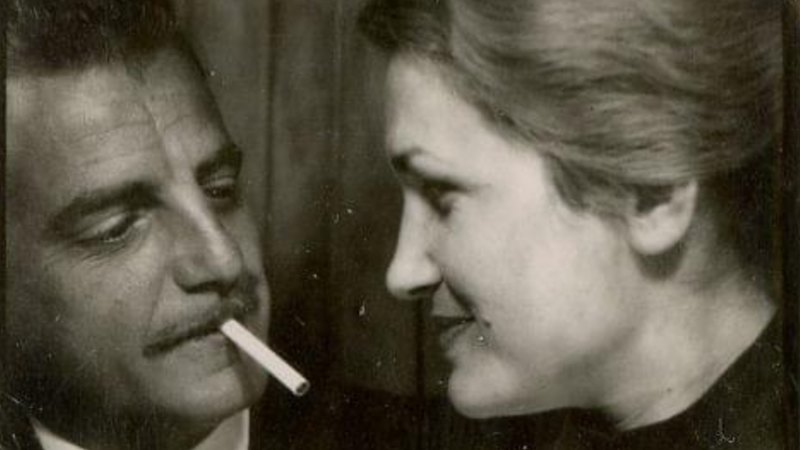
You have reached your maximum number of saved items.
Remove items from your saved list to add more.
Time creates chasms in memory. Past lives become increasingly opaque. Recently, my son took me for yum cha and gave me a present. These moments will become placeholders of memory. He is named after my father, Anastasios. Not for tradition, not for religion, but for memory.
It has been 33 years since my father died of liver cancer.
Anastasios was 62 when he died, two years younger than I am now. I was 31 and had just moved to Melbourne from Adelaide. I had vowed never to live in Adelaide longer than I had to. My old man understood.
If I could not live in Athens, or Vienna, two cities I had lived in the 1980s, then it would have to be Melbourne.
“You need to expand son, and you can’t do that here,” he would say. My mother never wanted me to leave Adelaide.
Obsessed by my fledgling career in the arts, I tried to not think of his cancer.
In his memoir, which I have tried to read since, but can only scan before tears drown me, he’d written, “My son the optimist pretends that things will be OK, and to help him I pretend I will not die.”
Two days before he died, I went back to Adelaide on the Overland train. Flights were not cheap, and I was not cashed up.
“I don’t think Dad will make it,” my sister said when I arrived.
“Don’t be ridiculous,” I said. My desire for positive news overtook me.
She was right. Dad’s yellowed skin stretched over bones, skeletal, eyes sunken and could hardly muster a word.
I tried not to break down in front of him. By the second day of my visit, he was rushed to hospital.
It was night. He could not breathe; the cancer had colonised his lungs, his bones, his pancreas, everything. The time had come.
The emergency doctor was the brother of a school friend.
“Do you think he needs more morphine?” he kept asking.
“Yes,” I kept saying.
My sister, six years younger, cared for him, but I did not want her to see him die, so I took her home. She never forgave me for that.
When I came back I saw my mother bent over his lifeless body on the dimly lit hospital bed.
“My man, my husband, my lover, you have gone … what am I going to do now?” she kept repeating like a mantra.
My father was an elegant man. Well-read. He was annoyed that I was not reading what he called, “Serious literature, Zola, Kazantzakis, or Steinbeck.” Since his death I have read them.
He was also irritated by what he termed my “infatuation with the trendy left” not “serious communism”.
He had, like much of his generation, witnessed the horror of Nazi Occupation and then the Greek Civil War, the fratricide.
He’d walked to high school in Patra and borne witness to partisan heads lined neatly in a row on the footpath.
I repeated his story to a colleague in media, recently, and she, maybe 20 years younger than me, questioned my veracity.
My father’s words, come out of me when I accuse my 24-year-old son of being “too woke”, whatever that is.
My father, like many socialists, was very bourgeois. He liked Harris Tweed jackets, smoked expensive tobacco, and thought it beneath him to work in factories — yet he called for the proletariat to rise. Instead he gambled and was good at it.
Migration never suited my old man.
When I spend time with my son, I try to make the grandfather he never met a little more real. Possibly channel him through me.
I often see him, whole. Now, my peers are losing their fathers and mothers. In our case, migrants once young, with life force, ideas, dreams, fire in their blood. Odysseuses who never found Ithaca again.
Our dead inhabit a wilderness of memory. So, for all who have lost fathers – reawaken memory. Even if it is splintered, inaccurate and vague. Forgetting is the greatest of all deaths.
Fotis Kapetopoulos is a journalist for the English edition of Neos Kosmos, a leading Greek-Australian masthead.
The Opinion newsletter is a weekly wrap of views that will challenge, champion and inform your own. Sign up here.
Citations · 2 reports from 2 outlets
Tap a citation to read it above, right here on T.A.M.
I pretended my father would be OK. I discovered in his memoir that he lied to me too
My migrant father and I never quite saw eye to eye. Now, as I get older, I think I am beginning to better understand him.
1 hour ago · Fotis KapetopoulosI pretended my father would be OK. I discovered in his memoir that he lied to me too
My migrant father and I never quite saw eye to eye. Now, as I get older, I think I am beginning to better understand him.
1 hour ago · Fotis Kapetopoulos