
Australian criminal groups reportedly using AI for illicit imports
Reports indicate that criminal networks in Australia are utilizing artificial intelligence to increase the speed and scale of illegal drug importations. The technology is being used to bypass police detection and exploit the illicit market.
First reported 2 hours ago · latest update 2 hours ago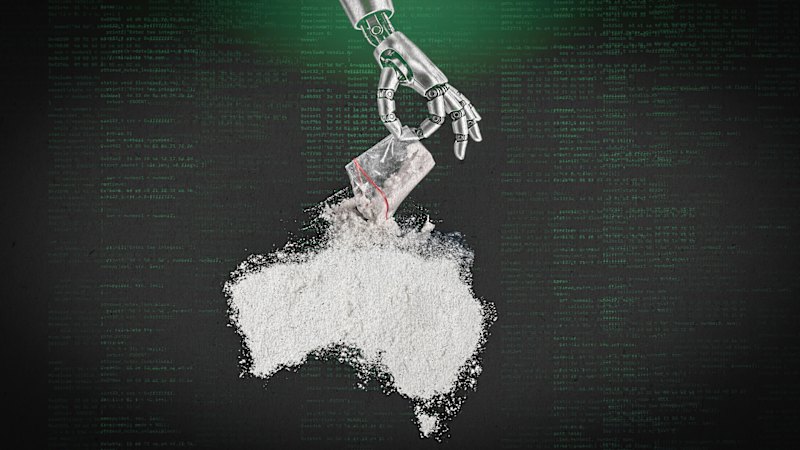
Organised crime groups are using artificial intelligence to streamline their global drug-trafficking operations and create fake documents, identities and business records to facilitate large-scale imports and money-laundering.
Authorities warn that criminals are exploiting the rapidly evolving technologies to recruit vulnerable community members and deceive Australia’s financial institutions as they evade law enforcement detection amid the increased sophistication of international crime syndicates.
“The growing accessibility of AI technology is enabling criminal networks to operate more efficiently and adapt more quickly to disruption efforts by law enforcement agencies,” acting Australian Federal Police Assistant Commissioner Donna Parsons said.
Parsons said while the emergence of artificial intelligence created new opportunities for innovation and economic growth, the technology was allowing criminal groups to fine-tune existing techniques and reduce risk of detection by authorities.
Professor Toby Walsh, chief scientist at the University of NSW’s AI Institute, said that despite the benefits of artificial intelligence, the technology had given bad actors significant capabilities.
“It’s a double-edged sword,” Walsh said.
“The same tools with bad intent can be used for harm as much as they can be used for good.”
Criminal networks are also increasing the speed and scale at which drugs are trafficked into Australia, which is being targeted by international cartels operating out of Mexico and Central and South America. The groups are importing unprecedented amounts of cocaine and methamphetamine into the country, which offers one of the world’s most lucrative markets for illicit substances and is one of the biggest consumers globally of the drugs.
Authorities have so far this year seized more than 17 tonnes of illicit drugs, mostly cocaine, in the Pacific, which has become the preferred trafficking route for cartels targeting Australia. In June, AFP, Australian Border Force and Queensland Police officers working under Operation Minjiang seized 2.7 tonnes of cocaine – the single biggest seizure in Australian history – from a property at Londonderry, in Sydney’s north-west.
AFP Commissioner Krissy Barrett last month issued an urgent plea for Australians to reconsider their drug consumption after a series of organised crime-related shootings, including the mistaken identity killings of two men, in Sydney.
“Australians take too many illicit drugs, and it is absurd how much money users are willing to pay for them,” Barrett said.
Barrett said authorities were battling a demand issue driven by “Australia’s voracious consumption of illicit drugs”.
“These shootings and violence are often the result of organised crime groups onshore or overseas fighting for dominance and power because of the obscene profits they are making from illicit drugs in Australia,” she said.
“They are rolling in dirty cash, and they are willing to kill each other and anyone who gets in the way.”
Enhanced technology is allowing criminals to launder funds through cryptocurrency and complex financial networks, Parsons said. Along with encrypted communications platforms, traffickers are using artificial intelligence to coordinate their activities, automate processes and conceal their identities.
“Organised crime groups can leverage AI-enabled social media content and targeted online engagement to recruit vulnerable individuals into criminal activities, including as couriers and money mules,” Parsons said.
As well as hiding behind AI-generated fake images, audio and online profiles, networks were using the technology to analyse publicly available information and identify vulnerabilities in law enforcement agencies’ methods to combat criminal activity.
The use of artificial intelligence to target, groom and coerce victims is increasing the reach and sophistication of sadistic online exploitation, Parsons said.
Authorities fear organised crime groups are increasingly using social media, online gaming platforms and encrypted communications to target and recruit children to commit offences.
In Sydney, NSW Police has arrested more than 850 people, most of whom are children and young men, since launching Taskforce Falcon to combat escalating gangland conflicts in the city. Police believe many of the crimes, including shootings and firebombings, are being contracted by exiled organised crime figures based overseas.
“The exploitation of young Australians reflects a growing technology-enabled organised crime model that allows offenders to recruit, task and replace individuals remotely and at scale,” Parsons said.
“This trend expands organised crime’s reach into Australian communities, lowers barriers to serious offending and poses an ongoing risk to community safety and social cohesion.”
Police believe children are recruited on social media before being diverted to encrypted platforms typically used to contract young offenders.
“Young people can be directed to engage in criminal activity without ever meeting the person coordinating it,” Parsons said.
Parsons said work to combat criminals’ increased use of artificial intelligence was ongoing.
Walsh said more guardrails were needed to prevent artificial intelligence from being used for criminal activity.
“We’re perhaps reaching a point where we’re going to realise that we need to hold these companies more liable for the harms of their products,” he said.
Start the day with a summary of the day’s most important and interesting stories, analysis and insights. Sign up for our Morning Edition newsletter.
You have reached your maximum number of saved items.
Remove items from your saved list to add more.
Citations · 2 reports from 2 outlets
Tap a citation to read it above, right here on T.A.M.
How Australia’s underworld is weaponising AI for drug imports
Criminals are exploiting the technology to increase the speed and scale of importations flooding Australia’s lucrative illicit market and avoid police detection.
2 hours ago · Riley Walter, Perry DuffinHow Australia’s underworld is weaponising AI for drug imports
Criminals are exploiting the technology to increase the speed and scale of importations flooding Australia’s lucrative illicit market and avoid police detection.
2 hours ago · Riley Walter, Perry Duffin