
Rogue pilots may be the most dangerous threat to passengers. They’re ‘just about impossible’ to stop
The insider threat risk has been part of the international aviation security framework for many years. But the options for confrontation remain limited.
First reported 1 hour ago · latest update 1 hour ago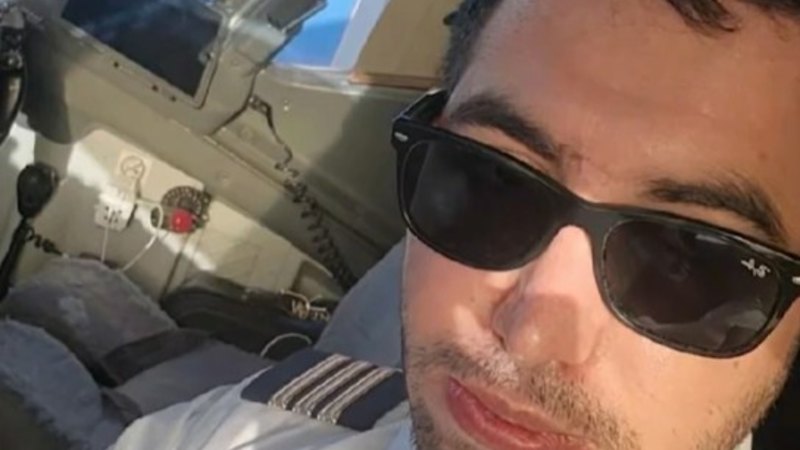
The near-tragic incident with the Tel Aviv-bound flydubai jet has the industry scrambling to manage what could be best described as the ultimate nightmare for passengers and airlines – what do you do if the pilot goes rogue?
The flydubai flight FZ1073 incident on September 30 is being described as an attempted terror attack by co-pilot Hamam al-Hammami. The alleged attack was thwarted because the other person in the cockpit - Captain Smit Machchhar - was able to unlock the door, allowing passengers to intervene.
It was the narrowest of escapes, owed to the actions of those onboard, but it exposes a number of weaknesses that the aviation sector will have to address.
The first is the insider threat posed by a rogue pilot, which in the flydubai flight’s case was Al-Hammami’s attempt to plunge himself and all on board the jet into a fatal dive. It’s not without precedent in aviation history.
In 2015, Germanwings flight 9525 was deliberately crashed by the first officer, killing 150 people on board, in a case of clear pilot suicide. Others – such as Malaysia Airlines flight MH370 in 2014 or a China Eastern Airlines flight in 2022 – are suspected to be pilot suicide.
In these cases, the pilot entrusted with the lives of passengers is suspected to have betrayed them by crashing the plane.
Pilot-suicide remains a theory in the Air India crash in June 2025 that killed 260 people as well.
While pilot-suicides are extremely rare, detecting and preventing a pilot from going rogue is also extremely difficult.
Dr Warren Harrex, a specialist in aerospace medicine said that while much progress had been made in reducing human factor errors in flight, it was “just about impossible to, with testing, identify people who might be at risk of acting adversely in the cockpit”.
“The best way really is to get to know people and to note if there’s any change in their behaviour or demeanour. Otherwise, there’s no real test you can do to prevent a pilot going rogue.”
“These events are very rare, but they’re high-profile when they do occur, of course,” said Harrex.
How rare? About 130,000 flights per day take off and land without incident, according to the International Air Transport Association.
“Yet if somebody’s really determined to behave badly, like we see with terrorist attacks, it’s very difficult to predict.”
The globalised industry with large workforces has processes in place to continually assess capabilities of pilots. Central Queensland University associate professor Geoffrey Dell said if a pilot started to get radicalised, or had other mental health issues, one would expect the system would identify that in advance. “There is a fairly rigorous reporting.”
Airlines continually check and recertify pilots on simulators, giving them opportunities to evaluate employees on the job. Pilots must also regularly fly with check and training captains who ensure “operational safety-critical personnel are proficient” in the skills required to keep the plane flying safely.
These are in-person interactions in which a pilot’s performance is judged. Yet al-Hammami was hired by flydubai after losing his job at Oman Air.
There have been cases of flight-deck assaults that could lead to suicide, such as a 1994 FedEx flight departing Memphis, Tennessee, in which a disaffected employee sought to subdue pilots on a cargo plane and then crash it.
Crisis24 global risk management aviation lead Dr Alejandra Gentil said the FedEx case highlighted “the importance of background checks on crew members, since the attacker was being fired by FedEx because he had presented false information upon employment related to his flight hours”.
The insider threat risk had been part of the international aviation security framework for many years, she said.
The International Civil Aviation Organisation had developed tools to manage it but “it falls upon the appropriate authorities of the state to conduct a thorough background check”, Gentil said.
She said background checks in the UAE were a prerequisite for being given a residence permit. While details are still being uncovered, media outlets have reported al-Hammami had earlier lost a job with Oman Air because of an apparent interest in extremism.
Gentil said yearly mental health checks are mandated by the UAE regulator as prescribed in the Civil Aviation Regulations, which gives them the authority and the responsibility for conducting them.
The safety of aviation is built on redundancies, including in oversight of the plane. A former commercial pilot said the incident should dissuade the industry from moving towards allowing a single pilot to fly at cruising altitude. “There was a strong move towards it by the airlines a few years ago for economic reasons,” and “the manufacturers were designing for it.”
Had planes moved to a single pilot cruise model, “then [al-Hammami] wouldn’t have had to stab the other pilot of the aircraft”.
Incidents such as this reinforce why the European Union Aviation Safety Agency banned single-pilot operations, he said.
The flydubai flight FZ1073 will also bring into focus the potential danger posed by a locked cockpit door.
The measure was introduced after the September 11 attacks as a way to stop hijackers from taking control of a plane. Usually, the pilot holds the key and while other crew members have emergency access, in case there is a health emergency, who gets inside the cockpit is still largely in the hands of the pilot. The flydubai incident may need the aviation sector to rethink the need for further emergency countermeasures.
Brisbane-based CW Aviation Security Consulting director Shannon Wandmaker said both the locks on doors, as well as the vetting of pilots before hiring would probably be reviewed as a result of the flydubai incident.
A relaxation in the hardened/locked cockpit door requirements would seem unlikely, he said. “It’s always easier to implement a security measure than it is to remove one.”
“It may be the case that we see some governments move unilaterally to implement additional, or more stringent measures related to background checks, and this may happen quite quickly,” Wandmaker said.
Airlines themselves try to be proactive on pilot mental health. Virgin Australia, for example, has a wellbeing strategy which is regularly reviewed by senior management. Qantas was approached for comment.
The Department of Home Affairs, which has authority over access to flight deck in Australia, said: “there are strict requirements regarding cockpit security, including when the cockpit door must remain locked, and the persons authorised to be in the cockpit during flight”.
The department regularly reviews aviation security settings.
If you are troubled by this report or experiencing a personal crisis, you can call Lifeline on 131 114 or Beyond Blue on 1300 224 636. To donate to Beyond Blue visit here
You have reached your maximum number of saved items.
Remove items from your saved list to add more.
Citations · 2 reports from 2 outlets
Tap a citation to read it above, right here on T.A.M.
Rogue pilots may be the most dangerous threat to passengers. They’re ‘just about impossible’ to stop
The insider threat risk has been part of the international aviation security framework for many years. But the options for confrontation remain limited.
1 hour ago · Chris ZapponeRogue pilots may be the most dangerous threat to passengers. They’re ‘just about impossible’ to stop
The insider threat risk has been part of the international aviation security framework for many years. But the options for confrontation remain limited.
1 hour ago · Chris Zappone