
War is big business, but what about Perth’s small businesses?
I’ve been mulling over the corporate favouritism-vs-small business struggle in the context of a niche business exhibition happening at the Perth Convention Centre this week.
First reported 1 hour ago · latest update 1 hour ago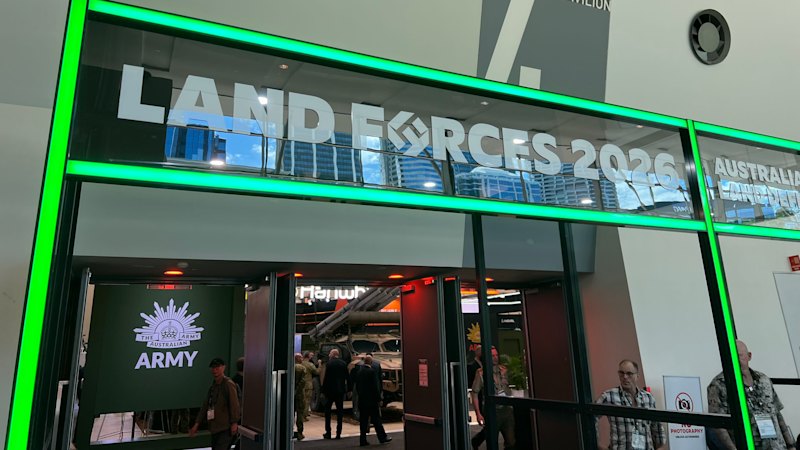
You have reached your maximum number of saved items.
Remove items from your saved list to add more.
As a business owner, I get served a lot of small business content through social media algorithms.
This past week there was such a deluge of stories describing how small businesses are being strangled to operational death by an increasing tangle of costs, rules, and regulations – all imposed by a government that concurrently raves about cutting red tape for giant corporations to make it easier for them to do business in this country.
Many small business owners have commented how Australia no longer feels like the Lucky Country.
By contrast, the gung-ho “Australia is open for business” rhetoric coming from the major parties can be noted in relation to the following, to take just a few examples:
To be clear, most Australians would quite like to keep our jarrah forests standing, get a fair deal for our gas, and our creative output protected.
Numbers wise, none of these “we’re open for business” examples feel like they’re especially beneficial for the majority Australian people, given that small businesses make up over 97 per cent of all businesses in our country, contribute close to a third of the national gross domestic product, and employ the largest hunk of the private sector workforce.
I’d also suggest that small businesses are a key contributor to our creativity, ingenuity, possibility, and national identity.
Small businesses make our towns – and lives – interesting, but more importantly, they are ours.
Small businesses represent Australian ideas that were born here. Each one is a glimmer of opportunity that can help millions of ordinary Australians achieve the fair go we all speak of.
While small businesses contribute to the macroeconomy of Australia, vitally they also contribute to the microeconomy by keeping money circulating locally.
Profits aren’t whipped offshore to a foreign HQ or distributed to private investment funds. Through wages and other running costs, money stays close, supporting other local businesses.
In short, small businesses give more than they take. They aren’t extractive.
In a galling counterpoint to tales of small business hardship – and outsized contribution to our country – in the past week, the Australian Tax Office’s Corporate Tax Transparency Report shows that nearly 30 per cent of companies with turnovers greater than $100 million paid zero dollars in company tax in the 2024/25 financial year.
Thanks to a set of conditions that enable tax avoidance by those who can afford to pay the requisite accountants, we’ve allowed some of the huge corporations that make the most revenue contribute the least to our country.
I’ve been mulling over this corporate favouritism-vs-small business struggle in the context of a niche business exhibition happening at the Perth Convention Centre this week.
It’s so special that extraordinary police powers have been legislated to enable it to run smoothly. In addition, at least $11million worth of WA taxpayer money has been spent on beaming a clear and present, “we want you” signal to the very special conference participants.
Today the Land Forces Exhibition opens in WA. It is Australia’s largest land defence event staged especially for the purveyors and buyers of the technology used to fight wars.
The products showcased aren’t those of interesting small, local businesses building the sort of proud national identity that we seek. It’s a conference about killing.
Our government is sponsoring a showcase of those enjoying the fruits of the military industrial complex; corporations making hay from the fortunes of America’s forever wars.
Here we see the Labor government backing other people’s conflicts, other people’s ideas, and other peoples’ businesses.
With this in mind, I return to the concept of “the lucky country”. Almost exclusively, this phrase is used antithetically to its original sentiment, coined by Donald Horne in his 1964 book of the same title.
Horne meant that Australia is lucky, but it’s not clever. He wrote that it is only thanks to our natural resources and geography – rather than innovation or visionary leadership – that Australians have achieved a high standard of living.
Horne spoke of second-rate leaders lacking curiosity, and WA Labor’s enthusiastic support of the Land Forces Exhibition feels a bit like this.
A lazy grab at an opportunity to attract big business, without any sort of courageous ambition to make the country, or the world, better. It feels reminiscent of desperate grabs to woo other extractive companies we’ve lauded in the past.
For most Australian small businesses, investing in the business of war sits in complete opposition to the sort of direction we seek from leaders.
We want a government that backs a thriving small business sector that can deliver, with the support of good policy conditions, a proud and positive national identity based on Australian-born ideas that set us all up for a better, more positive future.
Citations · 2 reports from 2 outlets
Tap a citation to read it above, right here on T.A.M.
War is big business, but what about Perth’s small businesses?
I’ve been mulling over the corporate favouritism-vs-small business struggle in the context of a niche business exhibition happening at the Perth Convention Centre this week.
1 hour ago · Kate HulettWar is big business, but what about Perth’s small businesses?
I’ve been mulling over the corporate favouritism-vs-small business struggle in the context of a niche business exhibition happening at the Perth Convention Centre this week.
1 hour ago · Kate Hulett