
‘I made a pretty strong stand’: How Travis Head stamped out a ball-tampering plot
Travis Head has opened up on how he shut down a ball-tampering plot as captain of his state, and why the memories of sandpapergate influence how Australia now plays cricket.
First reported 1 hour ago · latest update 1 hour ago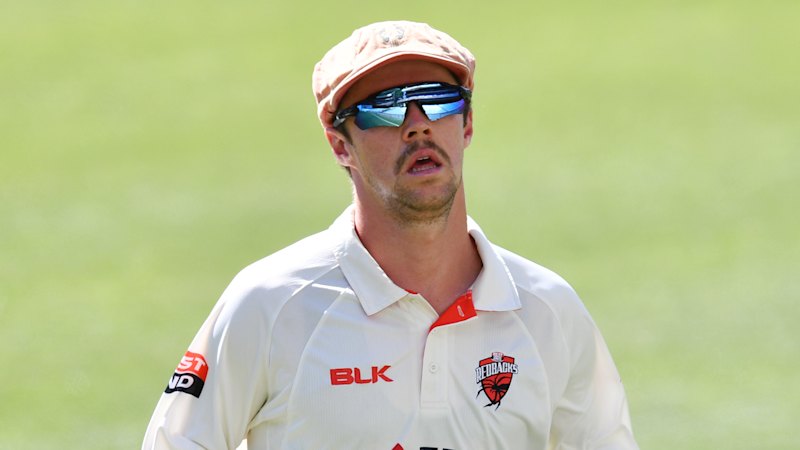
Durban: Travis Head has spoken for the first time about how he shut down a dressing room ball-tampering plot as captain of his state, and why the memories of “sandpapergate” remain key to how the Australian team now plays the game.
Eight years ago, Head was 24 years old and about to start playing a lot more often for Australia, having seen Steve Smith, David Warner and Cameron Bancroft cop heavy punishment for their parts in the Newlands scandal. He was also captain of a South Australian side that was in the midst of a run of five consecutive seasons at the bottom of the Sheffield Shield table.
It’s in that context that Head swiftly slammed the door shut on a discussion about whether the SACAs needed to be more aggressive in the way they managed the ball to make it reverse swing. Some players held suspicions that other teams were still sailing close to the wind in how they prepared the ball to reverse.
Head went as far as to tell those making the suggestion that they would lose their place in the side if they attempted to tamper in line with what they believed some opponents were doing. SA had long been saddled with the perception that their state team was not as “hard” as others, and it was a moment in which Head – backed up by his South Australian deputy Alex Carey – put the game first.
“I made a pretty strong stand at that point, and I was captain at the time, that they weren’t going to be in the dressing room if that’s the case, if that’s what [they want to do],” Head told this masthead in Durban ahead of Australia’s first Test in South Africa since the infamous 2018 tour. “I didn’t care what other teams did. I didn’t care if we were facing it.
“I just knew what a couple of close friends had gone through, and knew what the [Australian] team had gone through, and the flow-on effect of that. I don’t care if we’re bottom of the table, as long as we play the game the right way. That was my opinion, and still is my opinion.”
Head declined to go into further details about the discussion, including exactly when it took place, but said that the current team, led by Pat Cummins, would never forget the importance of keeping cricket in perspective: the 2018 team had lost their moorings and paid a heavy penalty as a result.
“It’s driven from Pat. Pat’s always said it’s a game, and it’s not do or die,” Head said. “If South Africa play really, really well, and we lose 3-0, that’s OK; it’s not the end of the world. We’ll wake up tomorrow. I think that then brings in, I guess, that freer side of yourself to go out and express yourself.
“We’ve seen other teams around the world hold on to certain things or think it’s the most important thing they’re ever going to do, and sometimes you can play on that. You can see that they get tense and feel pressure, and you never play better when you’re tense and feel pressured.”
Head is critical of some of the extremes he sees in the way Test cricketers are judged and critiqued, and said it was duly vital for the players themselves to stay level amid the madness.
“Yes, we’re playing in front of billions of people. Yes, it’s important,” Head said. “Yes, everyone’s got you scrutinised to the absolute tip of it, every single day. The game’s changed a lot over even the little period that I’ve played it.
“It’s not just ‘they batted well and they bowled well’. It’s their career is over. That team’s shit. That team’s not. Do you know what I mean? So the storylines of media now is through the roof. So if you can’t enjoy it within the four walls, then you’re never going to.
“That’s the one little piece that we’ve got to keep it sane, I guess, because everything around us is pretty much chaos.”
Head had some fun with his teammates when he claimed an unexpected catch on the boundary in the final over of their warm-up game in Potchefstroom this week, wheeling away in celebration as though the moment was as important as his blinder to catch Rohit Sharma in the 2023 World Cup final.
Head acknowledged his place as a back-up leader for both Cummins and Steve Smith in the three-Test series, which begins on Friday in Durban. It will be the first time the Australians have played Tests in South Africa since the acrimonious 2018 series.
“There’s a world where I can see it not bothering me too much,” he said laconically of the day he might be captain. “I think I bring something to this team. Well, I hope I do, and it doesn’t have to be in that [captaincy] space either.
“So I’m really, really enjoying where I’m at. It’s an exciting 12-18 months, but also a few years in Australian cricket. I want to be as involved as much as I can and support and help everyone and just be me.”
Aside from being vice-captain, Head is now the main ball shiner for the team, and said the reduction of reverse swing in the international game since 2018 was a combination of ball management methods and conditions.
“I’ve been shining it, so yeah, it’s going to be important if we can get it,” he said. “Wickets have been green over the last two or three years, so we haven’t really needed to worry too much about that. But with a fair few used wickets around South Africa, it may come in naturally too.”
Ask captain Cummins or Mitchell Starc about how rarely reverse swing has been seen since 2018 – apart from some striking instances on the 2022 tour of Pakistan – and they weigh up its disappearance.
“I wouldn’t put it on the overrated list, but it’s normally when there’s not much else happening, there’s no traditional swing or seam and you kind of shift into that role as a pace bowler,” Cummins said. “Normally, the ball is a bit softer and you’re not necessarily getting catches behind square.
“It is fun when it’s going, but I think our jobs have been easier in the last couple of years where it’s swinging and seaming up front with the new ball, rather than trying to take wickets with the reversing ball.
“It is part of red-ball cricket and Tests and it is interesting, but I’m not saying I miss it too much. A lot of the time I think reverse swing only excites people because the ball’s been doing nothing for the previous 40 overs.”
Starc believes that he has become a more rounded and versatile bowler than the one who used to revert to trying to reverse the ball from around the wicket at the first sign of a partnership.
“I have a few extra strings to the bow now,” he said. “The wobble seam and a bit more control and more comfortable in my own skin. Whereas before I had swing with the new ball, bowled fast, and when reverse started I had more to offer as well.
“So I think that and conditions around the world have changed a bit. Whether that’s the introduction of the World Test Championship and teams looking for results, or just the nature of the wickets, you don’t see a lot of reverse swing outside the subcontinent any more.
“Even the practice game the other day, it was more like a day-five wicket and both teams had a small hint of reverse, but you just don’t see it much. You get a little more now in a one-day game back to one ball for the innings, but not a whole lot of it the last seven years.”
As he nears the end of his tenure as Cricket Australia chair, Mike Baird believes there was a signal moment when he knew that the shadow of sandpapergate had receded.
It arrived at Lord's in 2023, when England were outraged by the stumping of Jonny Bairstow, but the balance of world cricket opinion was firmly with Australia.
“I think everyone was with Australia at that time. He walked out of his ground, pretty simple,” Baird said.
“But it’s true. Australia were no longer the favourite villains in world cricket. They were identified as fair and tough cricketers and that was shown at Lord’s.
“[2018] was a dark period, dark days indeed as a fan of the game. But there isn’t a person in Australia who hasn’t made mistakes and sometimes really big mistakes, and it’s about what you do from there.
“I’ve been in public life, so I’ve got a bit of understanding of what some of those pressures are like. But to see them respond and come back and have success is inspiring. Culturally, Australian cricket has really changed off the back of those days.”
News, results and expert analysis from the weekend of sport sent every Friday. Sign up for our Sport newsletter.
You have reached your maximum number of saved items.
Remove items from your saved list to add more.
You've used all of your gift articles. 3 more will become available on the 1st of every month.
Citations · 2 reports from 2 outlets
Tap a citation to read it above, right here on T.A.M.
‘I made a pretty strong stand’: How Travis Head stamped out a ball-tampering plot
Travis Head has opened up on how he shut down a ball-tampering plot as captain of his state, and why the memories of sandpapergate influence how Australia now plays cricket.
1 hour ago · Daniel Brettig‘I made a pretty strong stand’: How Travis Head stamped out a ball-tampering plot
Travis Head has opened up on how he shut down a ball-tampering plot as captain of his state, and why the memories of sandpapergate influence how Australia now plays cricket.
1 hour ago · Daniel Brettig