
‘Holding on for dear life’: Sydney unit rents at a record high
The years-long trend of rising rents is leaving some tenants reaching the ceiling of how much they can afford to pay.
First reported 1 hour ago · latest update 1 hour ago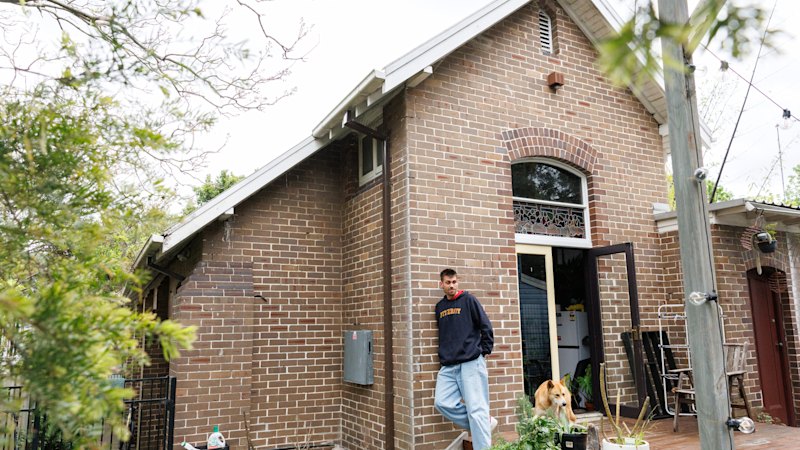
Sydney unit rents are at a record high and experts warn they could rise further as interest rate rises and the tax changes announced in the May budget work their way through the system.
The median asking rent for a Sydney unit was $780 a week in the September quarter, Domain’s latest Rent Report, released on Thursday, shows. The median held steady over the quarter, but was up 4 per cent, or $30 a week, over the year.
House rents inched lower. The median asking rent for a Sydney house was down 0.6 per cent, or $5 over the quarter, to $835 a week. Over the year, however, the median rose 5.7 per cent, or $45.
Sydney’s rental vacancy rate rose slightly over the quarter to 1.2 per cent but remains well below the 3 per cent rate that generally indicates power parity between landlords and tenants.
Dr Nicola Powell, Domain’s chief of research and economics, said the price and vacancy-rate data showed Sydney renters were “reaching the limits” of what they could pay.
“A low vacancy rate, like the one we have in Sydney, usually translates into rapid rent increases, but that’s just not happening right now. It tells us a lot about affordability ceilings being reached,” she said.
Powell said it was plausible that the budget changes to negative gearing and capital gains tax would prompt investors to exit the market, reducing the volume of rental stock in Sydney and causing asking rents to rise.
“The data is not showing that effect yet, but this is the first full quarter since the budget,” she said. “Certainly, the pressure points on investors are there: not only the changes to how property is taxed but also the rate rises we’ve seen and the expectation of another hike before the end of the year.”
The steepest rise in unit rents over the past three months was in the inner south-west region, up 2.9 per cent to $700 a week. For houses, the only rise this quarter was in the south-west, up 2.6 per cent to $780 a week.
Leo Patterson Ross, CEO of the Tenants’ Union of NSW, said the quarter’s flat rents were welcome but doubted they would continue.
“The September quarter is traditionally the quietest in Sydney because there’s less student turnover compared with the summer. These results could partly reflect that, rather than a meaningful moderation in prices.”
Patterson Ross said many tenants contacting his organisation were approaching “breaking point” after two years of rent increases that outpaced wage growth.
“We saw a lot of people holding on for dear life while rents were racing very quickly, and now that they’re up 10, 15, 20 per cent [over two years] they simply can’t keep up any more,” he said.
“They’re compromising in various ways, whether that’s a smaller place than they’d want, a place further away from where they want to be, or a place in poorer condition. There might be repairs issues, or no insulation, but they’re accepting it anyway.”
Sydney renter Julian Robinson, 28, a disability support worker, left a Balgowlah share house in late 2025 and moved into a converted church in Dulwich Hill to live with a friend.
Seeking a third flatmate, the pair advertised online and were inundated with applications.
“I received 150 messages, almost straight away,” Robinson said. “My phone was blowing up. We had a lot of international people, a lot of backpackers, as well as locals.”
Now, with their landlord attempting to sell for redevelopment, Robinson and his flatmates are preparing to move again.
Keen to live alone, Robinson has been attending inspections for one-bedroom apartments. He said his interactions with agents have been disheartening.
“One of them was gloating so hard. He said: ‘If you want to get the lease, you’ve got to offer more than the asking price.’ I’m preparing to spend about 50 per cent of my income to live alone, and I earn pretty good money.”
Independent economist Saul Eslake said for renters such as Robinson, coming months would be uncertain.
“I think it’s too early to tell how the budget and the rate hikes are ultimately going to affect the housing and rental markets. In just about everything in economics, cause and effect happens with a lag.”
Eslake said affordability constraints might keep rents stable, but it was just as likely that supply and demand factors would push rents higher.
“The vacancy rate is still very low by historical standards, which suggests a period of prolonged pressure on tenants,” he added.
Eslake suspected many tenants were frozen in place, unable to afford to switch rentals or buy a home.
“If fewer people are moving because they can’t afford to, that means less rental turnover, fewer vacancies and fewer opportunities for landlords to exercise their market power and raise rents. But as renters’ leases expire, we may see this year’s budget changes reflected in asking rents.”
You have reached your maximum number of saved items.
Remove items from your saved list to add more.
Citations · 2 reports from 2 outlets
Tap a citation to read it above, right here on T.A.M.
‘Holding on for dear life’: Sydney unit rents at a record high
The years-long trend of rising rents is leaving some tenants reaching the ceiling of how much they can afford to pay.
1 hour ago · Dan F Stapleton‘Holding on for dear life’: Sydney unit rents at a record high
The years-long trend of rising rents is leaving some tenants reaching the ceiling of how much they can afford to pay.
1 hour ago · Dan F Stapleton