
‘Absolutely staggering’: Results from experimental drug trial to prevent Parkinson’s disease
For the first time, the Australian-led trial has found evidence that an experimental drug could lessen inflammation in the brains of people at high risk of Parkinson’s, potentially slowing or even stopping its development.
First reported 1 hour ago · latest update 1 hour ago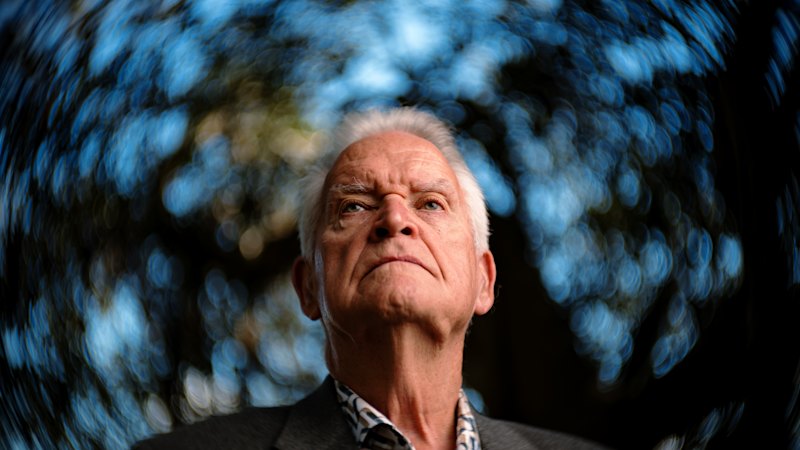
John Clowes only saw his father cry once, when he spoke about his own father’s deterioration and eventual death from Parkinson’s disease.
“The enormous emotional reaction from my father, I’d never seen anything like that before,” Clowes said. “He was quite a strong man.”
“My grandfather was quite stocky, and he ended up almost shrinking before my father’s eyes. At the end, my father could pick him up and carry him around like a child.”
So when Clowes developed a hallmark early warning sign for Parkinson’s disease – isolated rapid eye movement sleep behaviour disorder (iRBD) – he didn’t hesitate to enrol in a world-first clinical trial of a promising treatment for the debilitating neurodegenerative movement disorder.
For the first time, the Australian-led phase two trial has found evidence that an experimental drug called SNT-4728 could lessen inflammation in the brains of people at high risk of the debilitating disease, potentially slowing or even stopping its development.
The trial of SNT-4728 involved 41 people with iRBD, a condition which causes them to act out their dreams, often vigorously and even violently.
“I’d sort of thrash around in bed,” Clowes said from his home in Sydney’s inner west. He likened the experience of his vivid dreams to fighting his way through a Western film.
“The first [time], I actually threw myself out of the bed, which didn’t impress my wife.”
Trial participants also had at least one other early symptom of Parkinson’s, such as a partial loss of smell. About three-quarters were given SNT-4728, while the rest received a placebo.
The researchers, led by Professor Simon Lewis at Macquarie University’s Brain Institute and Clinic, used a positron emission tomography (PET) scan that measures cellular activity to measure neuroinflammation at the beginning of the study, and then again after 12 weeks.
“We saw a reduction in [brain] inflammation in 20 out of the 30 patients who took the drug,” Lewis said of the findings presented at the International Congress of Parkinson’s and Movement Disorders in Seoul on Wednesday, ahead of plans to submit them to a peer-reviewed journal.
“It’s absolutely staggering that in just 12 weeks’ exposure we were able to show a reduction in neuroinflammation,” he said.
Parkinson’s is known for its movement and motor symptoms – tremors, stiffness, walking difficulties and loss of balance.
The disease damages or destroys nerve cells in a part of the brain stem called the substantia nigra, which produce the critical chemical messenger, dopamine.
This dopamine depletion disrupts the movement-control signals sent to the putamen – the brain’s “mission control”, Lewis said.
The trial found a statistically significant reduction of inflammation on one side of the putamen in participants given SNT-4728, and no change in the placebo group.
Lewis said iRBD patients had increased brain inflammation compared with the general population, and that level of inflammation predicted how many dopamine-producing cells a person would lose in the next three years.
“By the time someone is diagnosed with Parkinson’s, they’ve lost about half of those dopamine-producing cells,” Lewis said. “If we can get people upstream, then maybe we can actually target that new inflammation”, before those cells are lost.
Professor Carolyn Sue, a Parkinson’s expert at Neuroscience Research Australia, said it was “encouraging that the inflammation looks like it is reducing in at least one part of the brain”.
“If we can reduce the inflammation that occurs in REM sleep disorder and possibly Parkinson’s, then this might reduce or slow down the disease process, if these results are sustained over longer periods of time,” Sue said.
But she said it was too early to tell whether it would translate into a clinical effect, and it was still unclear whether inflammation caused iRBD and Parkinson’s, or if it was a consequence of the condition.
“The putamen is connected to the substantia nigra, but it’s a long way from the affected regions,” where the cells are lost. “[It’s like] seeing whether something that happens in the lounge room is affecting something in the kitchen.”
Lewis said it was possible the drug could affect other regions of the brain over a longer exposure period, and impact the development of Parkinson’s: “If we treat these people for longer, how does their future look? We don’t know yet.”
Both Sue and Lewis stressed the need for longer-term studies to understand whether the drug’s anti-inflammatory effects could be sustained.
The trial found participants given the placebo performed slightly worse compared with participants given SNT-4728 during physical assessments when asked to open and close their hands or walk back and forth, while those who were given the drug had slightly improved.
Start the day with a summary of the day’s most important and interesting stories, analysis and insights. Sign up for our Morning Edition newsletter.
You have reached your maximum number of saved items.
Remove items from your saved list to add more.
Citations · 2 reports from 2 outlets
Tap a citation to read it above, right here on T.A.M.
‘Absolutely staggering’: Results from experimental drug trial to prevent Parkinson’s disease
For the first time, the Australian-led trial has found evidence that an experimental drug could lessen inflammation in the brains of people at high risk of Parkinson’s, potentially slowing or even stopping its development.
1 hour ago · Rachel Rasker‘Absolutely staggering’: Results from experimental drug trial to prevent Parkinson’s disease
For the first time, the Australian-led trial has found evidence that an experimental drug could lessen inflammation in the brains of people at high risk of Parkinson’s, potentially slowing or even stopping its development.
1 hour ago · Rachel Rasker