
For some of Tokyo’s best food, you have to descend to basement level 1
Depachika, or department store food floors, is where the Japanese go to eat. Follow Good Food’s guide to five of the best, including a Tokyo bento box hotspot.
First reported 2 hours ago · latest update 2 hours ago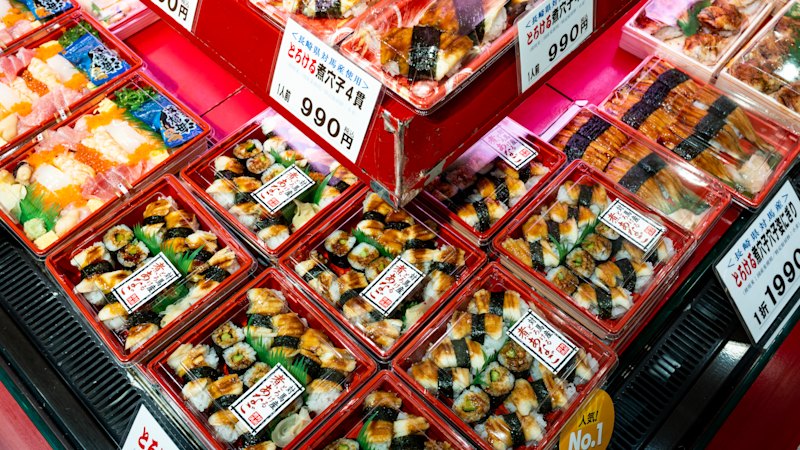
A globetrotting celebrity chef offers a hot take: the greatest thing they ate in Tokyo was – drumroll, please – an egg sandwich from Lawson. Thanks to people on social media romanticising jet-lagged cravings, Japanese convenience stores (or konbini) have become shrines of worship. Food travellers gush over pillowy milk bread, fried chicken under heat cabinets, and rice balls sheathed in single-use plastic. Capture, share, repeat.
Little do (some) people know, just around the corner, beneath the city’s grand department stores lies the depachika. The word is a mash-up of depato (department) and chika (basement), and while tourists queue for tax-free handbags or navigate Ginza with an online food map, Tokyoites descend to B1 and B2 for seasonal local produce, gifts fit for an embassy, and dinner for their families.
To evolve and graduate from the konbini, you have to take the escalator down.
You can smell the shift of energy in the air as you descend. The blue fluorescent glare gives way to warm spotlights, polished counters and a chorus of welcoming “irasshaimase!” from tea merchants, regional wagashi (traditional confectionery) houses, fishmongers and European-trained patissiers.
Attendants in both traditional and modern uniforms handle white strawberries and Yubari melons with white gloves, fold packaging paper like origami, and calculate gel ice packs against the exact minute of your commute.
Restaurant reviews, news and the hottest openings served to your inbox.
Up to 50 distinct brands are packed into a single floor, operating in a Darwinian retail environment. Securing a spot here means signing a lease with a share of revenue and a daily sales target attached; miss it and you’re rotated out for the next hopeful. The presentation is lavish but the environment is cutthroat: this is not for convenience but serious business.
Different department stores cultivate distinct identities, shaped by their location, clientele and specialist retailers.
Isetan Shinjuku: The confectionery high temple
The basement floor at Isetan Shinjuku is the gourmet’s high-fashion runway. Confectioners and wagashi artisans introduce seasonal releases the way Burberry drops an autumn collection. The Fukuoka-based confectioner Suzukake is known for its monaka, crisp rice wafers filled with sweet red adzuki bean paste. A few counters over, Ameya Eitaro packages traditional fruit-infused sugar syrups in sleek glass tubes that look indistinguishable from luxury lip gloss.
3-14-1 Shinjuku, Shinjuku-ku, Tokyo
Daimaru Tokyo: Bento-box heaven
Directly connected to Tokyo Station’s Yaesu North exit, Daimaru’s B1 level is built for the traveller who has approximately six minutes to decide what to eat before boarding a bullet train.
Its “Hoppe Town” brings together close to a thousand varieties of premium lunch boxes every year. Meat Yazawa’s hamburg steak bento is a serious contender: a kuroge wagyu patty, demi-glace and rice, all packed for the journey.
A longtime favourite, Takimoto’s “Dream Pretty Millefeuille” sushi layers abalone, salmon roe and crab in tiers inside a jewellery-box container. At the boarding gates passengers balance their boxed meals like they’re transporting classified documents. The best part? You don’t need a train ticket to buy a train bento.
1-9-1 Marunouchi, Chiyoda City, Tokyo
Takashimaya Nihonbashi: The time capsule
Nihonbashi has been Tokyo’s merchant heart since the Edo period. In 2009, Takashimaya’s building (with elevators guided by attendants who turn a brass lever at each level) was designated an Important Cultural Property.
The foot traffic here is noticeably older, drifting past heritage makers like Nishiri, which measures out Kyoto pickles (tsukemono) by weight. You can buy premium dried kelp to make dashi stock from Ungetsu, and ladle out braised seasonal sides (tsukudani) in hundred-gram portions from Shinbashi Tamakiya, a shop that’s been operating since 1782.
2-4-1 Nihonbashi, Chuo City, Tokyo
Nihombashi Mitsukoshi: The heritage vault
Across the bridge, Mitsukoshi is an archive of the Japanese pantry. Regional condiments are catalogued by prefecture, allowing you to easily source three-year barrel-aged Kamebishi soy sauce from Kagawa, or heirloom Kyoto misos.
Pick up freshly shaved katsuobushi (bonito flakes) from Ninben, a local institution founded in 1699, or premium roasted seaweed from Yamamoto Noriten. At the depachika’s eat-in counter, Tempura Yamanoue fries seafood and seasonal vegetables in light batter to order, proving that counter dining in a department store cellar can rival a standalone Ginza restaurant.
1-4-1 Nihombashi Muromachi, Chuo-ku, Tokyo
Hankyu Umeda: Take a trip to Osaka for its depachika scene
Take the Shinkansen west to Osaka, and the depachika landscape adopts the city’s swagger. While some novelty station bentos feature a hidden pull-string heating pad to steam your meal right at your seat, a true depachika bento is engineered to be eaten at room temperature.
Toriyoshi, a poultry butcher since 1885, tweaks its tare glaze and grilling temperature so its yakitori stays perfectly succulent hours later. A few paces away is 551 Horai, a pork bun (butaman) institution that famously refuses to expand to Tokyo: its dough only holds its ideal fermentation for 150 minutes out of the Osaka factory, and it sells nothing frozen. Behind the glass, see staff rapidly wrap that fresh skin around diced pork and onions from Awaji Island. Tourists hoard the boxes, striped red and white, while locals grab a couple for an easy Tuesday dinner.
8-7 Kakudacho, Kita Ward, Osaka
Many counters offer small samples on toothpicks. It’s there for you to check the flavour, rather than being an all-you-can-eat loophole. Taking more than one piece, or circling back for seconds, is a major faux pas. Take one, give a quick nod of thanks and walk on.
Strict food-safety rules require prepared dishes to clear out daily. An hour before closing time, staff appear with label guns, marking prices down incrementally: 10 per cent, 20 per cent and, finally, the prized yellow and red stickers reading hangaku (half price).
The polite reserve of Japanese retail vanishes completely at this hour; it’s now a gripping spectator sport. Watch grandmothers, salarymen and university students holding their collective breath, quietly boxing each other out before swooping in on a ¥5000 ($45) wooden box of sea urchin the second it becomes a bargain.
Keep an eye out for regional fairs (bussanten). Every few weeks, department stores clear the floor for a single prefecture, unleashing a concentrated blitz of regional fishermen, farmers and micro-brewers. One week it could be Hokkaido snow crab; the next, Kagoshima black pork and sweet potato shochu. A bussanten is the absolute next-best thing if you can’t travel there.
Here is the catch to the depachika experience: you are surrounded by incredible food but the basement offers absolutely nowhere to sit and enjoy it. Do not try strolling down a Tokyo boulevard while eating (an action coined as arukitabe) unless you enjoy the crushing weight of a thousand silent, judging stares.
The fix? Find the elevator and hit the rooftop button. In this dense city where free, outdoor “third spaces” are notoriously scarce, almost every classic Japanese department store hides a rooftop garden (okujo).
Takashimaya Nihonbashi features a massive terrace with real grass and a reflecting pool, and did so decades before green roofs became an architectural trend. Over at Isetan Shinjuku, the roof opens up into a lawn where locals let their kids run off energy. At Nihombashi Mitsukoshi the roof is anchored by a historic Shinto shrine, and in the warmer months it transforms into a beer garden. Show up at noon at any of them and you’ll find office workers unpacking their bentos in the sun.
Toraya from Kyoto has been making yokan (firm blocks of sweet red bean paste and agar) since 1526. Its slim, elegant boxes remain the gold standard of Japanese gifting. Shelf-stable for months, they travel without fear of damage.
If you are after something savoury, track down the traditional rice cracker senbei stalls selling assorted tins wrapped in washi paper. They are engineered to handle changes in cabin pressure, meaning you won’t open your luggage to find a bag of expensive crumbs.
You can pick up boxes of financiers baked with Marcona almonds and cultured butter from Noix de Beurre, or the caramel-filled shortbreads from Press Butter Sand stacked in sleek, durable matte boxes that you will reuse to hoard rubber bands.
You have reached your maximum number of saved items.
Remove items from your saved list to add more.
You've used all of your gift articles. 3 more will become available on the 1st of every month.
Citations · 2 reports from 2 outlets
Tap a citation to read it above, right here on T.A.M.
For some of Tokyo’s best food, you have to descend to basement level 1
Depachika, or department store food floors, is where the Japanese go to eat. Follow Good Food’s guide to five of the best, including a Tokyo bento box hotspot.
2 hours ago · Harvard WangFor some of Tokyo’s best food, you have to descend to basement level 1
Depachika, or department store food floors, is where the Japanese go to eat. Follow Good Food’s guide to five of the best, including a Tokyo bento box hotspot.
2 hours ago · Harvard Wang