
Does your pet sleep on your bed? You probably need these cleaning tips
Around half of all pet owners share a bed with their animals. If that’s you, an easy cleaning routine is key.
First reported 2 hours ago · latest update 2 hours ago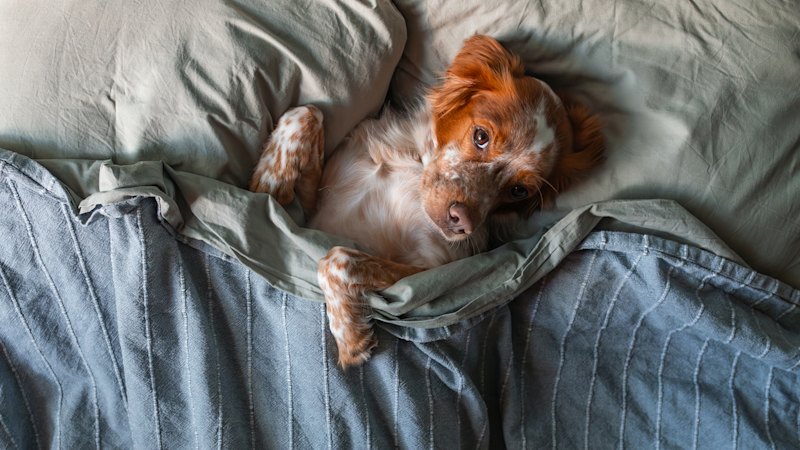
If you have a furry pet, there’s a good chance you also sleep with your furry pet – about half of people with pets share a bed with their animals. This also means they’re sharing a bed with their pet’s fur, dander, drool and a whole host of other unpleasantries (fleas, anyone?).
“Tending to pet hair is good sleep hygiene, period,” says home organising expert Caroline Solomon. It’s especially important for people suffering from asthma and allergies, she adds, “but even if you don’t have asthma or allergies, inhaling dander can be mildly irritating to your respiratory tract and disrupt sleep quality.”
Hair and dander aren’t the only problems pets bring to the boudoir. “Sharing your bed with a pet means you’re sharing your bedding with everything that comes along with it,” says Josh Leonardi, the founder of The Meow Picks, a US-based store featuring high-end products for cats and dogs. “Pets groom themselves, walk around the home and then climb onto bedding, so a cleaning routine should reflect that.”
A reliable routine is essential, says Erin Smith, a dog-lifestyle content creator and owner of three golden retrievers. “If you let your pets sleep in bed with you, which we do, there really is no way to keep the hair off and out of the bed. The best thing you can do is make your cleanup routine easy.”
These expert tips will go a long way to making things a little less hairy.
Leonardi tells pet owners to take ease of cleaning and maintenance into account when choosing bedding. Fabric, in particular, “matters more than people think,” he says. “[Pets] shed into loose weaves and looped fabrics like bouclé and chenille,” while tight, flat weaves such as fleece, as well as leather and coated surfaces, repel shedded fur.
Smith washes her sheets weekly, sometimes twice a week, which she calls ideal. Experts agree that once a week is the minimum for people who sleep with their pets. “Bedding collects sweat, skin cells, oils and dust. Adding a pet brings additional hair, dander, saliva and particles carried in on paws and whatever else ends up on their coat,” Leonardi says. “If they are sleeping under the blankets, ideally the bedding would be washed twice a week.”
Regular washing will also extend the lifespan of your sheets, which can be expensive to replace. “Pet odours, oils and moisture can degrade bedding faster, so it’s a good idea to stay on top of your laundry routine,” Solomon says.
Pillows and doona inserts are what Ashley Burgos, a doctor of veterinary medicine and co-founder of Futureproof Pet, calls “indirect layers”; she recommends washing them every two weeks.
Sheets and indirect layers aren’t the only things that absorb pet essence: the mattress, too, will hold dander and odours. “A mattress cover can also help protect the mattress itself,” Leonardi says. Solomon recommends washing mattress pads monthly.
Use a pet-safe enzymatic cleaner to spot-treat stains on bedding, mattresses and upholstered headboards. “This task is great to do every two weeks or so, incorporating it into your bedroom cleaning routine,” Solomon says. The same stain remover can be used to clean up accidents (urine, bowel movements, vomiting, hairballs, wounds, etc.). “If an accident occurs or your [pet] licks or grooms themselves and leaves saliva wet spots, consider more frequent cleanings,” Burgos says.
Leonardi calls the bed frame “one of the most forgotten parts of keeping bedding clean”. Wipe bed frames made of wood, metal or other hard surfaces with a cloth to remove hair, dust and dander; fabric headboards should be vacuumed regularly using an upholstery attachment. “Fabric holds on to unwanted accumulation,” he says, “so it’s best to vacuum them when changing bedding.”
“Under the bed is another often overlooked area where pet hair and dust can quickly accumulate,” Leonardi says, “especially if the pet likes to sleep or hide there”. He recommends vacuuming under the bed twice a week and mopping hard floors as needed. Robot vacuums can help reduce the workload. “We clean under our bed every day,” Smith says. “We have a robot vacuum that can vacuum under the bed frame, and this really helps keep the hair from piling up under the bed.”
When it comes to laundry, there are tricks that can help with fur removal. “The important thing is to remove excess hair before laundering rather than assuming the washing machine will take care of all of it,” Leonardi says. “Shaking the bedding out, vacuuming it or using a lint roller first can make a noticeable difference.” He also uses a dryer trick for bedding that is covered in hair. “Tumbling it briefly in a dryer on a no-heat setting can loosen some of the hair and send it into the lint trap, making it easier to wash.”
Burgos uses wool dryer balls, not dryer sheets, to reduce static that makes pet fur cling to fabrics. “The wool balls also help move any remaining fur into the lint trap for easy removal,” she says.
In between washing, there are things you can do to keep pet hair at bay. “I am a fan of using a lint roller to lift away pet hair in one swipe,” Solomon says. “Keep them in your nightstand drawer, your living room and wherever your pet likes to hang out.” Rubber tools also work well: “Rubber hand brooms and rubber grooming gloves are useful tools for upholstery and excessive fur accumulation,” Burgos says.
Even if your pet sleeps under the covers with you at night, making your bed in the morning will keep them out of the sheets during the day, reducing contact time. Making the bed with the covers pulled up over the pillows will keep filthy paws off the place where you lay your head.
If the thought of doing all that laundry chills you to the bone, put down a protective layer. “The more direct contact a pet has with a piece of bedding, the more often I’d clean it,” Leonardi says. “A dedicated washable throw or blanket can make things much easier, because you can wash that more often without having to strip the entire bed.”
”A lot of the fur-on-the-bed problem is really a ‘the cat has nowhere better to sleep’ problem,” Leonardi says. “Setting an arbitrary boundary with a pet can also be difficult, so the key is to provide an attractive alternative they want to use.” Try directing pets away from the bed by placing a pet bed or another comfortable sleeping spot nearby. “If the nicest, warmest, highest spot in the room is your duvet, that’s where they’ll be. Giving them a genuinely better option nearby, a real bed or a perch in the same sunny corner, moves them off the bedding.”
Consider blocking your pet’s access to the bedroom(s) during the day. “I typically shut the bedroom doors and limit them to the more pet-friendly areas of my home that can more easily be cleaned,” Burgos says.
Regular grooming reduces the amount of loose fur at its source. “An ounce of prevention is better than a pound of cure,” Burgos says. “Brushing pets daily can help exfoliate dead skin and fur in a controlled manner, limiting how much they shed throughout the home and bedding.”
Pets track residue from the outdoors, such as pollen, dirt, fertilisers and pesticides, into the home on their paws. “I recommend setting up a foot bath just outside your front door with one part white distilled vinegar and nine parts water, then gently dry their paws to help remove residues from their paws after a walk,” Burgos says.
Although it won’t move the needle on pet hair, an air purifier will reduce dander and other particulates. “It won’t collect pet hair, but I recommend keeping an air purifier close to your bed to trap excess dander,” Solomon says. Burgos agrees that air purifiers are essential in homes with pets. “Inhaled and contact allergens in and around bedding can be a trigger for pets and people, sometimes severe enough to contribute to changes in quality of life.”
Make the most of your health, relationships, fitness and nutrition with our Live Well newsletter. Get it in your inbox every Monday.
You have reached your maximum number of saved items.
Remove items from your saved list to add more.
You've used all of your gift articles. 3 more will become available on the 1st of every month.
Citations · 2 reports from 2 outlets
Tap a citation to read it above, right here on T.A.M.
Does your pet sleep on your bed? You probably need these cleaning tips
Around half of all pet owners share a bed with their animals. If that’s you, an easy cleaning routine is key.
2 hours ago · Jolie KerrDoes your pet sleep on your bed? You probably need these cleaning tips
Around half of all pet owners share a bed with their animals. If that’s you, an easy cleaning routine is key.
2 hours ago · Jolie Kerr