
Sandpapergate: The tough questions about who knew what that never got asked
On the Saturday of the Cape Town Test in 2018, Cameron Bancroft was filmed comically shoving sandpaper into his underpants. Within days, he, Steve Smith and Dave Warner were banned.
First reported 2 hours ago · latest update 2 hours ago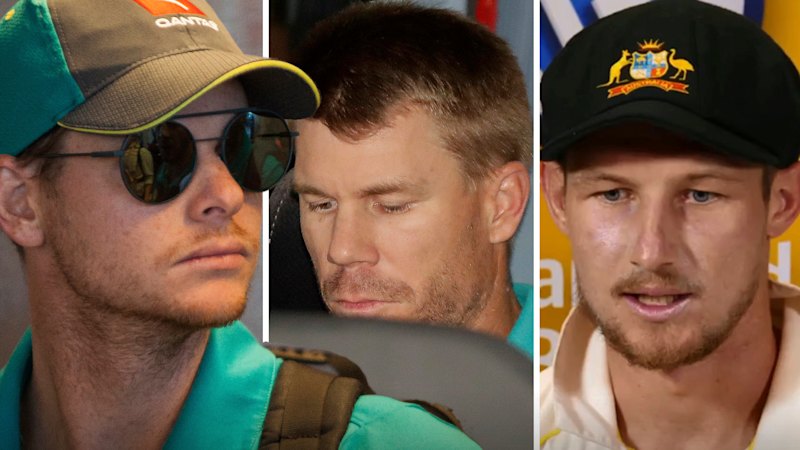
You have reached your maximum number of saved items.
Remove items from your saved list to add more.
You've used all of your gift articles. 3 more will become available on the 1st of every month.
Over the last fortnight, so many of us have been enthralled in a game of “Remember When” regarding a blizzard of rude recollections about the Sandpaper-gate events of 2018 in South Africa.
Australia’s Test team is back in South Africa this week, where that imbroglio kicked off eight years and seven months ago.
Back then, I wrote that the Australian players needed to lawyer-up and demand a fair hearing; such was the schemozzle of their head-spiking. A year later I opined that they’d been bashed up too hard.
In 2022, I dared to write that David Warner’s lifetime leadership ban constituted moral policing ham-fistedly disguised as the metering-out of discipline. Nothing Cricket Australia (CA) has done since gives me the slightest inclination to deviate from these views.
On the Saturday of the Cape Town Test, Cameron Bancroft was filmed comically shoving sandpaper into his underpants. The next day, CA’s then chief executive James Sutherland fronted the media, without consulting the captain, Steve Smith.
By Tuesday, CA scrambled a two-man squad to arrive in South Africa, to investigate. The probe was completed inside 100 hours. Only selected witnesses had their chains rattled.
By the following day, Smith and Warner had been handed 12-month bans from all cricket, Bancroft nine months. Smith was barred from leadership roles for a further year. Warner was banned from leading for life.
By Thursday, they were on their way home. Within days, each had cried on camera, blubbering their scripted “messaging”.
Within a fortnight, they had accepted everything. Nobody appealed.
Smith’s admissions were that he’d been party to a premeditated, orchestrated and juvenile plan to cheat. You can’t remain captain after that. Nobody has sensibly prosecuted the alternate case.
None of the players were charged by CA with wilfully or unfairly changing the condition of the ball under law 41.3 of the Laws of Cricket.
That’s the on-field offence, and the only body competent to prosecute it is the International Cricket Council.
The ICC dealt with Bancroft under 41.3; he copped a small fine and some demerit points but no suspension. The ICC dealt with Smith for conduct contrary to the spirit of the game; he copped one Test match and his match fee. That’s it.
Warner, supposedly the evil puppet master; the ICC didn’t touch him. And the umpires didn’t even change the ball. The sandpaper failed.
CA instead reached for article 2.3.5 of its Code of Conduct for Players and Player Support Personnel. That’s the archetypal catch-all: conduct contrary to the spirit of the game, unbecoming, harmful to the interests of cricket, blah blah. Disrepute is of course an elastic concept; it stretches to fit whatever the outrage demands.
The players weren’t banned for sandpapering a ball. They were banned for the embarrassment CA suffered when the calamitous scheme was detected, and for the fibbing that followed.
They could’ve copped the sanction; admitted the charge but contested the severity before an independent Code of Conduct commissioner; or denied it and appealed.
The sanctions were announced as settled fact before any commissioner had been appointed, let alone sitting in judgment.
Each player was frogmarched to a microphone by CA to make admissions, in harrowing circumstances, before any of them had so much as a phone call from a lawyer.
I’ve advised plenty of clients to run dead on questions from journalists for this reason; honest answers given under duress become legal potholes.
And then there’s the thing nobody at CA will utter aloud: selection of a national cricket team is discretionary.
A player who takes his employer to an independent hearing and succeeds in getting a reduced penalty must then present himself to that same employer for selection.
Warner and Smith didn’t appeal because they did the calculus: winning the battle meant being banished. That calculation was rational. A right you’re too frightened to exercise isn’t a right.
So some tough questions about who knew what never got asked.
How did the bowlers using that ball form no suspicion it was being attacked with an abrasive? Was Cape Town the first time, or just the first time anyone got caught? What did coach Darren Lehmann know, and when?
How does Smith’s instinctive blurting about a “leadership group” square with the official narrative?
When Bancroft stated in 2021 that the bowlers’ knowledge was “self-explanatory”, CA invited him to provide evidence; the bowlers issued a denial. Since then, nothing.
Compare the process other athletes have been afforded. The 34 Essendon players who sat out the 2016 AFL season after being found guilty of anti-doping rule violations copped a comparable penalty, but they got there via a full hearing before the code’s Anti-Doping Tribunal.
Former Bulldogs NRL star James Graham copped 12 matches for biting Billy Slater’s ear in the 2012 grand final. Sandpaper on a ball that the umpires didn’t bother replacing drew a sanction roughly four times longer.
CA also announced that any future leadership for Smith and Bancroft would be “conditional on acceptance by fans and the public”. How was that meant to be measured?
No disciplinary system in any sport, or any court, conditions the restoration of a person’s standing in a popularity contest.
That sentence told you everything about what the window-dressing exercise really was about.
Yes, they broke the rules – they admitted it; they didn’t appeal; and anyway the organisation has since reformed. But CA’s treatment of Warner, Smith and Bancroft in 2018 was shameful.
In late 2022 the CA’s Code of Conduct was changed to allow long-term sanctions to be reviewed, only because Warner had asked for his lifetime leadership ban to be revisited.
The review panel then insisted on a public hearing that would’ve retried Cape Town from scratch.
Warner withdrew from a procedure considered by some to be akin to a lynching. He wasn’t wrong.
The ban was quietly lifted in November 2023, weeks before he retired from Test cricket, at the precise point it no longer mattered. That’s not redemption. That’s an institution abandoning a position it knew wouldn’t survive scrutiny.
CA acted within its rules, which is the most damning thing I can say about the rules.
Three good people were hung out for one stupid decision under the harshest spotlight in sport.
The institution has paid nothing, and changed nothing.
News, results and expert analysis from the weekend of sport sent every Friday. Sign up for our Sport newsletter.
Citations · 2 reports from 2 outlets
Tap a citation to read it above, right here on T.A.M.
Sandpapergate: The tough questions about who knew what that never got asked
On the Saturday of the Cape Town Test in 2018, Cameron Bancroft was filmed comically shoving sandpaper into his underpants. Within days, he, Steve Smith and Dave Warner were banned.
2 hours ago · Darren KaneSandpapergate: The tough questions about who knew what that never got asked
On the Saturday of the Cape Town Test in 2018, Cameron Bancroft was filmed comically shoving sandpaper into his underpants. Within days, he, Steve Smith and Dave Warner were banned.
2 hours ago · Darren Kane